



.jpg)
.jpg)

.jpg)
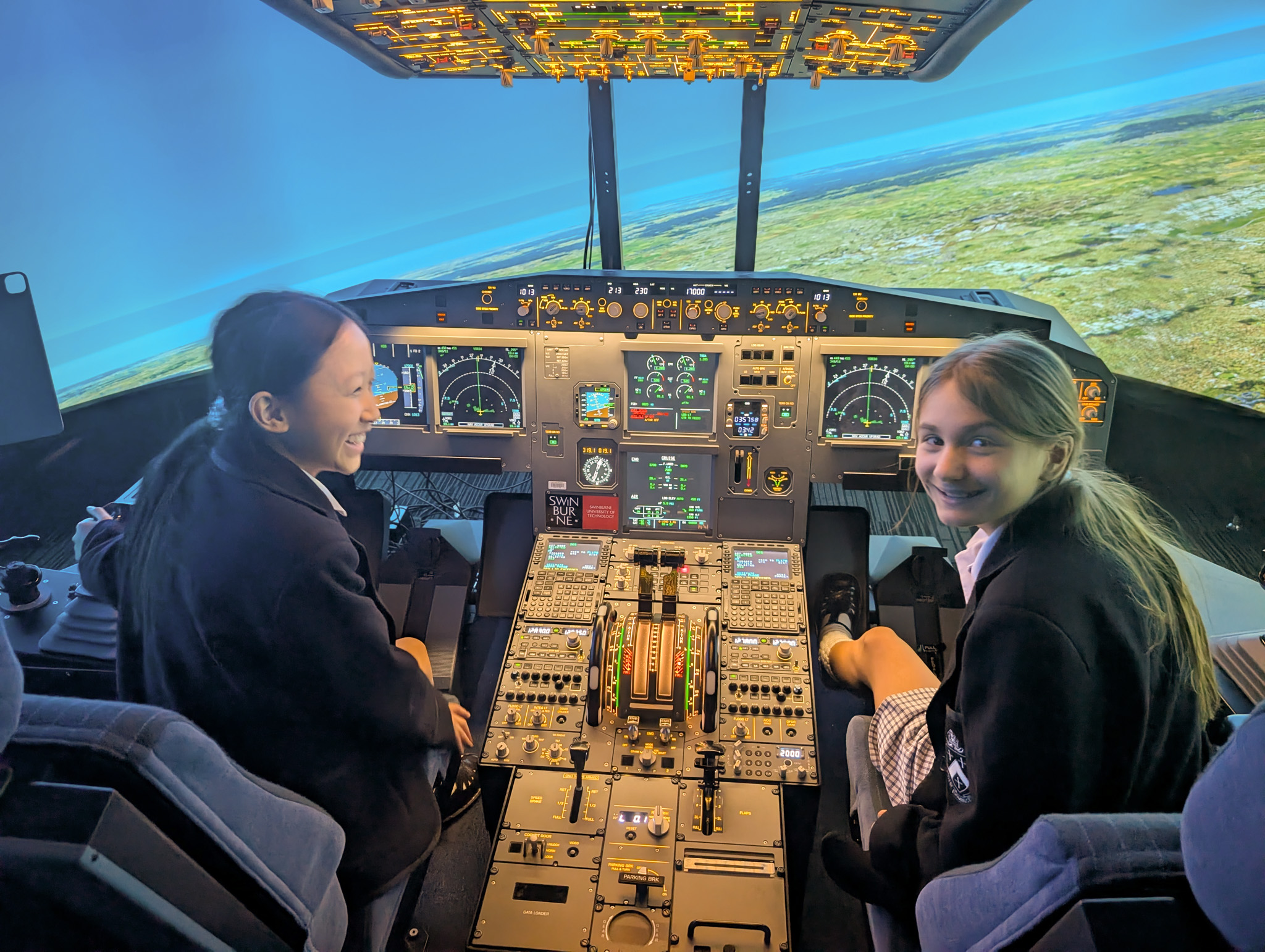

Students in the Flight Simulator at Swinburne University

Students in the Flight Simulator at Swinburne University
Learning by Design
At Wildfell, Year 5 and 6 students are being introduced to Engineering and Digital Technologies through hands-on, inquiry-driven learning that encourages curiosity, problem-solving and experimentation. From dismantling computers to coding and game design, the program is building foundational skills while fostering the beginnings of an engineering mindset grounded in creativity and real-world application.

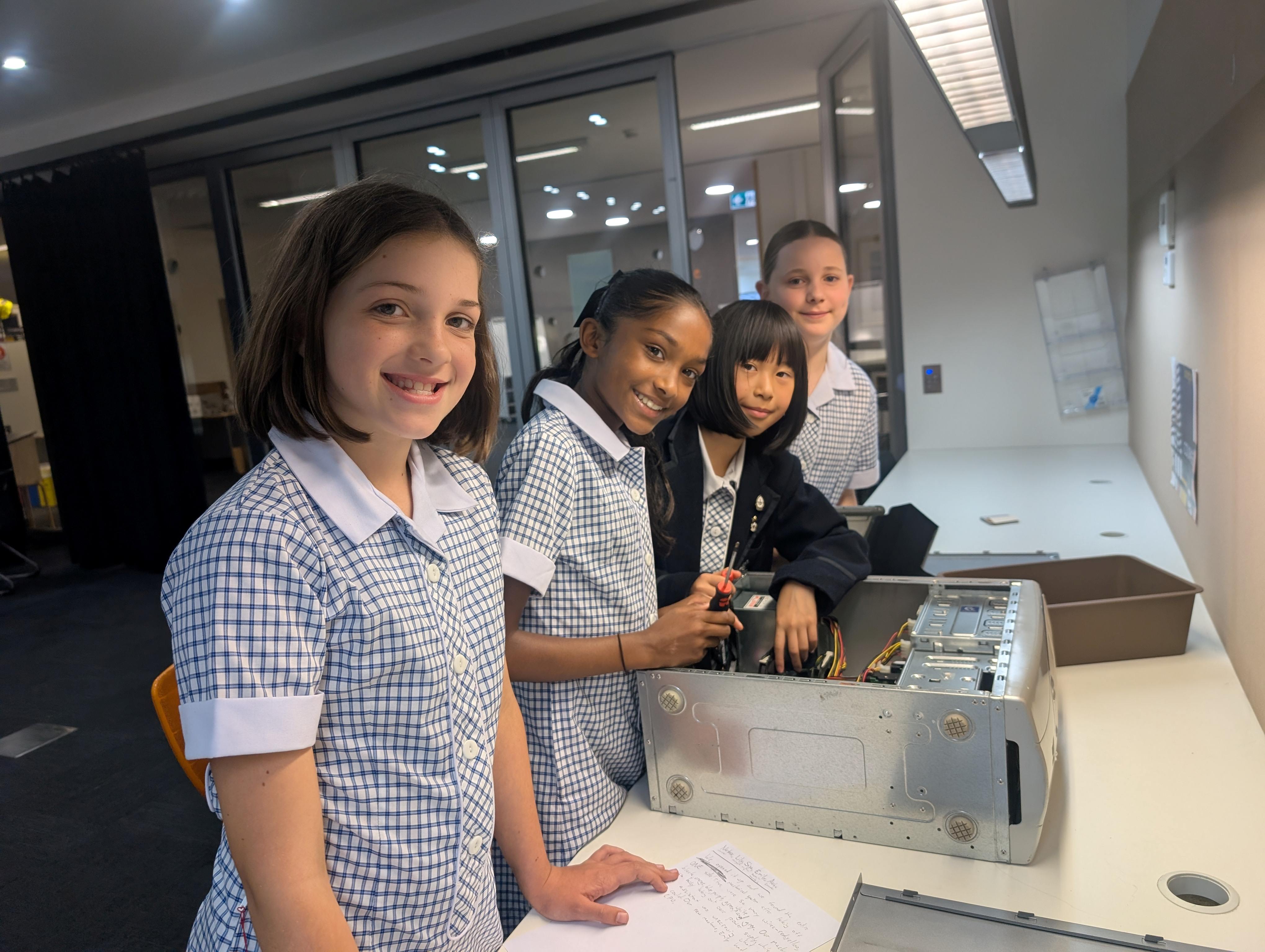
On a bright late summer afternoon, I was excited to visit Wildfell, our specialist Year 5 and 6 precinct, to observe the energy of students clustered around workspaces pulling apart desktop computers. What I was seeing wasn’t an act of vandalism. It was one of our first Engineering classes for the year, and the culmination of months of planning to have hands-on experimentation with Engineering and Digital Technologies introduced to the lower Middle Years. In 2025, highly respected Middle Years Teacher, Lingling Sun, was appointed to lead the development of the curriculum. As well as drawing on her strong background in STEM education and extensive experience leading student extension and competition‑based projects.
Lingling met with experts from the school and tertiary sectors, travelled interstate observing best practice and established a bespoke model to engage students in foundational technological skills. She expresses that “engineering is not just a subject. It’s a way of thinking. Our goal is to help students learn how to approach complexity with curiosity, confidence, and persistence. It’s encouraging to see a growing number of schools recognising the value of this approach and investing in learning environments and facilities that support authentic engineering experiences across the whole School.”
Digital and Engineering Technologies has commenced in Wildfell, with two lessons every week for Years 5 and 6. The focused curriculum time represents the importance of experiential learning, using real materials, and understanding technology and innovation. The curriculum draws from VCE foundations in both Design and Technologies which use a design-based thinking model to meet the needs of users.
“Engineering is not just a subject. It’s a way of thinking.” – Lingling Sun
Year 5 students have begun the year with understanding Computer Science. They’ve studied the main components of Digital systems and their function. They’ve also pulled apart computers, examining the hardware. Theyhave worked with Micro: bits, using coding of their designs and practising computational thinking. Students have also completed a series of lessons from the Cyber Safety Project. They’ll be moving on to inventions in Semester 2, designing and creating sustainable inventions for business. Prototypes will be made from cardboard, with opportunities to expand into 3-D printing. Year 5 will also be working on data analysis, understanding Excel Spreadsheets and the way data underpins and drives technology projects.
On a bright late summer afternoon, I was excited to visit Wildfell, our specialist Year 5 and 6 precinct, to observe the energy of students clustered around workspaces pulling apart desktop computers. What I was seeing wasn’t an act of vandalism. It was one of our first Engineering classes for the year, and the culmination of months of planning to have hands-on experimentation with Engineering and Digital Technologies introduced to the lower Middle Years. In 2025, highly respected Middle Years Teacher, Lingling Sun, was appointed to lead the development of the curriculum. As well as drawing on her strong background in STEM education and extensive experience leading student extension and competition‑based projects.
Lingling met with experts from the school and tertiary sectors, travelled interstate observing best practice and established a bespoke model to engage students in foundational technological skills. She expresses that “engineering is not just a subject. It’s a way of thinking. Our goal is to help students learn how to approach complexity with curiosity, confidence, and persistence. It’s encouraging to see a growing number of schools recognising the value of this approach and investing in learning environments and facilities that support authentic engineering experiences across the whole School.”
Digital and Engineering Technologies has commenced in Wildfell, with two lessons every week for Years 5 and 6. The focused curriculum time represents the importance of experiential learning, using real materials, and understanding technology and innovation. The curriculum draws from VCE foundations in both Design and Technologies which use a design-based thinking model to meet the needs of users.
“Engineering is not just a subject. It’s a way of thinking.” – Lingling Sun
Year 5 students have begun the year with understanding Computer Science. They’ve studied the main components of Digital systems and their function. They’ve also pulled apart computers, examining the hardware. Theyhave worked with Micro: bits, using coding of their designs and practising computational thinking. Students have also completed a series of lessons from the Cyber Safety Project. They’ll be moving on to inventions in Semester 2, designing and creating sustainable inventions for business. Prototypes will be made from cardboard, with opportunities to expand into 3-D printing. Year 5 will also be working on data analysis, understanding Excel Spreadsheets and the way data underpins and drives technology projects.
On a bright late summer afternoon, I was excited to visit Wildfell, our specialist Year 5 and 6 precinct, to observe the energy of students clustered around workspaces pulling apart desktop computers. What I was seeing wasn’t an act of vandalism. It was one of our first Engineering classes for the year, and the culmination of months of planning to have hands-on experimentation with Engineering and Digital Technologies introduced to the lower Middle Years. In 2025, highly respected Middle Years Teacher, Lingling Sun, was appointed to lead the development of the curriculum. As well as drawing on her strong background in STEM education and extensive experience leading student extension and competition‑based projects.
Lingling met with experts from the school and tertiary sectors, travelled interstate observing best practice and established a bespoke model to engage students in foundational technological skills. She expresses that “engineering is not just a subject. It’s a way of thinking. Our goal is to help students learn how to approach complexity with curiosity, confidence, and persistence. It’s encouraging to see a growing number of schools recognising the value of this approach and investing in learning environments and facilities that support authentic engineering experiences across the whole School.”
Digital and Engineering Technologies has commenced in Wildfell, with two lessons every week for Years 5 and 6. The focused curriculum time represents the importance of experiential learning, using real materials, and understanding technology and innovation. The curriculum draws from VCE foundations in both Design and Technologies which use a design-based thinking model to meet the needs of users.
“Engineering is not just a subject. It’s a way of thinking.” – Lingling Sun
Year 5 students have begun the year with understanding Computer Science. They’ve studied the main components of Digital systems and their function. They’ve also pulled apart computers, examining the hardware. Theyhave worked with Micro: bits, using coding of their designs and practising computational thinking. Students have also completed a series of lessons from the Cyber Safety Project. They’ll be moving on to inventions in Semester 2, designing and creating sustainable inventions for business. Prototypes will be made from cardboard, with opportunities to expand into 3-D printing. Year 5 will also be working on data analysis, understanding Excel Spreadsheets and the way data underpins and drives technology projects.

Engineering at Wildfell
Engineering at Wildfell
Engineering at Wildfell
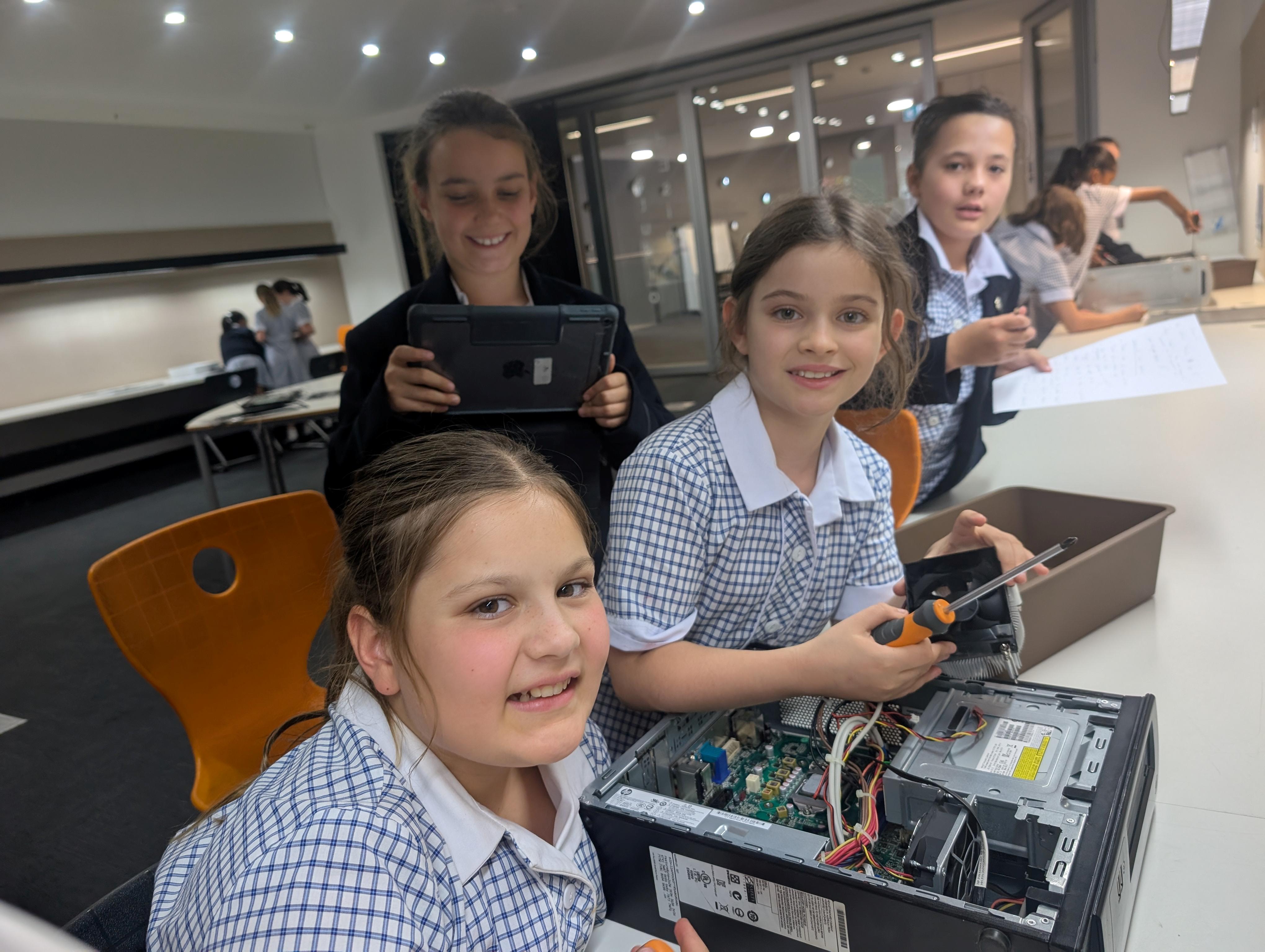
Grammarians dismantling and old computer
In Year 6, the focus has been on game making. Students have developed an understanding of the ethics of online game making, coding and computational thinking. Highlights included excursions to the ACMI Game Worlds Exhibition, and Swinburne University, where students were able to experiment with the Motion Capture Studio, Robot demonstrations and an Aviation Lab.
Year 6 student Camilla was extra enthusiastic describing the excursion: “We went in the flight simulator, learned how to fly a plane and, specifically, how not to crash! Next, we undertook an airline activity where we learned about different types of airlines like full-service and low-cost carriers. One of my highlights of the day was watching my teacher crash land in the simulator! Overall, the whole experience was fun and very educational. I will consider working in the aviation industry as a career!”
In Year 6, the focus has been on game making. Students have developed an understanding of the ethics of online game making, coding and computational thinking. Highlights included excursions to the ACMI Game Worlds Exhibition, and Swinburne University, where students were able to experiment with the Motion Capture Studio, Robot demonstrations and an Aviation Lab.
Year 6 student Camilla was extra enthusiastic describing the excursion: “We went in the flight simulator, learned how to fly a plane and, specifically, how not to crash! Next, we undertook an airline activity where we learned about different types of airlines like full-service and low-cost carriers. One of my highlights of the day was watching my teacher crash land in the simulator! Overall, the whole experience was fun and very educational. I will consider working in the aviation industry as a career!”
In Year 6, the focus has been on game making. Students have developed an understanding of the ethics of online game making, coding and computational thinking. Highlights included excursions to the ACMI Game Worlds Exhibition, and Swinburne University, where students were able to experiment with the Motion Capture Studio, Robot demonstrations and an Aviation Lab.
Year 6 student Camilla was extra enthusiastic describing the excursion: “We went in the flight simulator, learned how to fly a plane and, specifically, how not to crash! Next, we undertook an airline activity where we learned about different types of airlines like full-service and low-cost carriers. One of my highlights of the day was watching my teacher crash land in the simulator! Overall, the whole experience was fun and very educational. I will consider working in the aviation industry as a career!”

Robot Demonstrations during the Excursion at Swinburne University
Robot Demonstrations during the Excursion at Swinburne University
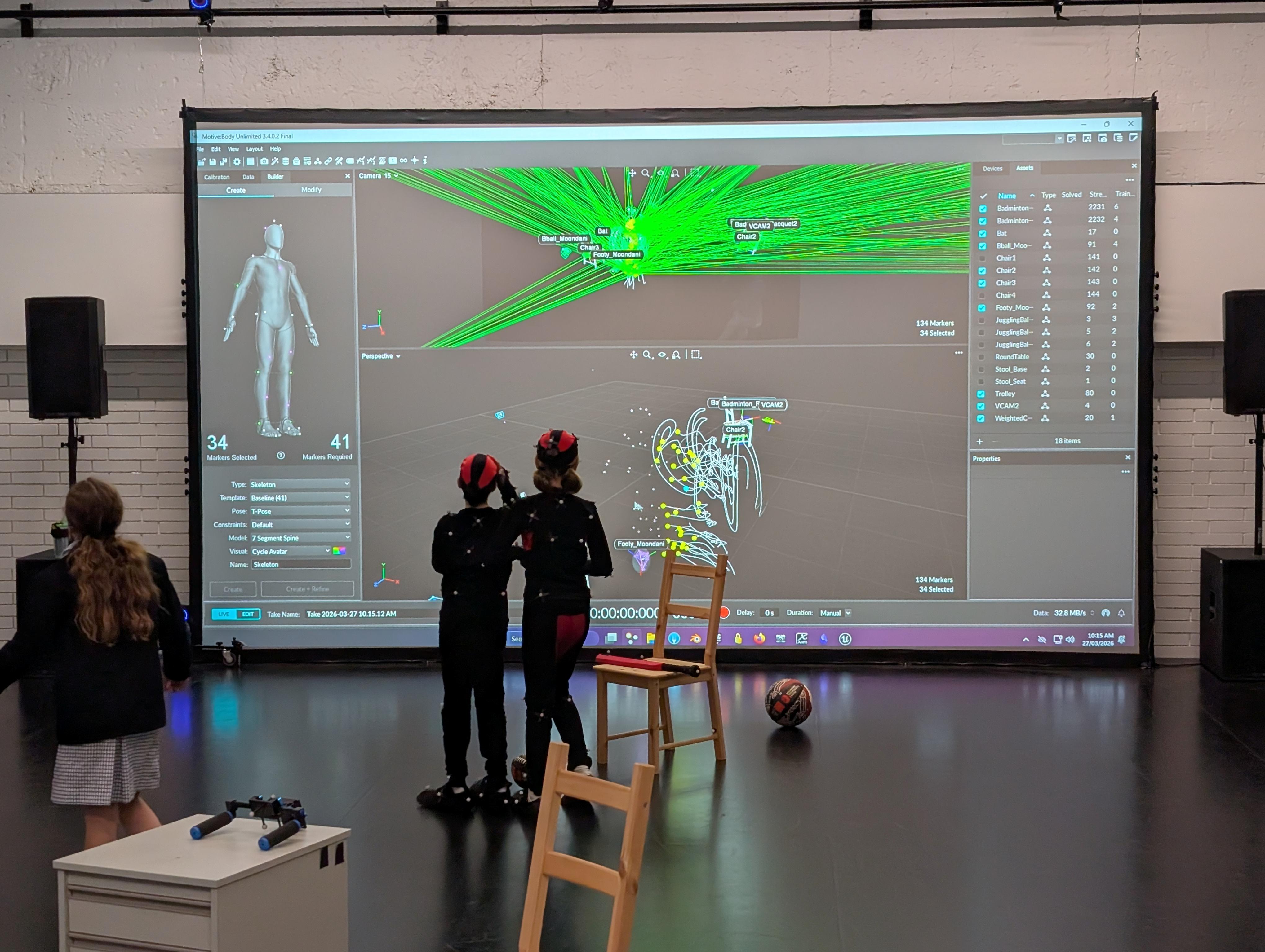
Exploring the Motion Capture Studio at Swinburne University
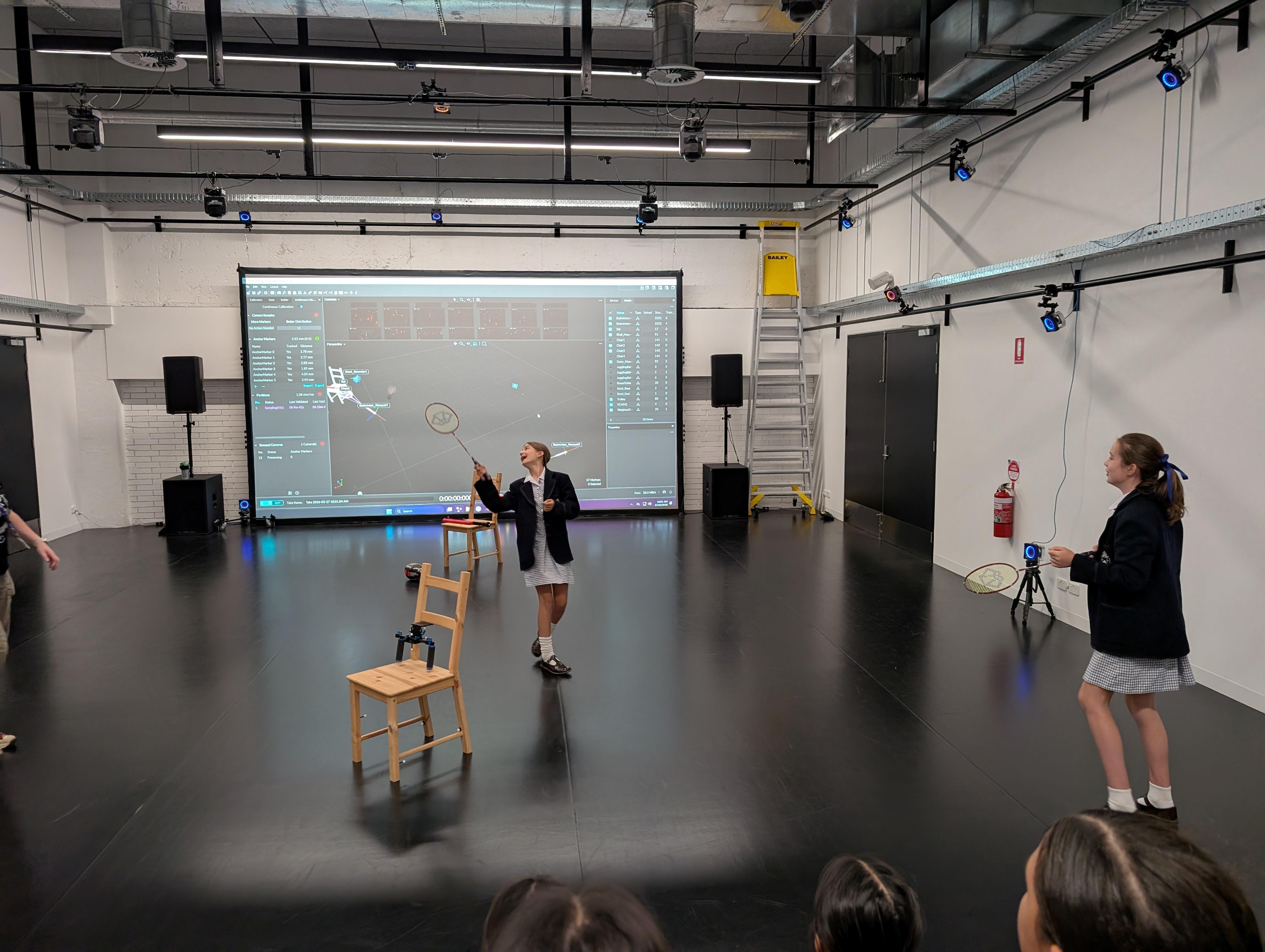
Exploring the Motion Capture Studio at Swinburne University
Students have been working on the foundational concepts of binary code, data transmission and data security. Next semester, the Year 6 unit will become distinctly hands-on, with a creative engineering project, including circuitry, along with Engineering storytelling activities.
"Our goal is to help students learn how to approach complexity with curiosity, confidence, and persistence."
Bringing this level of sophisticated learning into the Year 5 and 6 space takes advantage of the expertise in place at Melbourne Girls Grammar. The School’s co-curricular Engineering Club has been very popular over a number of years, with activities such as billycart building and racing and rocket building. The Years 7 – 10 Digital Technologies subject has become increasingly popular, with an expanded robotics focus in Year 7. Senior pathways into Product Design and Visual Communication Design give opportunities for further development. The parent-led STEM Auxiliary has also hosted a number of ‘meet the professional evenings’ to encourage students to consider STEM pathways for future careers.
Our younger learners in Wildfell are being challenged and excited by the creativity and innovation in this new subject offering and as they grow through the School we will see their Engineering mindsets shape the future.
Students have been working on the foundational concepts of binary code, data transmission and data security. Next semester, the Year 6 unit will become distinctly hands-on, with a creative engineering project, including circuitry, along with Engineering storytelling activities.
"Our goal is to help students learn how to approach complexity with curiosity, confidence, and persistence."
Bringing this level of sophisticated learning into the Year 5 and 6 space takes advantage of the expertise in place at Melbourne Girls Grammar. The School’s co-curricular Engineering Club has been very popular over a number of years, with activities such as billycart building and racing and rocket building. The Years 7 – 10 Digital Technologies subject has become increasingly popular, with an expanded robotics focus in Year 7. Senior pathways into Product Design and Visual Communication Design give opportunities for further development. The parent-led STEM Auxiliary has also hosted a number of ‘meet the professional evenings’ to encourage students to consider STEM pathways for future careers.
Our younger learners in Wildfell are being challenged and excited by the creativity and innovation in this new subject offering and as they grow through the School we will see their Engineering mindsets shape the future.
Students have been working on the foundational concepts of binary code, data transmission and data security. Next semester, the Year 6 unit will become distinctly hands-on, with a creative engineering project, including circuitry, along with Engineering storytelling activities.
"Our goal is to help students learn how to approach complexity with curiosity, confidence, and persistence."
Bringing this level of sophisticated learning into the Year 5 and 6 space takes advantage of the expertise in place at Melbourne Girls Grammar. The School’s co-curricular Engineering Club has been very popular over a number of years, with activities such as billycart building and racing and rocket building. The Years 7 – 10 Digital Technologies subject has become increasingly popular, with an expanded robotics focus in Year 7. Senior pathways into Product Design and Visual Communication Design give opportunities for further development. The parent-led STEM Auxiliary has also hosted a number of ‘meet the professional evenings’ to encourage students to consider STEM pathways for future careers.
Our younger learners in Wildfell are being challenged and excited by the creativity and innovation in this new subject offering and as they grow through the School we will see their Engineering mindsets shape the future.
In May we launched our 2026 Annual Giving Appeal, which is directly related to the learning discussed in this article.
Indeed, we are focusing on our Middle Years students this, with an exciting opportunity to transform an existing space into a dedicated Engineering Hub. This means Years 5 to 8 students will have access to a dynamic learning environment where ideas can be explored, tested and brought to life. This new space will be designed to foster collaboration, creativity and technical skill.
Please help us make this vision a reality with a tax-deductible donation to our Annual Giving 2026 campaign.
In May we launched our 2026 Annual Giving Appeal, which is directly related to the learning discussed in this article.
Indeed, we are focusing on our Middle Years students this, with an exciting opportunity to transform an existing space into a dedicated Engineering Hub. This means Years 5 to 8 students will have access to a dynamic learning environment where ideas can be explored, tested and brought to life. This new space will be designed to foster collaboration, creativity and technical skill.
Please help us make this vision a reality with a tax-deductible donation to our Annual Giving 2026 campaign.
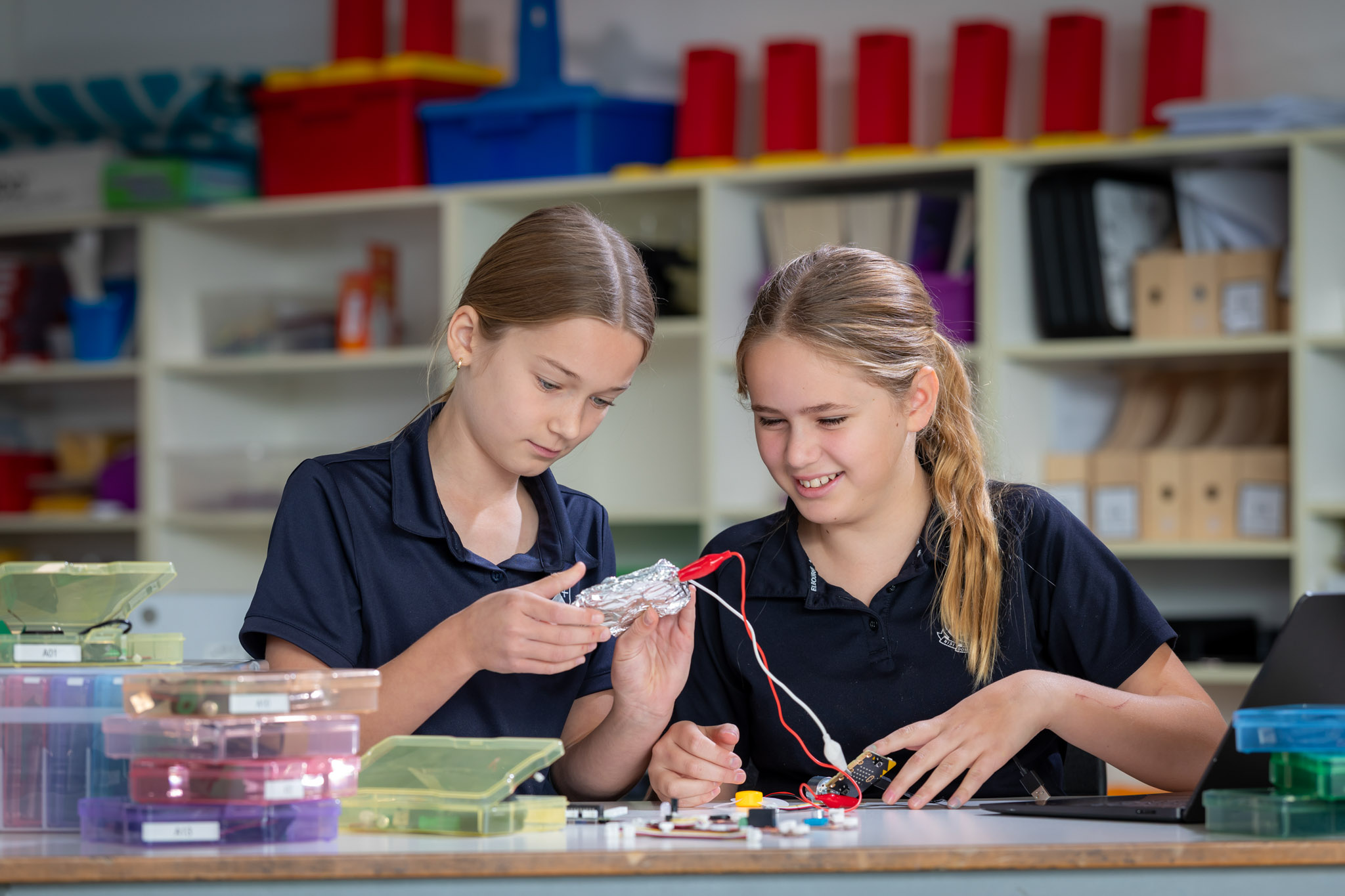
Middle years students in Engineering class
Middle years students in Engineering class
Middle years students in Engineering class