



.jpg)
.jpg)


.jpg)


Designing for the Future
Innovation in Visual Communication Design is not simply about using new tools. It is about helping students think like contemporary designers, creatively, critically and with purpose, in a world where design is constantly evolving. Melbourne Girls Grammar has a rich pathway starting from Media Arts in Year 6, through multiple electives in Visual Design so that our students are at the cutting edge of the design world.

In Visual Communication Design classes, students are encouraged to see themselves not just as learners completing a task, but as emerging designers, problem-solvers and visual communicators. They are asked to think deeply about audience, context and purpose, and to develop ideas that are imaginative and relevant to the world around them. Creativity is a natural and essential part of this process and, increasingly, one of the most important capabilities students can develop for the future.
The current VCAA VCE Visual Communication Design Study Design reflects this shift. Implemented from 2024, it positions students within contemporary design practice, strengthens the emphasis on digital methods and workflows, and expands the field to include interactive experiences alongside objects, messages and environments. This reflects what we already know as educators and designers: visual communication today exists across physical, digital and increasingly immersive spaces.
In the classroom, this means students are learning through a blend of traditional design foundations and emerging technologies. Foundational skills remain central. Students still sketch by hand, annotate ideas, apply technical drawing conventions, and build their understanding of typography, layout, hierarchy and composition. For example, in Year 9, students photograph their family kitchen, interview the family members who use the space, and then engage in the design process, including technical drawings, to reimagine the kitchen. We’ve even had a report from one parent that they’ve renovated some elements at their daughter’s suggestion. The fundamentals of design matter deeply. However, they are also working in ways that reflect contemporary industry practice.
"Our students also have opportunities to bring ideas into the physical world. Through 3D printing, they can prototype, test and refine their concepts in tangible ways, strengthening the connection between digital design and material outcome. "
In Visual Communication Design classes, students are encouraged to see themselves not just as learners completing a task, but as emerging designers, problem-solvers and visual communicators. They are asked to think deeply about audience, context and purpose, and to develop ideas that are imaginative and relevant to the world around them. Creativity is a natural and essential part of this process and, increasingly, one of the most important capabilities students can develop for the future.
The current VCAA VCE Visual Communication Design Study Design reflects this shift. Implemented from 2024, it positions students within contemporary design practice, strengthens the emphasis on digital methods and workflows, and expands the field to include interactive experiences alongside objects, messages and environments. This reflects what we already know as educators and designers: visual communication today exists across physical, digital and increasingly immersive spaces.
In the classroom, this means students are learning through a blend of traditional design foundations and emerging technologies. Foundational skills remain central. Students still sketch by hand, annotate ideas, apply technical drawing conventions, and build their understanding of typography, layout, hierarchy and composition. For example, in Year 9, students photograph their family kitchen, interview the family members who use the space, and then engage in the design process, including technical drawings, to reimagine the kitchen. We’ve even had a report from one parent that they’ve renovated some elements at their daughter’s suggestion. The fundamentals of design matter deeply. However, they are also working in ways that reflect contemporary industry practice.
"Our students also have opportunities to bring ideas into the physical world. Through 3D printing, they can prototype, test and refine their concepts in tangible ways, strengthening the connection between digital design and material outcome. "
In Visual Communication Design classes, students are encouraged to see themselves not just as learners completing a task, but as emerging designers, problem-solvers and visual communicators. They are asked to think deeply about audience, context and purpose, and to develop ideas that are imaginative and relevant to the world around them. Creativity is a natural and essential part of this process and, increasingly, one of the most important capabilities students can develop for the future.
The current VCAA VCE Visual Communication Design Study Design reflects this shift. Implemented from 2024, it positions students within contemporary design practice, strengthens the emphasis on digital methods and workflows, and expands the field to include interactive experiences alongside objects, messages and environments. This reflects what we already know as educators and designers: visual communication today exists across physical, digital and increasingly immersive spaces.
In the classroom, this means students are learning through a blend of traditional design foundations and emerging technologies. Foundational skills remain central. Students still sketch by hand, annotate ideas, apply technical drawing conventions, and build their understanding of typography, layout, hierarchy and composition. For example, in Year 9, students photograph their family kitchen, interview the family members who use the space, and then engage in the design process, including technical drawings, to reimagine the kitchen. We’ve even had a report from one parent that they’ve renovated some elements at their daughter’s suggestion. The fundamentals of design matter deeply. However, they are also working in ways that reflect contemporary industry practice.
"Our students also have opportunities to bring ideas into the physical world. Through 3D printing, they can prototype, test and refine their concepts in tangible ways, strengthening the connection between digital design and material outcome. "
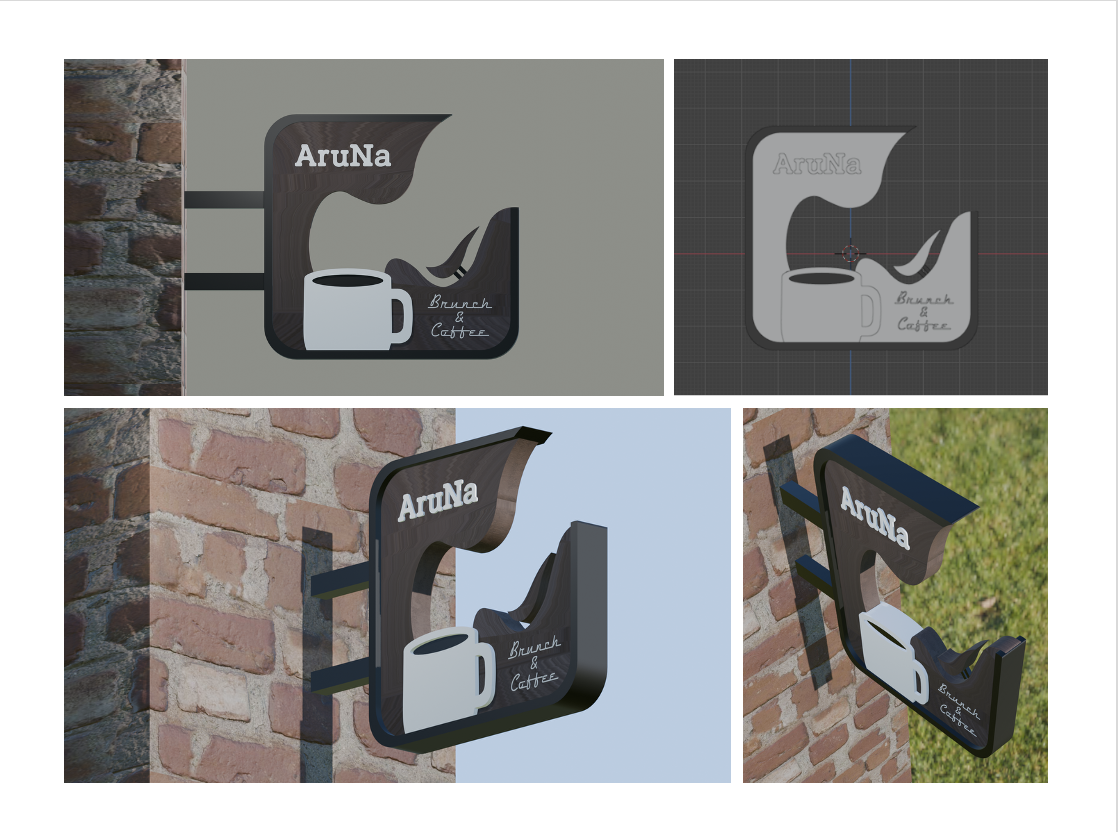
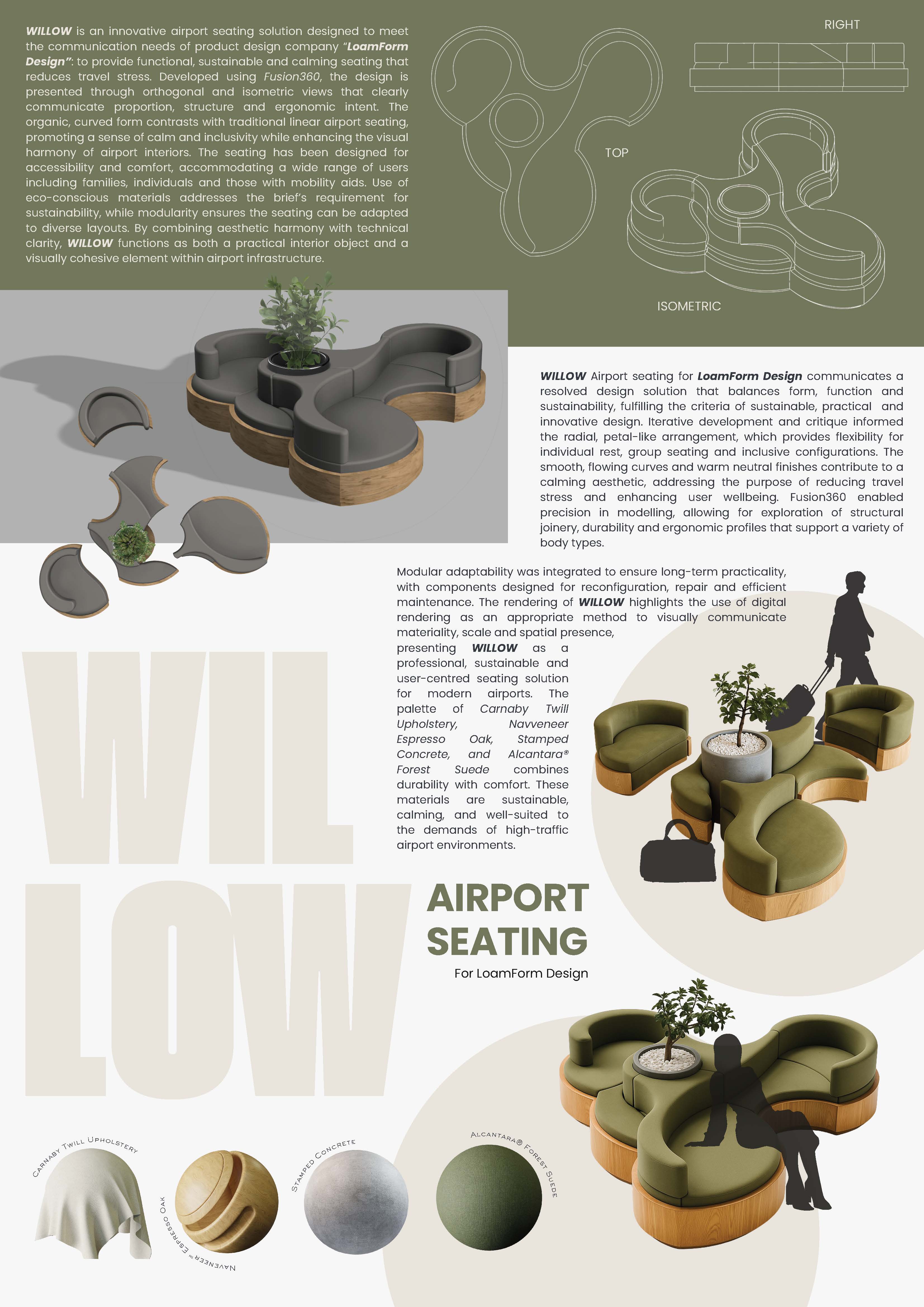
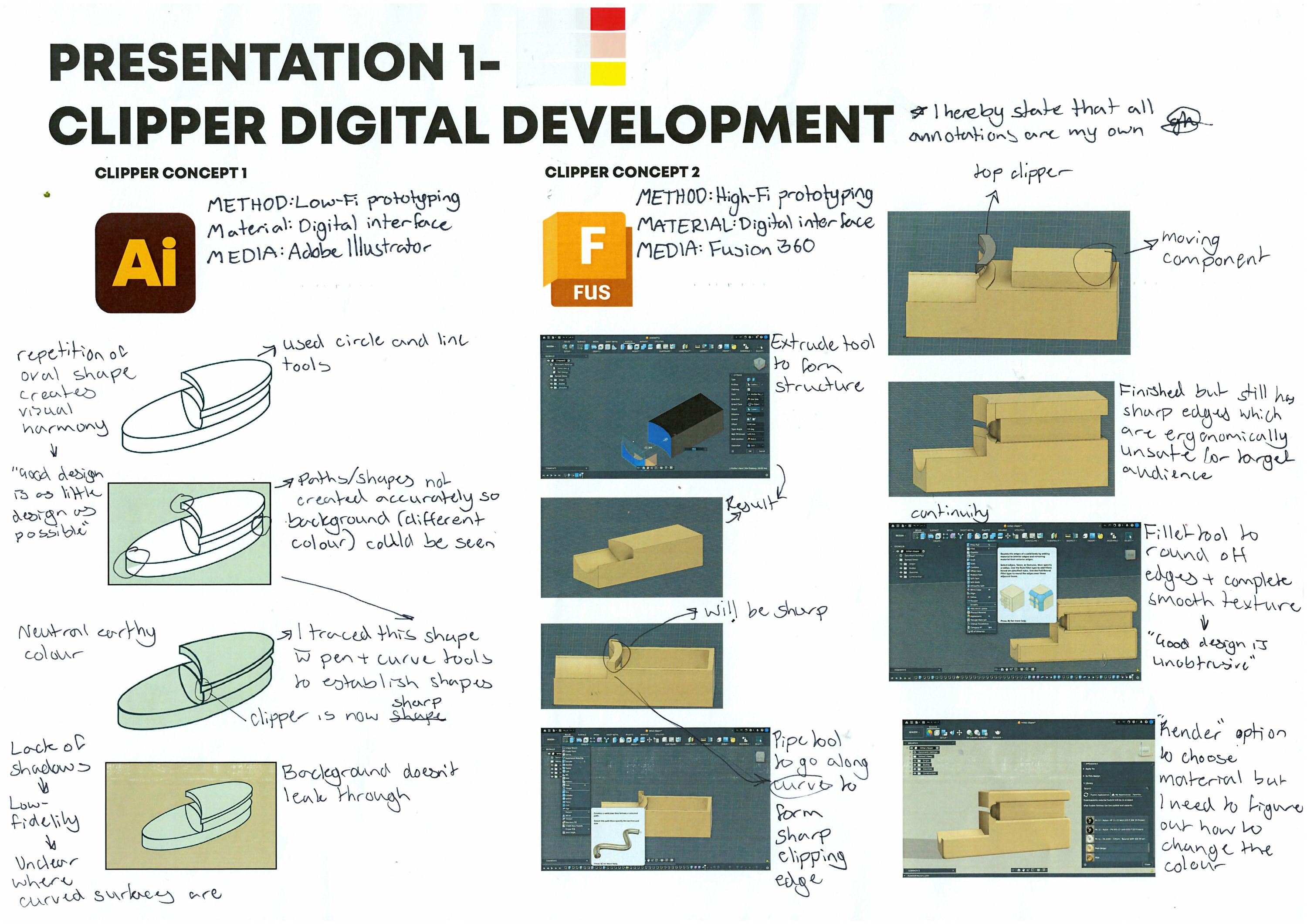
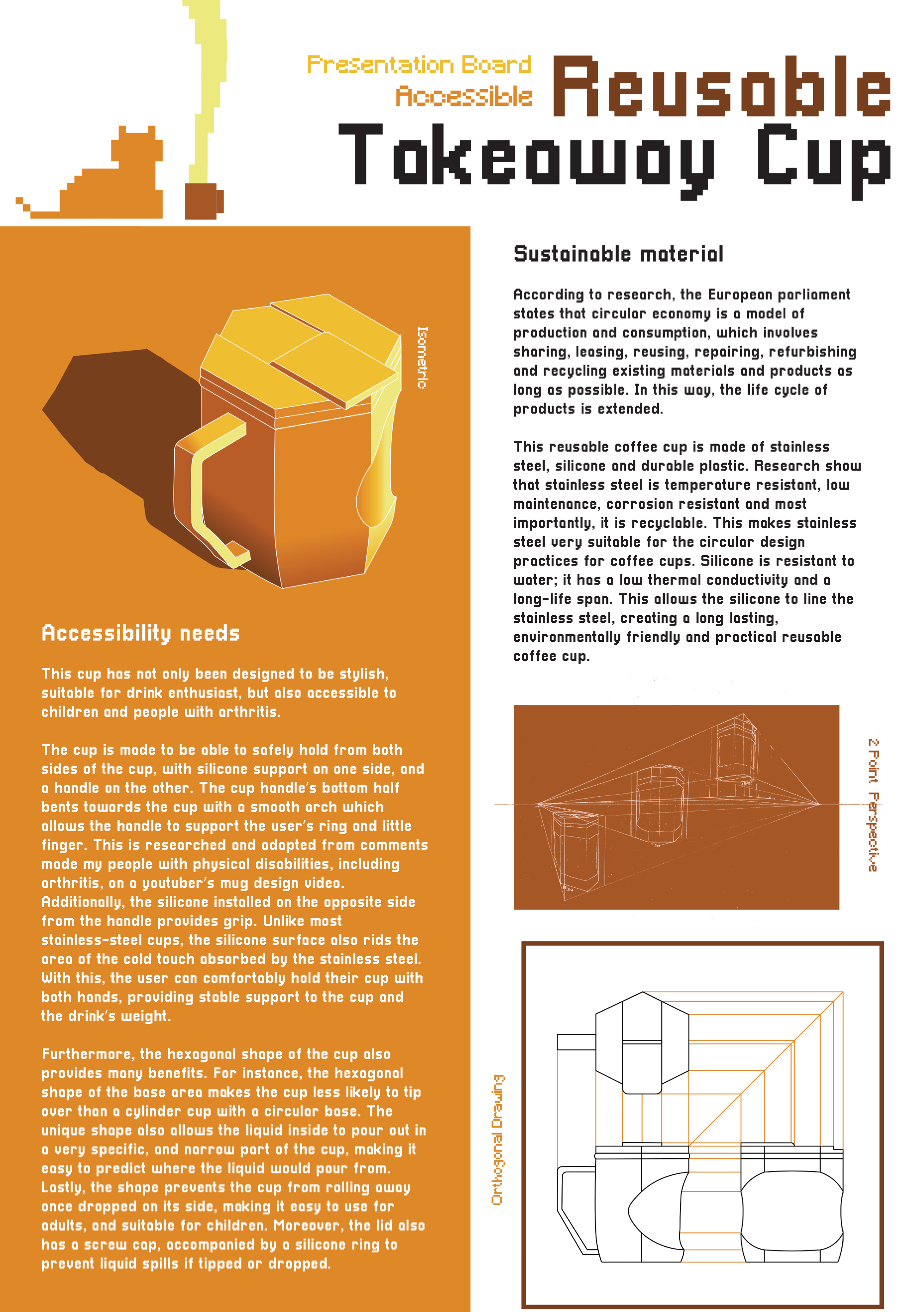
Students use Adobe Creative Cloud, including Photoshop, Illustrator, Dimension and InDesign, as well as Figma and Procreate, to develop, refine and present work with increasing sophistication. Year 11s have used a choice of Adobe Dimension or Fusion to design functional objects such as coffee cups or perfume bottles. They focus on rendering and 3D printing. These tools allow them to move from ideation to polished outcomes in ways that mirror professional design workflows. They also develop confidence in working across multiple applications, understanding that design is often iterative, multi-platform and increasingly collaborative.
Beyond the Adobe suite, students are also introduced to Autodesk software such as Revit and Fusion, alongside SketchUp, to explore spatial design, product design and three-dimensional thinking. Year 10s design eco beach houses, weaving in lessons about sustainability and circular design practices. They create floor plans before creating physical prototypes. Programs such as SketchUp open rich opportunities for students to design beyond the page, to consider form, structure, materials and user interaction in increasingly complex ways. This is particularly powerful as the VCD field expands to embrace environments and interactive experiences, and as students begin to understand that contemporary visual communication is no longer confined to print or screen alone.
Our students also have opportunities to bring ideas into the physical world. Through 3D printing, they can prototype, test and refine their concepts in tangible ways, strengthening the connection between digital design and material outcome.
Increasingly, we also explore ideas connected to circular design practices, encouraging students to think beyond aesthetics and function alone. They are challenged to consider how materials are sourced, how products or outcomes are used, and what happens at the end of a product’s lifecycle. This helps students understand that good design is not only visually compelling, but also responsible, sustainable and thoughtful in its impact, an increasingly important mindset for the future of design.
This is also where artificial intelligence is beginning to play an increasingly important role. AI is reshaping creative industries, and it is important that students learn how to engage with it thoughtfully rather than passively. In Visual Communication Design, AI is not treated as a shortcut or a replacement for original thinking. Instead, it is introduced as a tool that can support ideation, concept generation, visual experimentation and critical discussion.
Students can utilise AI as part of their divergent thinking strategies, particularly in early stages such as brainstorming. It can help broaden their thinking, generate unexpected directions and expand the range of possibilities they consider. Used in this way, it supports exploration and encourages students to move beyond predictable or familiar ideas. The emphasis remains on using AI to enhance and extend thinking, not replace it.
Students may use AI-assisted tools to test visual directions, explore possibilities or challenge their own assumptions. For example, during the Year 9 Kitchen re-design unit, students screenshotted their nearly completed designs and asked AI to critique. The students were required to include this critique in their folio, reflecting on the usefulness of the input. During this exercise, ethical referencing of AI use was also an explicit teaching point. However, the most important part of this process is what follows: evaluating what is effective, identifying what lacks originality, questioning bias, and making design decisions based on purpose, audience and context.
These conversations are increasingly relevant beyond the classroom. Broader discussions around the future of communication and technology reinforce the importance of helping young people think critically about the systems and tools shaping the future. In design education, this means ensuring that students understand not only how to use emerging technologies, but when, why and with what responsibility.
Students use Adobe Creative Cloud, including Photoshop, Illustrator, Dimension and InDesign, as well as Figma and Procreate, to develop, refine and present work with increasing sophistication. Year 11s have used a choice of Adobe Dimension or Fusion to design functional objects such as coffee cups or perfume bottles. They focus on rendering and 3D printing. These tools allow them to move from ideation to polished outcomes in ways that mirror professional design workflows. They also develop confidence in working across multiple applications, understanding that design is often iterative, multi-platform and increasingly collaborative.
Beyond the Adobe suite, students are also introduced to Autodesk software such as Revit and Fusion, alongside SketchUp, to explore spatial design, product design and three-dimensional thinking. Year 10s design eco beach houses, weaving in lessons about sustainability and circular design practices. They create floor plans before creating physical prototypes. Programs such as SketchUp open rich opportunities for students to design beyond the page, to consider form, structure, materials and user interaction in increasingly complex ways. This is particularly powerful as the VCD field expands to embrace environments and interactive experiences, and as students begin to understand that contemporary visual communication is no longer confined to print or screen alone.
Our students also have opportunities to bring ideas into the physical world. Through 3D printing, they can prototype, test and refine their concepts in tangible ways, strengthening the connection between digital design and material outcome.
Increasingly, we also explore ideas connected to circular design practices, encouraging students to think beyond aesthetics and function alone. They are challenged to consider how materials are sourced, how products or outcomes are used, and what happens at the end of a product’s lifecycle. This helps students understand that good design is not only visually compelling, but also responsible, sustainable and thoughtful in its impact, an increasingly important mindset for the future of design.
This is also where artificial intelligence is beginning to play an increasingly important role. AI is reshaping creative industries, and it is important that students learn how to engage with it thoughtfully rather than passively. In Visual Communication Design, AI is not treated as a shortcut or a replacement for original thinking. Instead, it is introduced as a tool that can support ideation, concept generation, visual experimentation and critical discussion.
Students can utilise AI as part of their divergent thinking strategies, particularly in early stages such as brainstorming. It can help broaden their thinking, generate unexpected directions and expand the range of possibilities they consider. Used in this way, it supports exploration and encourages students to move beyond predictable or familiar ideas. The emphasis remains on using AI to enhance and extend thinking, not replace it.
Students may use AI-assisted tools to test visual directions, explore possibilities or challenge their own assumptions. For example, during the Year 9 Kitchen re-design unit, students screenshotted their nearly completed designs and asked AI to critique. The students were required to include this critique in their folio, reflecting on the usefulness of the input. During this exercise, ethical referencing of AI use was also an explicit teaching point. However, the most important part of this process is what follows: evaluating what is effective, identifying what lacks originality, questioning bias, and making design decisions based on purpose, audience and context.
These conversations are increasingly relevant beyond the classroom. Broader discussions around the future of communication and technology reinforce the importance of helping young people think critically about the systems and tools shaping the future. In design education, this means ensuring that students understand not only how to use emerging technologies, but when, why and with what responsibility.
Students use Adobe Creative Cloud, including Photoshop, Illustrator, Dimension and InDesign, as well as Figma and Procreate, to develop, refine and present work with increasing sophistication. Year 11s have used a choice of Adobe Dimension or Fusion to design functional objects such as coffee cups or perfume bottles. They focus on rendering and 3D printing. These tools allow them to move from ideation to polished outcomes in ways that mirror professional design workflows. They also develop confidence in working across multiple applications, understanding that design is often iterative, multi-platform and increasingly collaborative.
Beyond the Adobe suite, students are also introduced to Autodesk software such as Revit and Fusion, alongside SketchUp, to explore spatial design, product design and three-dimensional thinking. Year 10s design eco beach houses, weaving in lessons about sustainability and circular design practices. They create floor plans before creating physical prototypes. Programs such as SketchUp open rich opportunities for students to design beyond the page, to consider form, structure, materials and user interaction in increasingly complex ways. This is particularly powerful as the VCD field expands to embrace environments and interactive experiences, and as students begin to understand that contemporary visual communication is no longer confined to print or screen alone.
Our students also have opportunities to bring ideas into the physical world. Through 3D printing, they can prototype, test and refine their concepts in tangible ways, strengthening the connection between digital design and material outcome.
Increasingly, we also explore ideas connected to circular design practices, encouraging students to think beyond aesthetics and function alone. They are challenged to consider how materials are sourced, how products or outcomes are used, and what happens at the end of a product’s lifecycle. This helps students understand that good design is not only visually compelling, but also responsible, sustainable and thoughtful in its impact, an increasingly important mindset for the future of design.
This is also where artificial intelligence is beginning to play an increasingly important role. AI is reshaping creative industries, and it is important that students learn how to engage with it thoughtfully rather than passively. In Visual Communication Design, AI is not treated as a shortcut or a replacement for original thinking. Instead, it is introduced as a tool that can support ideation, concept generation, visual experimentation and critical discussion.
Students can utilise AI as part of their divergent thinking strategies, particularly in early stages such as brainstorming. It can help broaden their thinking, generate unexpected directions and expand the range of possibilities they consider. Used in this way, it supports exploration and encourages students to move beyond predictable or familiar ideas. The emphasis remains on using AI to enhance and extend thinking, not replace it.
Students may use AI-assisted tools to test visual directions, explore possibilities or challenge their own assumptions. For example, during the Year 9 Kitchen re-design unit, students screenshotted their nearly completed designs and asked AI to critique. The students were required to include this critique in their folio, reflecting on the usefulness of the input. During this exercise, ethical referencing of AI use was also an explicit teaching point. However, the most important part of this process is what follows: evaluating what is effective, identifying what lacks originality, questioning bias, and making design decisions based on purpose, audience and context.
These conversations are increasingly relevant beyond the classroom. Broader discussions around the future of communication and technology reinforce the importance of helping young people think critically about the systems and tools shaping the future. In design education, this means ensuring that students understand not only how to use emerging technologies, but when, why and with what responsibility.
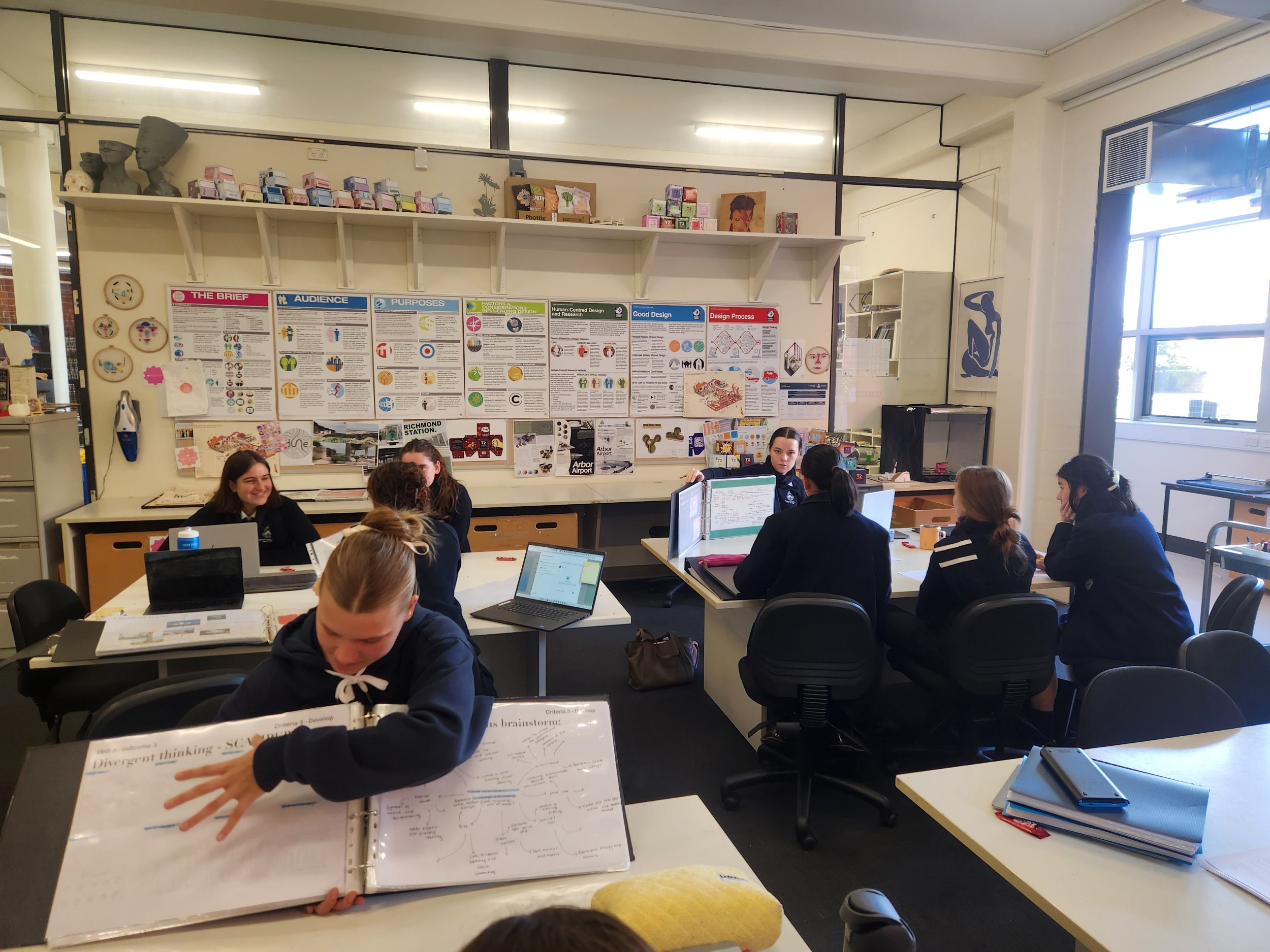
Year 12 VCD Design Critique
Year 12 VCD Design Critique
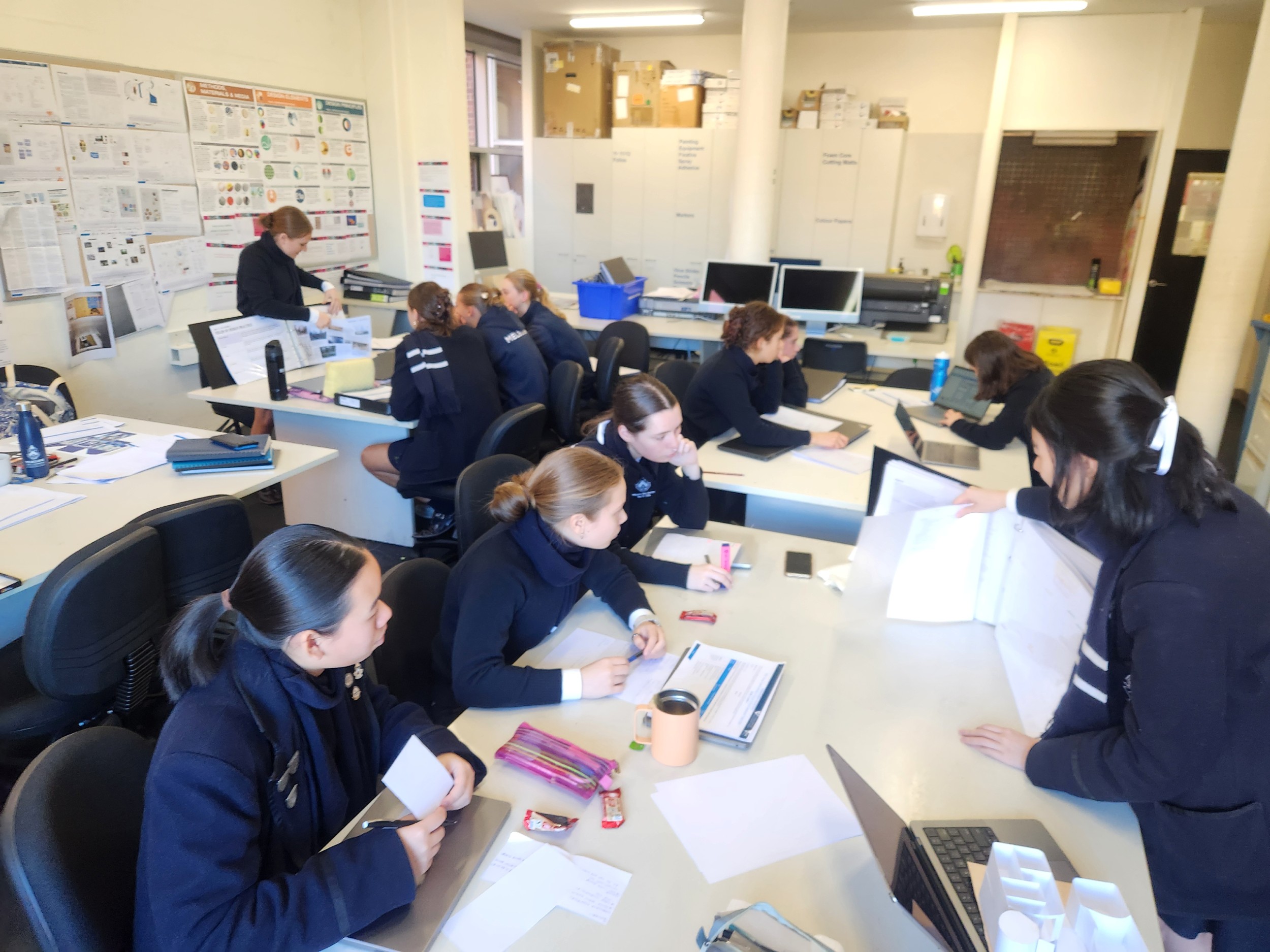
Year 12 VCD Design Critique
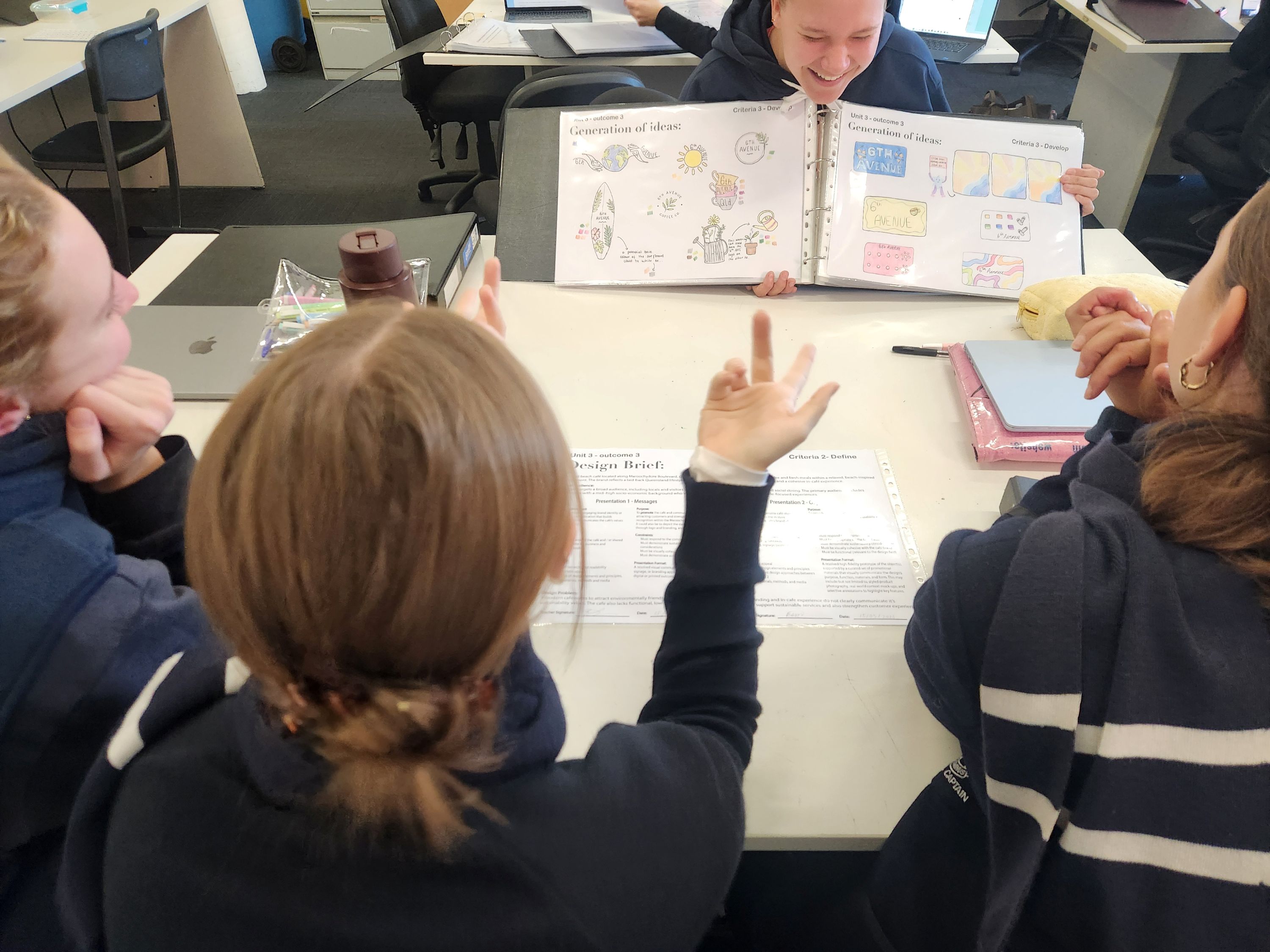
Year 12 VCD Design Critique
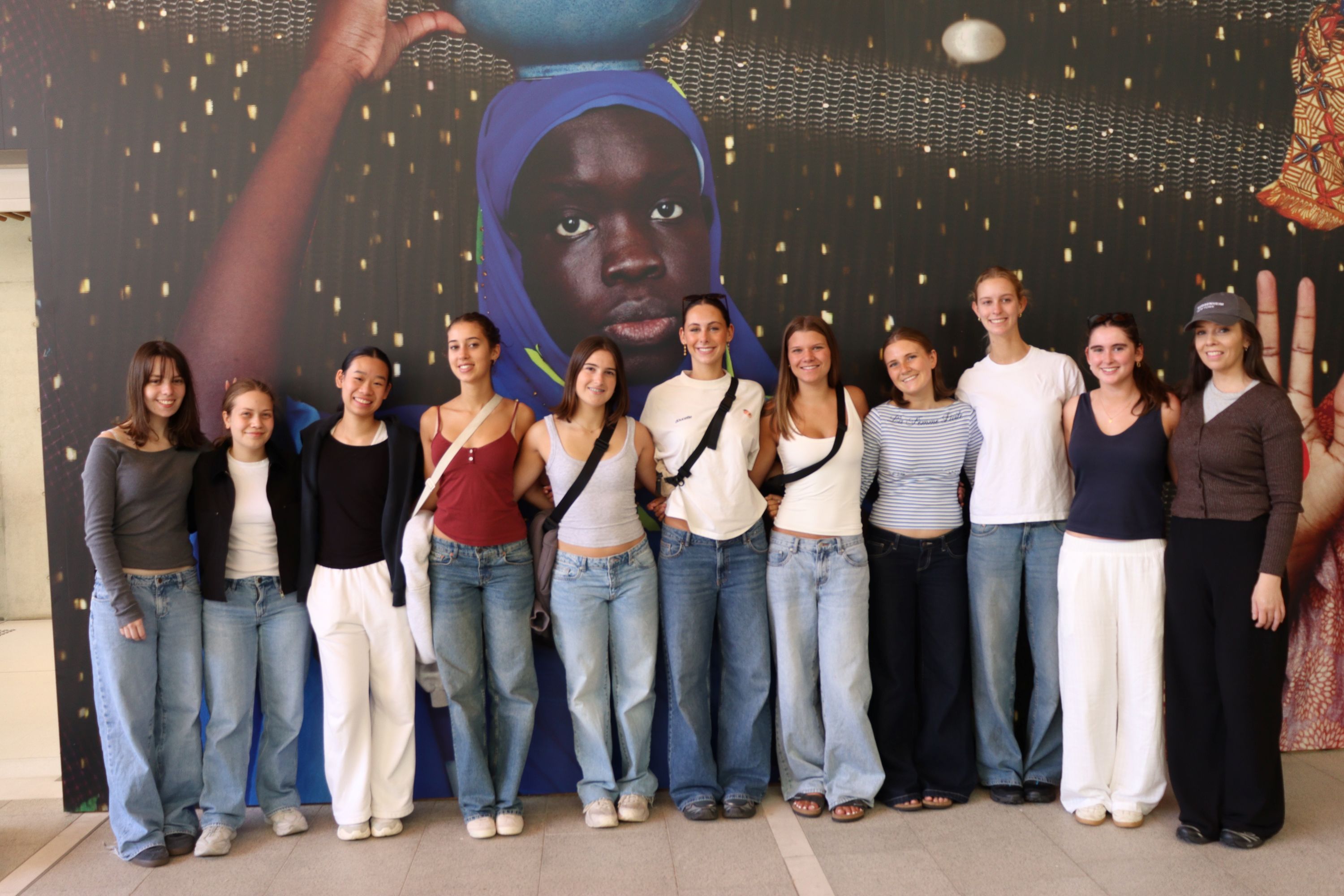
Year 12 VCD Class on an excursion
Innovation in Visual Communication Design is also supported by the spaces and structures that allow students to immerse themselves in creative practice. Our Year 12 students benefit from access to the studio space after school each week, giving them dedicated time to settle in, focus, experiment and make meaningful progress on their folios. This time matters. It allows students to work in a more authentic studio rhythm, one that reflects the sustained, iterative nature of design practice. It also reinforces that strong creative work often requires space: space to think, test, fail, refine and keep going.
"Innovation in Visual Communication Design is not about chasing trends. It is about preparing students for a future in which creativity, adaptability and design thinking will be increasingly valuable."
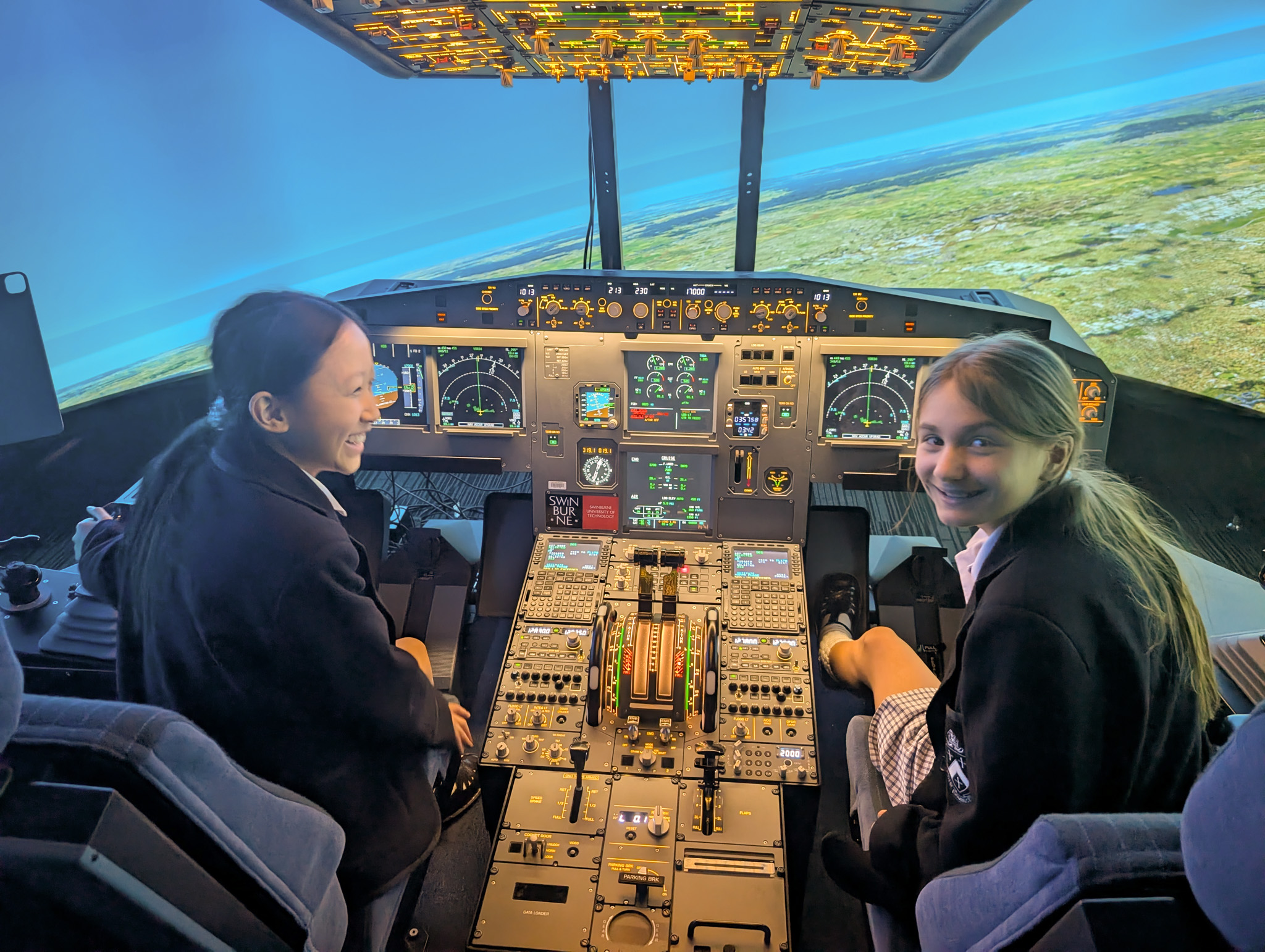
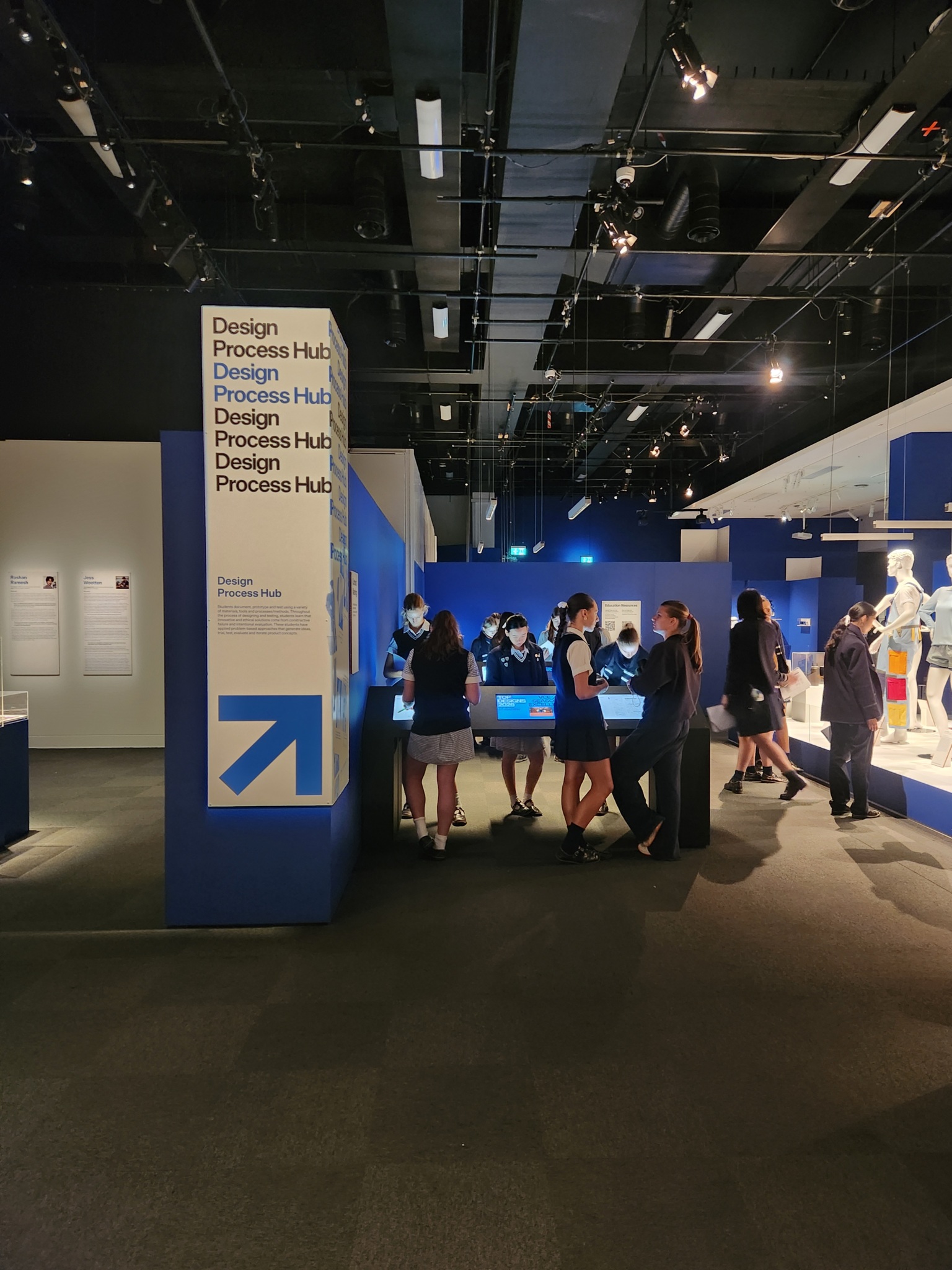
Importantly, students are also encouraged to immerse themselves in the field beyond the classroom. This includes attending university open days, designer talks, exhibitions and industry events, helping them see that Visual Communication Design is not just a school subject, but part of a vibrant and evolving professional and cultural landscape. With Melbourne Design Week, Australia’s leading annual design festival which ran from 14 to 24 May 2026 across Melbourne and regional Victoria, students had the opportunity to experience first-hand how design can be a force for innovation, storytelling and change.
Where possible, I also try to model this kind of professional curiosity myself, attending events, talks and exhibitions that connect design, communication and contemporary practice. This extends into ongoing professional learning that is increasingly global in nature and deeply connected to the intersection of design, technology and education.
A recent trip in December 2025 / January 2026 to New York City provided a significant opportunity for design-led inquiry across some of the world’s most influential innovation / design institutions. This includes MoMA, where contemporary practice, digital media, curation and design innovation intersect across disciplines; the Whitney Museum of American Art, which offers insight into contemporary visual culture and evolving modes of storytelling; and the New Museum, whose focus on emerging art and technology provides a powerful lens on future-facing creative practice and the role of innovation in shaping cultural narratives.
Experiences such as Mercer Labs also offer a highly relevant perspective on immersive design, sensory environments and the blending of art, technology and interaction design, all of which directly connect to how visual communication is evolving beyond traditional formats. Alongside these institutions, I have also engaged with exhibitions and events focused on AI, generative design, digital futures and creative technologies, which are increasingly central to global conversations about design innovation and human-centred systems.
Together, these experiences provide a lens into how leading institutions are using curation, spatial design, storytelling, interaction and emerging technologies to shape meaningful public and learning experiences. They also strengthen my capacity to bring these ideas back into the classroom, ensuring that students are engaging with design education that is informed by real-world innovation and global practice.
That mindset extends beyond any single city. One of the most valuable aspects of design education is helping students understand that creative practice is global. Museums, public spaces, branding, architecture, retail experiences and urban environments all become part of the learning conversation, offering insight into how design shapes everyday life.
Institutions such as the Cooper Hewitt, Smithsonian Design Museum provide powerful inspiration. As the only museum in the United States devoted exclusively to historical and contemporary design, it offers an extraordinary collection spanning disciplines and centuries, alongside initiatives such as the National Design Awards. These kinds of institutions remind students that design is not niche, it shapes how we live, move, communicate and experience the world.
"Students are challenged to consider how materials are sourced, how products or outcomes are used, and what happens at the end of a product’s lifecycle."
This connects strongly with the values reflected in industry recognition closer to home. Organisations such as the Australian Good Design Awards celebrate work that demonstrates not only aesthetic quality, but also Good Design, Design Innovation and Design Impact. For students, this is a powerful reference point. Whether they are designing branding, packaging, interactive experiences, spatial concepts or presentation models, they are learning that strong design is about more than style. It is about insight, process, innovation, refinement and meaningful impact.
Ultimately, innovation in Visual Communication Design is not about chasing trends. It is about preparing students for a future in which creativity, adaptability and design thinking will be increasingly valuable. The tools may continue to evolve, from Adobe workflows to 3D printing, from AI-assisted ideation to digital fabrication, but the core purpose remains the same: to help students become thoughtful, capable and confident creators.
At MGGS, in our VCD classes, innovation means creating the conditions for students to imagine boldly, design with intention, and engage with both traditional and emerging practices in ways that feel authentic, relevant and future focused. It is about equipping them not just to respond to change, but to help shape it.
Innovation in Visual Communication Design is also supported by the spaces and structures that allow students to immerse themselves in creative practice. Our Year 12 students benefit from access to the studio space after school each week, giving them dedicated time to settle in, focus, experiment and make meaningful progress on their folios. This time matters. It allows students to work in a more authentic studio rhythm, one that reflects the sustained, iterative nature of design practice. It also reinforces that strong creative work often requires space: space to think, test, fail, refine and keep going.
"Innovation in Visual Communication Design is not about chasing trends. It is about preparing students for a future in which creativity, adaptability and design thinking will be increasingly valuable."
Importantly, students are also encouraged to immerse themselves in the field beyond the classroom. This includes attending university open days, designer talks, exhibitions and industry events, helping them see that Visual Communication Design is not just a school subject, but part of a vibrant and evolving professional and cultural landscape. With Melbourne Design Week, Australia’s leading annual design festival which ran from 14 to 24 May 2026 across Melbourne and regional Victoria, students had the opportunity to experience first-hand how design can be a force for innovation, storytelling and change.
Where possible, I also try to model this kind of professional curiosity myself, attending events, talks and exhibitions that connect design, communication and contemporary practice. This extends into ongoing professional learning that is increasingly global in nature and deeply connected to the intersection of design, technology and education.
A recent trip in December 2025 / January 2026 to New York City provided a significant opportunity for design-led inquiry across some of the world’s most influential innovation / design institutions. This includes MoMA, where contemporary practice, digital media, curation and design innovation intersect across disciplines; the Whitney Museum of American Art, which offers insight into contemporary visual culture and evolving modes of storytelling; and the New Museum, whose focus on emerging art and technology provides a powerful lens on future-facing creative practice and the role of innovation in shaping cultural narratives.
Experiences such as Mercer Labs also offer a highly relevant perspective on immersive design, sensory environments and the blending of art, technology and interaction design, all of which directly connect to how visual communication is evolving beyond traditional formats. Alongside these institutions, I have also engaged with exhibitions and events focused on AI, generative design, digital futures and creative technologies, which are increasingly central to global conversations about design innovation and human-centred systems.
Together, these experiences provide a lens into how leading institutions are using curation, spatial design, storytelling, interaction and emerging technologies to shape meaningful public and learning experiences. They also strengthen my capacity to bring these ideas back into the classroom, ensuring that students are engaging with design education that is informed by real-world innovation and global practice.
That mindset extends beyond any single city. One of the most valuable aspects of design education is helping students understand that creative practice is global. Museums, public spaces, branding, architecture, retail experiences and urban environments all become part of the learning conversation, offering insight into how design shapes everyday life.
Institutions such as the Cooper Hewitt, Smithsonian Design Museum provide powerful inspiration. As the only museum in the United States devoted exclusively to historical and contemporary design, it offers an extraordinary collection spanning disciplines and centuries, alongside initiatives such as the National Design Awards. These kinds of institutions remind students that design is not niche, it shapes how we live, move, communicate and experience the world.
"Students are challenged to consider how materials are sourced, how products or outcomes are used, and what happens at the end of a product’s lifecycle."
This connects strongly with the values reflected in industry recognition closer to home. Organisations such as the Australian Good Design Awards celebrate work that demonstrates not only aesthetic quality, but also Good Design, Design Innovation and Design Impact. For students, this is a powerful reference point. Whether they are designing branding, packaging, interactive experiences, spatial concepts or presentation models, they are learning that strong design is about more than style. It is about insight, process, innovation, refinement and meaningful impact.
Ultimately, innovation in Visual Communication Design is not about chasing trends. It is about preparing students for a future in which creativity, adaptability and design thinking will be increasingly valuable. The tools may continue to evolve, from Adobe workflows to 3D printing, from AI-assisted ideation to digital fabrication, but the core purpose remains the same: to help students become thoughtful, capable and confident creators.
At MGGS, in our VCD classes, innovation means creating the conditions for students to imagine boldly, design with intention, and engage with both traditional and emerging practices in ways that feel authentic, relevant and future focused. It is about equipping them not just to respond to change, but to help shape it.
Innovation in Visual Communication Design is also supported by the spaces and structures that allow students to immerse themselves in creative practice. Our Year 12 students benefit from access to the studio space after school each week, giving them dedicated time to settle in, focus, experiment and make meaningful progress on their folios. This time matters. It allows students to work in a more authentic studio rhythm, one that reflects the sustained, iterative nature of design practice. It also reinforces that strong creative work often requires space: space to think, test, fail, refine and keep going.
"Innovation in Visual Communication Design is not about chasing trends. It is about preparing students for a future in which creativity, adaptability and design thinking will be increasingly valuable."
Importantly, students are also encouraged to immerse themselves in the field beyond the classroom. This includes attending university open days, designer talks, exhibitions and industry events, helping them see that Visual Communication Design is not just a school subject, but part of a vibrant and evolving professional and cultural landscape. With Melbourne Design Week, Australia’s leading annual design festival which ran from 14 to 24 May 2026 across Melbourne and regional Victoria, students had the opportunity to experience first-hand how design can be a force for innovation, storytelling and change.
Where possible, I also try to model this kind of professional curiosity myself, attending events, talks and exhibitions that connect design, communication and contemporary practice. This extends into ongoing professional learning that is increasingly global in nature and deeply connected to the intersection of design, technology and education.
A recent trip in December 2025 / January 2026 to New York City provided a significant opportunity for design-led inquiry across some of the world’s most influential innovation / design institutions. This includes MoMA, where contemporary practice, digital media, curation and design innovation intersect across disciplines; the Whitney Museum of American Art, which offers insight into contemporary visual culture and evolving modes of storytelling; and the New Museum, whose focus on emerging art and technology provides a powerful lens on future-facing creative practice and the role of innovation in shaping cultural narratives.
Experiences such as Mercer Labs also offer a highly relevant perspective on immersive design, sensory environments and the blending of art, technology and interaction design, all of which directly connect to how visual communication is evolving beyond traditional formats. Alongside these institutions, I have also engaged with exhibitions and events focused on AI, generative design, digital futures and creative technologies, which are increasingly central to global conversations about design innovation and human-centred systems.
Together, these experiences provide a lens into how leading institutions are using curation, spatial design, storytelling, interaction and emerging technologies to shape meaningful public and learning experiences. They also strengthen my capacity to bring these ideas back into the classroom, ensuring that students are engaging with design education that is informed by real-world innovation and global practice.
That mindset extends beyond any single city. One of the most valuable aspects of design education is helping students understand that creative practice is global. Museums, public spaces, branding, architecture, retail experiences and urban environments all become part of the learning conversation, offering insight into how design shapes everyday life.
Institutions such as the Cooper Hewitt, Smithsonian Design Museum provide powerful inspiration. As the only museum in the United States devoted exclusively to historical and contemporary design, it offers an extraordinary collection spanning disciplines and centuries, alongside initiatives such as the National Design Awards. These kinds of institutions remind students that design is not niche, it shapes how we live, move, communicate and experience the world.
"Students are challenged to consider how materials are sourced, how products or outcomes are used, and what happens at the end of a product’s lifecycle."
This connects strongly with the values reflected in industry recognition closer to home. Organisations such as the Australian Good Design Awards celebrate work that demonstrates not only aesthetic quality, but also Good Design, Design Innovation and Design Impact. For students, this is a powerful reference point. Whether they are designing branding, packaging, interactive experiences, spatial concepts or presentation models, they are learning that strong design is about more than style. It is about insight, process, innovation, refinement and meaningful impact.
Ultimately, innovation in Visual Communication Design is not about chasing trends. It is about preparing students for a future in which creativity, adaptability and design thinking will be increasingly valuable. The tools may continue to evolve, from Adobe workflows to 3D printing, from AI-assisted ideation to digital fabrication, but the core purpose remains the same: to help students become thoughtful, capable and confident creators.
At MGGS, in our VCD classes, innovation means creating the conditions for students to imagine boldly, design with intention, and engage with both traditional and emerging practices in ways that feel authentic, relevant and future focused. It is about equipping them not just to respond to change, but to help shape it.