



.jpg)
.jpg)

.jpg)
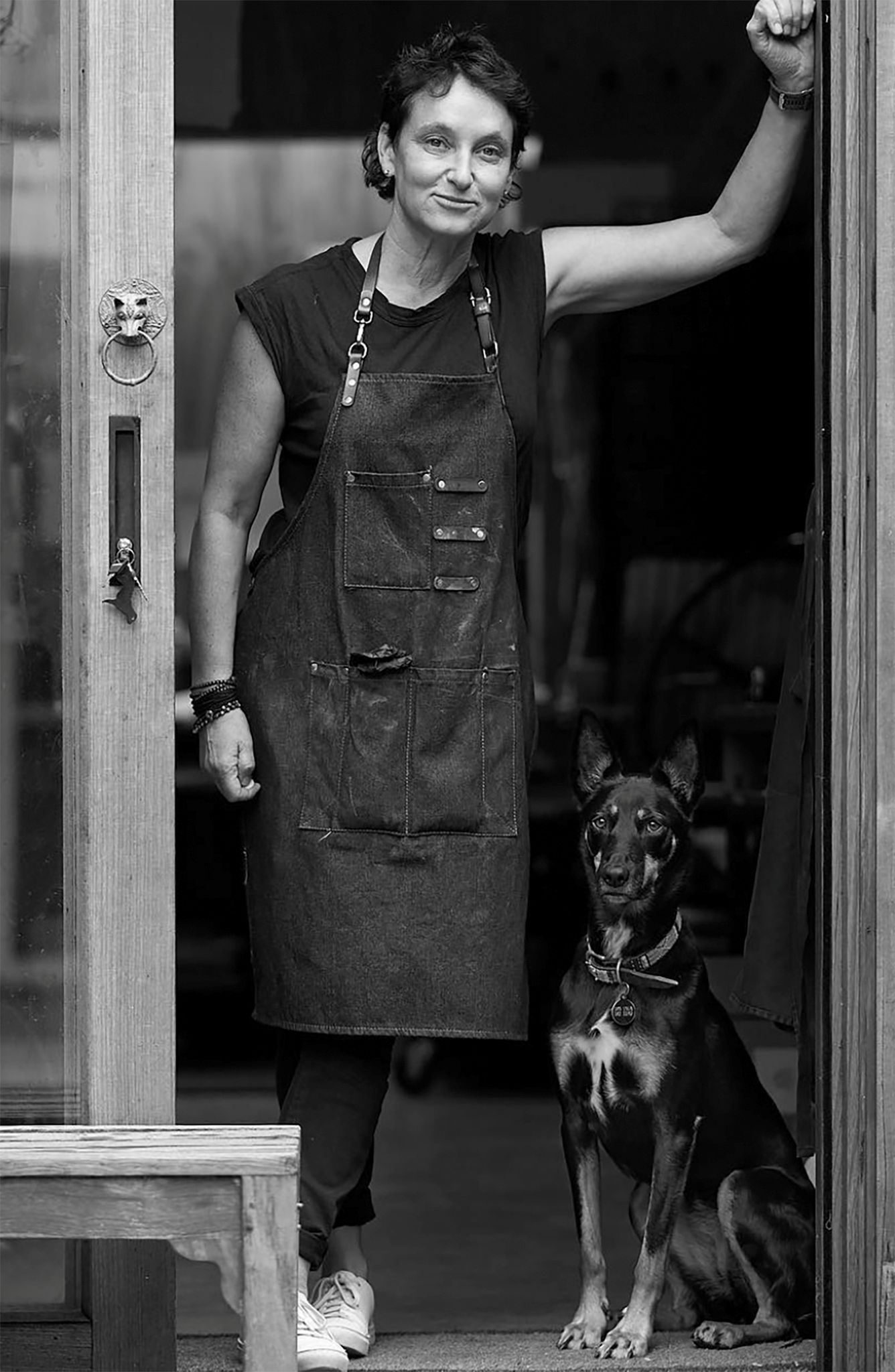

Deborah Williams © Handmade Films. Photo by Peter M. Lamont

Deborah Williams © Handmade Films. Photo by Peter M. Lamont
Old Grammarians Profiles
In this edition, we speak with two Old Grammarians whose journeys reflect the many different directions a Melbourne Girls Grammar education can take. Though their pathways have unfolded across different fields and continents, both share a common thread of curiosity, independence and a willingness to step into the unfamiliar.

From early experiences at MGGS through to leadership in art, science, healthcare and emerging technologies, their stories highlight how formative school years can shape not only future careers, but also the ways in which we think, create and contribute to the world around us. Please enjoy reading about the achievements of Old Grammarians Deborah Williams (1985) and Kate Gunn (1982).
From early experiences at MGGS through to leadership in art, science, healthcare and emerging technologies, their stories highlight how formative school years can shape not only future careers, but also the ways in which we think, create and contribute to the world around us. Please enjoy reading about the achievements of Old Grammarians Deborah Williams (1985) and Kate Gunn (1982).
From early experiences at MGGS through to leadership in art, science, healthcare and emerging technologies, their stories highlight how formative school years can shape not only future careers, but also the ways in which we think, create and contribute to the world around us. Please enjoy reading about the achievements of Old Grammarians Deborah Williams (1985) and Kate Gunn (1982).
Deborah Williams (1985)
Can you please tell us about your time at school? How did your schooling shape you?
My school years were not without their difficulties. Looking back, I think the education system of the time didn't always recognise the many ways students learn and thrive – something the education system has come a long way in recognising.
I also faced some personal challenges during those years, including navigating the social complexities that many young people encounter. Those experiences were tough in the moment, but they ultimately built in me a deeper sense of empathy that I hope I carry with me still.
What I do look back on with gratitude, however, are the friendships I formed. The connections I made during those years have proven to be some of the most enduring and meaningful of my life – people who knew me before I really knew myself, and who remain close to me still.
What parts of that environment still hold value for you? Has your perspective changed with time?
The value of community is what stays with me most. School is, at its heart, one of the first places we learn to exist alongside others – to navigate difference, to find our people, and to understand ourselves in relation to the world. That lesson has only grown in meaning as I've gotten older.
My perspective has certainly shifted with time. Things that felt significant then look different through the lens of lived experience. Some of the harder moments I can now recognise as quietly formative – they taught me more about resilience and empathy than I gave them credit for at the time.
I think I also have a greater appreciation now for the teachers and staff who showed genuine interest in their students. Those small moments of being seen and encouraged are the ones that linger longest.
Were you involved with art when you were at school?
Yes, very much so, and it played a significant role in shaping my path through school. Part of my reason for moving from Melbourne Girls Grammar to Carey was specifically to pursue art. At the time, the structure at MGGS required me to enrol in two Mathematics subjects and to pursue General Maths in Year 12, which left little room in my timetable for Art. Carey offered a single Maths pathway, and that difference was meaningful – it freed me up to dedicate one of my choices to Art, which is exactly what I wanted to do.
Looking back, I'm glad I had the clarity at that age to know what mattered to me and to make a change in pursuit of it.
Can you tell us about your path after you finished school?
I studied Bachelor of Fine Arts at Victoria College in Melbourne from 1987 to 1989, which was a formative period. I then completed a Diploma of Education at the University of Melbourne and went on to do Honours in Fine Art at RMIT. My first solo exhibition was in 1993, so I was already showing work while still studying. Much later – between 2006 and 2011 – I completed a Master of Fine Arts by Research at the National Art School in Sydney. It's been a long, layered path, and I've always pursued formal learning alongside my practice rather than instead of it. I am currently pursuing a PhD at RMIT University.
Your current work revolves around the canine-human relationship. What first drew you to this?
It grew from observation and questioning, really. When I began looking closely at the dogs around me, I found myself asking whether we ever truly see them for what they are – as separate, sentient beings in their own right.
What I observed was that our feelings for dogs, as loving as they are, tend to be filtered through a human lens. We anthropomorphise them; we bring them into our world rather than meeting them in theirs. That troubled me, and art became the way I worked through it.
I wanted to depict the dog as dog – stripped of artifice. Not as a companion or a symbol, not above, apart or beyond, but simply of its own. Captured in a moment. My work is concerned with the art of observation discrete from interaction – the essence of identity seen apart from the herd. A sentient being with agency, on its own terms.
What would you say is the greatest influence on or inspiration for your work?
There are many artists who have had a profound impact on me over the years – Albrecht Dürer, Francisco Goya, Käthe Kollwitz and Paula Rego, to name a few. Noel Counihan has been a constant. I was fortunate to grow up with his linocut The Hunger (1959), and his belief that printmaking was a socialist art form – easier to disseminate to the masses – had a direct impact on my decision to study printmaking. His images keep me grounded. They challenge me to keep reflecting.
Then there are the dogs themselves. I travel to remote places and observe dogs across very different cultures and circumstances, and that constantly informs my practice. Dogs in contexts where they are not pets, where they are neither owned nor cared for, reveal something about their essential nature – and about us.
How do you know when a piece is finished?
That's one of the great mysteries of making. With printmaking, there's a built-in dialogue – proofing the matrix as the image evolves becomes a record of my thinking. Each proof is a critique. But finished? I think a piece is finished when it stops needing me. When it begins to hold its own – to create what I call a mutual gaze, where the work looks back at the viewer. That moment of exchange is what I work toward.
Are there pieces you feel connected to and struggle to part with?
Yes, though I think the attachment is less about possessing the work and more about what it represents – a particular moment of understanding, or a risk taken. Some pieces feel like turning points. Those are the ones you hold onto a little longer.
How much of a role does routine play in your life and career? What kind of environment do you work best in?
Routine is important for me – the studio demands a kind of discipline, particularly with intaglio printmaking, which is physically demanding and technically complex. I have a home print workshop, which I love for its intimacy. But I also think travel disrupts routine in productive ways. Visiting remote places, observing dogs in different cultural contexts – that disruption feeds the work enormously.
Deborah Williams (1985)
Can you please tell us about your time at school? How did your schooling shape you?
My school years were not without their difficulties. Looking back, I think the education system of the time didn't always recognise the many ways students learn and thrive – something the education system has come a long way in recognising.
I also faced some personal challenges during those years, including navigating the social complexities that many young people encounter. Those experiences were tough in the moment, but they ultimately built in me a deeper sense of empathy that I hope I carry with me still.
What I do look back on with gratitude, however, are the friendships I formed. The connections I made during those years have proven to be some of the most enduring and meaningful of my life – people who knew me before I really knew myself, and who remain close to me still.
What parts of that environment still hold value for you? Has your perspective changed with time?
The value of community is what stays with me most. School is, at its heart, one of the first places we learn to exist alongside others – to navigate difference, to find our people, and to understand ourselves in relation to the world. That lesson has only grown in meaning as I've gotten older.
My perspective has certainly shifted with time. Things that felt significant then look different through the lens of lived experience. Some of the harder moments I can now recognise as quietly formative – they taught me more about resilience and empathy than I gave them credit for at the time.
I think I also have a greater appreciation now for the teachers and staff who showed genuine interest in their students. Those small moments of being seen and encouraged are the ones that linger longest.
Were you involved with art when you were at school?
Yes, very much so, and it played a significant role in shaping my path through school. Part of my reason for moving from Melbourne Girls Grammar to Carey was specifically to pursue art. At the time, the structure at MGGS required me to enrol in two Mathematics subjects and to pursue General Maths in Year 12, which left little room in my timetable for Art. Carey offered a single Maths pathway, and that difference was meaningful – it freed me up to dedicate one of my choices to Art, which is exactly what I wanted to do.
Looking back, I'm glad I had the clarity at that age to know what mattered to me and to make a change in pursuit of it.
Can you tell us about your path after you finished school?
I studied Bachelor of Fine Arts at Victoria College in Melbourne from 1987 to 1989, which was a formative period. I then completed a Diploma of Education at the University of Melbourne and went on to do Honours in Fine Art at RMIT. My first solo exhibition was in 1993, so I was already showing work while still studying. Much later – between 2006 and 2011 – I completed a Master of Fine Arts by Research at the National Art School in Sydney. It's been a long, layered path, and I've always pursued formal learning alongside my practice rather than instead of it. I am currently pursuing a PhD at RMIT University.
Your current work revolves around the canine-human relationship. What first drew you to this?
It grew from observation and questioning, really. When I began looking closely at the dogs around me, I found myself asking whether we ever truly see them for what they are – as separate, sentient beings in their own right.
What I observed was that our feelings for dogs, as loving as they are, tend to be filtered through a human lens. We anthropomorphise them; we bring them into our world rather than meeting them in theirs. That troubled me, and art became the way I worked through it.
I wanted to depict the dog as dog – stripped of artifice. Not as a companion or a symbol, not above, apart or beyond, but simply of its own. Captured in a moment. My work is concerned with the art of observation discrete from interaction – the essence of identity seen apart from the herd. A sentient being with agency, on its own terms.
What would you say is the greatest influence on or inspiration for your work?
There are many artists who have had a profound impact on me over the years – Albrecht Dürer, Francisco Goya, Käthe Kollwitz and Paula Rego, to name a few. Noel Counihan has been a constant. I was fortunate to grow up with his linocut The Hunger (1959), and his belief that printmaking was a socialist art form – easier to disseminate to the masses – had a direct impact on my decision to study printmaking. His images keep me grounded. They challenge me to keep reflecting.
Then there are the dogs themselves. I travel to remote places and observe dogs across very different cultures and circumstances, and that constantly informs my practice. Dogs in contexts where they are not pets, where they are neither owned nor cared for, reveal something about their essential nature – and about us.
How do you know when a piece is finished?
That's one of the great mysteries of making. With printmaking, there's a built-in dialogue – proofing the matrix as the image evolves becomes a record of my thinking. Each proof is a critique. But finished? I think a piece is finished when it stops needing me. When it begins to hold its own – to create what I call a mutual gaze, where the work looks back at the viewer. That moment of exchange is what I work toward.
Are there pieces you feel connected to and struggle to part with?
Yes, though I think the attachment is less about possessing the work and more about what it represents – a particular moment of understanding, or a risk taken. Some pieces feel like turning points. Those are the ones you hold onto a little longer.
How much of a role does routine play in your life and career? What kind of environment do you work best in?
Routine is important for me – the studio demands a kind of discipline, particularly with intaglio printmaking, which is physically demanding and technically complex. I have a home print workshop, which I love for its intimacy. But I also think travel disrupts routine in productive ways. Visiting remote places, observing dogs in different cultural contexts – that disruption feeds the work enormously.
Deborah Williams (1985)
Can you please tell us about your time at school? How did your schooling shape you?
My school years were not without their difficulties. Looking back, I think the education system of the time didn't always recognise the many ways students learn and thrive – something the education system has come a long way in recognising.
I also faced some personal challenges during those years, including navigating the social complexities that many young people encounter. Those experiences were tough in the moment, but they ultimately built in me a deeper sense of empathy that I hope I carry with me still.
What I do look back on with gratitude, however, are the friendships I formed. The connections I made during those years have proven to be some of the most enduring and meaningful of my life – people who knew me before I really knew myself, and who remain close to me still.
What parts of that environment still hold value for you? Has your perspective changed with time?
The value of community is what stays with me most. School is, at its heart, one of the first places we learn to exist alongside others – to navigate difference, to find our people, and to understand ourselves in relation to the world. That lesson has only grown in meaning as I've gotten older.
My perspective has certainly shifted with time. Things that felt significant then look different through the lens of lived experience. Some of the harder moments I can now recognise as quietly formative – they taught me more about resilience and empathy than I gave them credit for at the time.
I think I also have a greater appreciation now for the teachers and staff who showed genuine interest in their students. Those small moments of being seen and encouraged are the ones that linger longest.
Were you involved with art when you were at school?
Yes, very much so, and it played a significant role in shaping my path through school. Part of my reason for moving from Melbourne Girls Grammar to Carey was specifically to pursue art. At the time, the structure at MGGS required me to enrol in two Mathematics subjects and to pursue General Maths in Year 12, which left little room in my timetable for Art. Carey offered a single Maths pathway, and that difference was meaningful – it freed me up to dedicate one of my choices to Art, which is exactly what I wanted to do.
Looking back, I'm glad I had the clarity at that age to know what mattered to me and to make a change in pursuit of it.
Can you tell us about your path after you finished school?
I studied Bachelor of Fine Arts at Victoria College in Melbourne from 1987 to 1989, which was a formative period. I then completed a Diploma of Education at the University of Melbourne and went on to do Honours in Fine Art at RMIT. My first solo exhibition was in 1993, so I was already showing work while still studying. Much later – between 2006 and 2011 – I completed a Master of Fine Arts by Research at the National Art School in Sydney. It's been a long, layered path, and I've always pursued formal learning alongside my practice rather than instead of it. I am currently pursuing a PhD at RMIT University.
Your current work revolves around the canine-human relationship. What first drew you to this?
It grew from observation and questioning, really. When I began looking closely at the dogs around me, I found myself asking whether we ever truly see them for what they are – as separate, sentient beings in their own right.
What I observed was that our feelings for dogs, as loving as they are, tend to be filtered through a human lens. We anthropomorphise them; we bring them into our world rather than meeting them in theirs. That troubled me, and art became the way I worked through it.
I wanted to depict the dog as dog – stripped of artifice. Not as a companion or a symbol, not above, apart or beyond, but simply of its own. Captured in a moment. My work is concerned with the art of observation discrete from interaction – the essence of identity seen apart from the herd. A sentient being with agency, on its own terms.
What would you say is the greatest influence on or inspiration for your work?
There are many artists who have had a profound impact on me over the years – Albrecht Dürer, Francisco Goya, Käthe Kollwitz and Paula Rego, to name a few. Noel Counihan has been a constant. I was fortunate to grow up with his linocut The Hunger (1959), and his belief that printmaking was a socialist art form – easier to disseminate to the masses – had a direct impact on my decision to study printmaking. His images keep me grounded. They challenge me to keep reflecting.
Then there are the dogs themselves. I travel to remote places and observe dogs across very different cultures and circumstances, and that constantly informs my practice. Dogs in contexts where they are not pets, where they are neither owned nor cared for, reveal something about their essential nature – and about us.
How do you know when a piece is finished?
That's one of the great mysteries of making. With printmaking, there's a built-in dialogue – proofing the matrix as the image evolves becomes a record of my thinking. Each proof is a critique. But finished? I think a piece is finished when it stops needing me. When it begins to hold its own – to create what I call a mutual gaze, where the work looks back at the viewer. That moment of exchange is what I work toward.
Are there pieces you feel connected to and struggle to part with?
Yes, though I think the attachment is less about possessing the work and more about what it represents – a particular moment of understanding, or a risk taken. Some pieces feel like turning points. Those are the ones you hold onto a little longer.
How much of a role does routine play in your life and career? What kind of environment do you work best in?
Routine is important for me – the studio demands a kind of discipline, particularly with intaglio printmaking, which is physically demanding and technically complex. I have a home print workshop, which I love for its intimacy. But I also think travel disrupts routine in productive ways. Visiting remote places, observing dogs in different cultural contexts – that disruption feeds the work enormously.
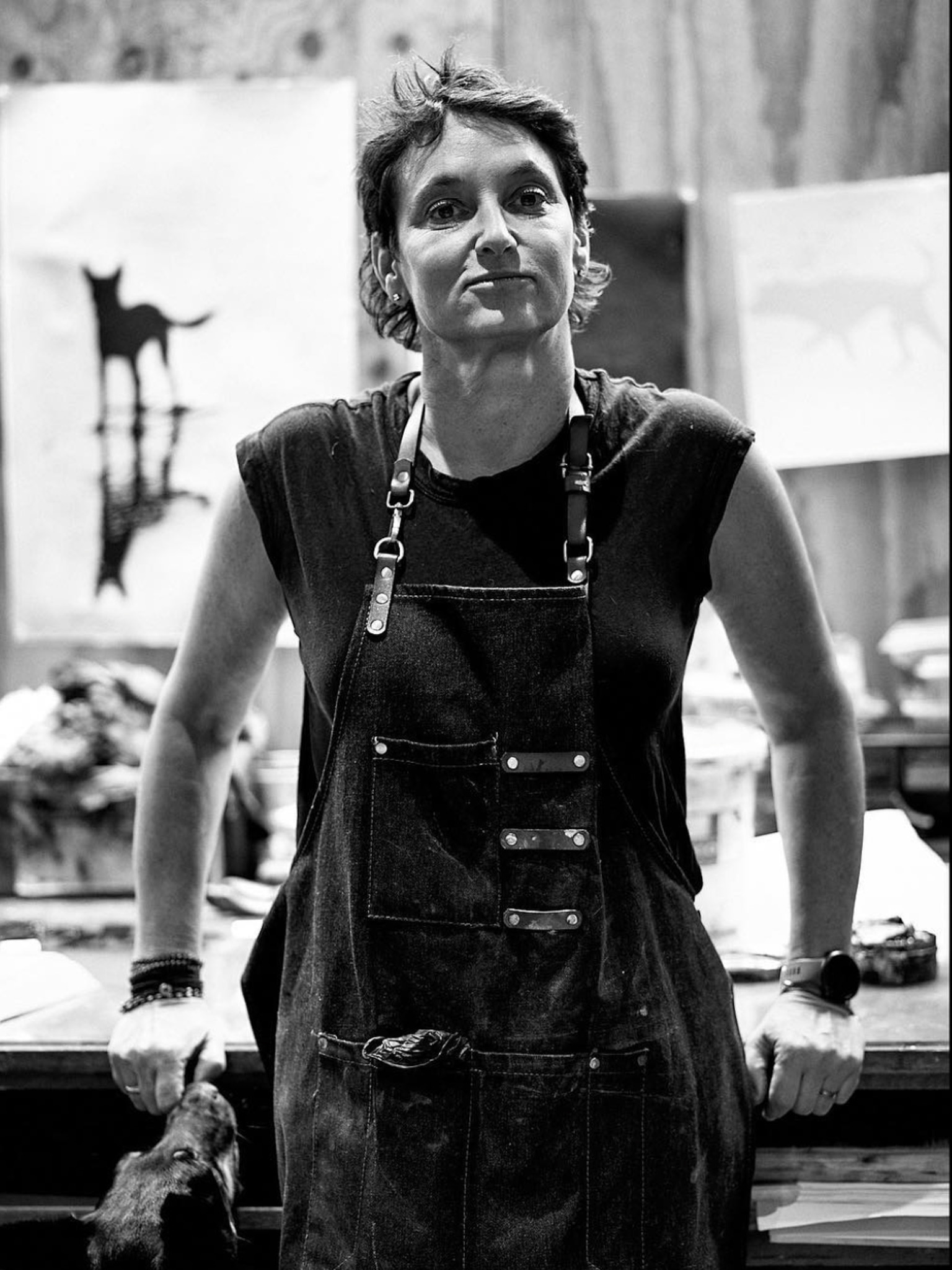
© Handmade Films. Photo by Peter M. Lamont
© Handmade Films. Photo by Peter M. Lamont
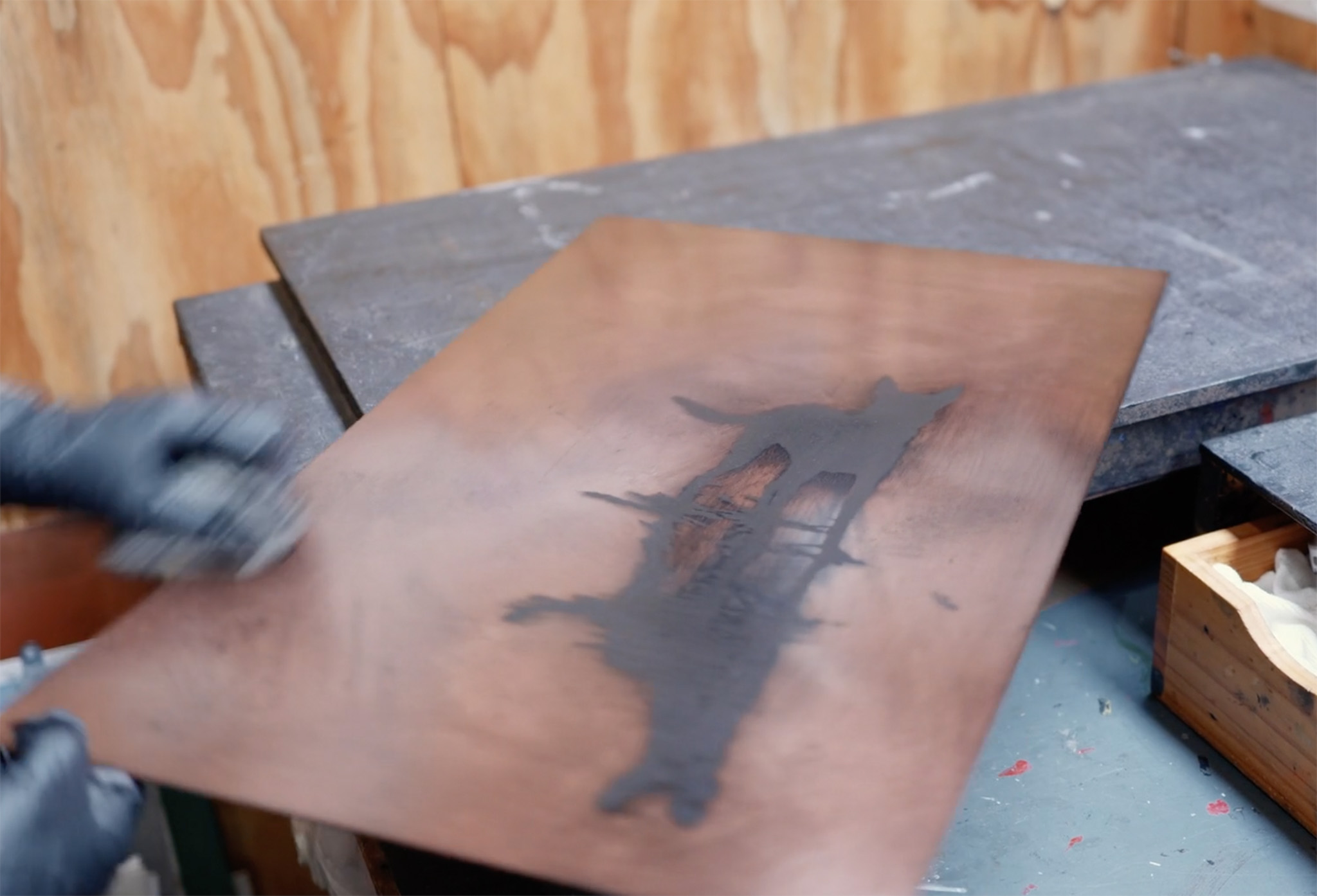
© Handmade Films. Photo by Peter M. Lamont
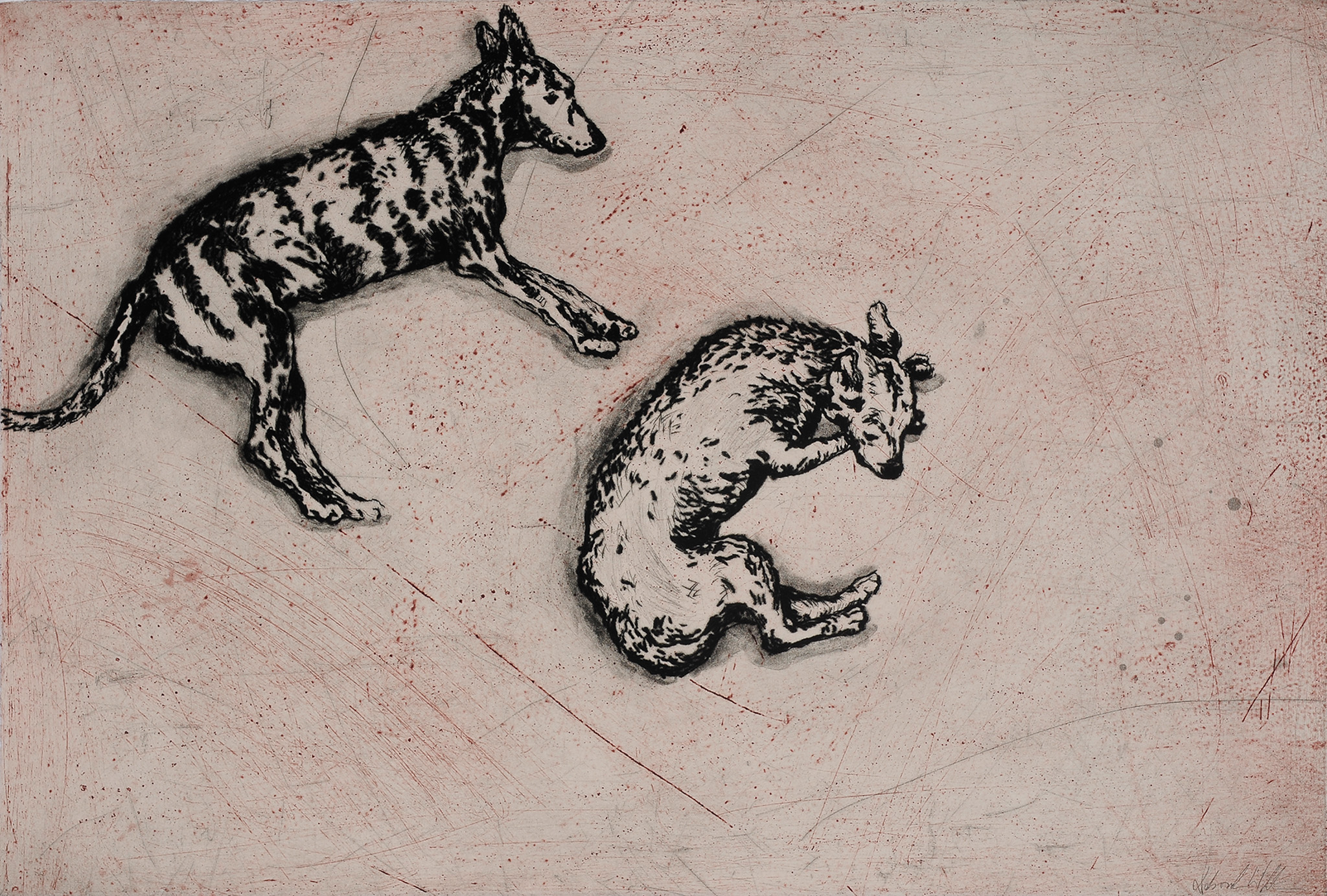
© Handmade Films. Photo by Peter M. Lamont
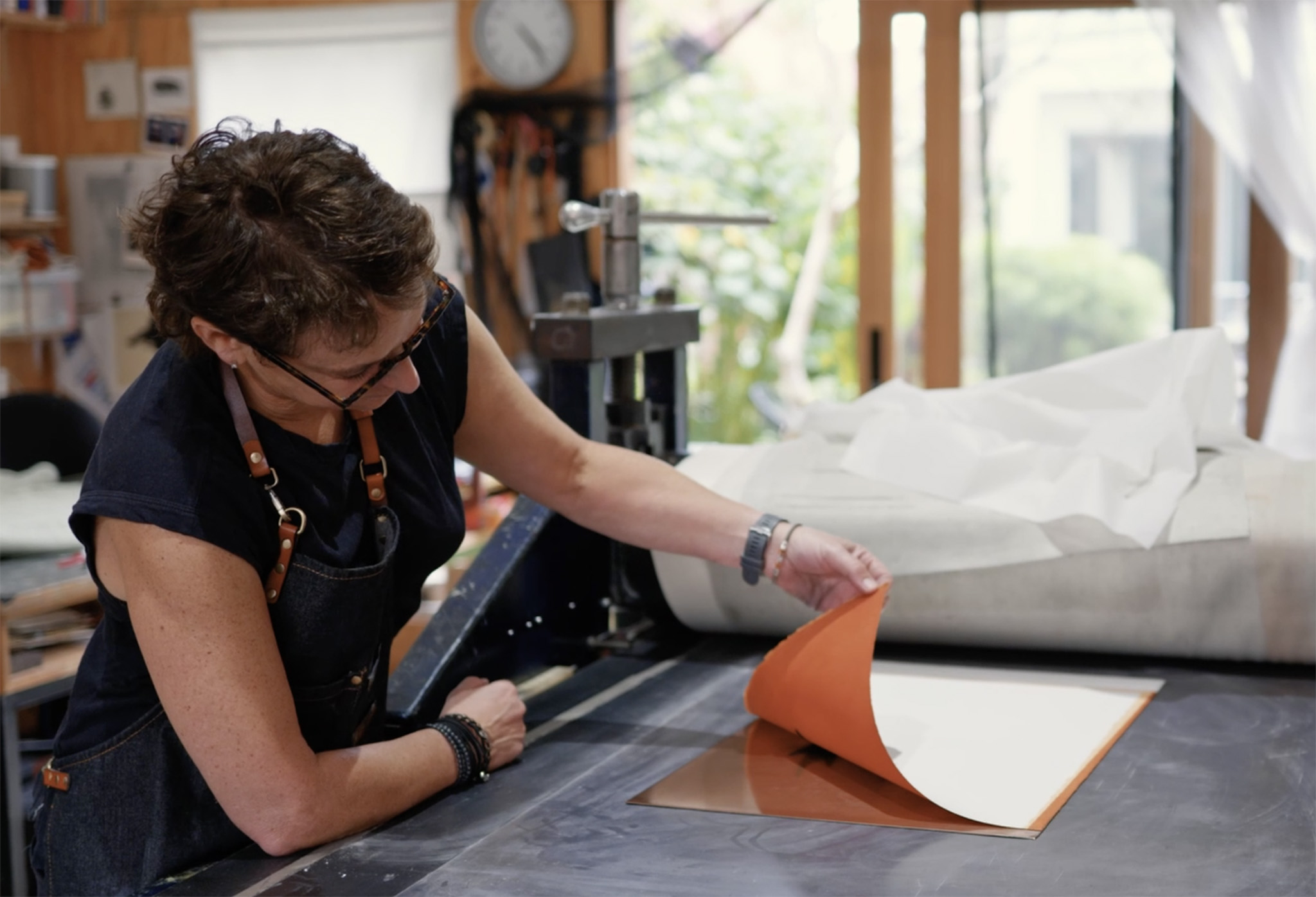
© Handmade Films. Photo by Peter M. Lamont
You are also working on a PhD on this topic. Can you talk to us about that?
The PhD is an extension of questions I have been pursuing for decades – around canine sentience, agency, and what it means to represent the dog as subject rather than object. What does it mean to truly depict another being's interiority? The research gives me a formal framework for ideas that have always driven my practice, and it is exciting to be in that rigorous, questioning space again.
At its core, my practice investigates the relationship between human and canine perceptual worlds. I work to challenge the assumption that we are always at the centre – that everything, including the animals we live alongside, is understood only in relation to us.
You are a lecturer at RMIT. How do you draw on your own educational experience when teaching?
More than I expected if I am honest. Particularly the understanding that learning is rarely linear, and that mistakes are not failures but imperative information.
My philosophy, which I share with students from the very beginning, is simple: embrace your mistakes. In printmaking, that's not just a mindset – it's a technical reality. What comes off the press is sometimes a revelation precisely because it isn't what you planned. I want students to develop the resilience to work with what they have, rather than against it.
How do you inspire your students and help them cultivate their talents?
My aim is to create a genuinely curious environment – one where every student builds a real relationship with their own practice. Something that feels authentically theirs, that they can develop and defend long after they have left university.
One of the things I encounter regularly is students arriving with the belief that they can't draw. My response is always the same: every single person can draw – we simply draw differently. Releasing students from that fixed idea is often where things begin to open.
Reflection is central to how I teach. I encourage students to look at their work honestly, to ask what isn't working and to think carefully about how to address it. That habit of honest, constructive self-reflection is both a creative tool and a life skill – and I think it's one of the most valuable things a student can leave with.
Can you talk a little about AI and art? What impact do you think AI will have on the creative world?
It's a conversation the art world can't avoid, and I think it's important to engage with it honestly rather than defensively.
The questions it raises – about authorship, about creativity, about the value of process – aren't new. When digital tools like Photoshop arrived, there was, in some areas, real alarm. In time they became just tools. But I'm not convinced AI is simply the next version of that. It feels different, and I think we need to be honest about that.
What worries me most is what we risk losing as thinkers. Creativity isn't just something you produce – it's something you develop, through sitting with hard questions, through getting things wrong, through the kind of sustained curiosity that takes time. If we start outsourcing that, I genuinely worry that we lose the ability to think creatively at all. Not just in art. More broadly.
In my teaching, I see how much students learn through struggle. That's not something AI can replicate.
How do you navigate your three roles concurrently — student, teacher, artist?
They feed each other more than they compete. Being a student again, pursuing a PhD, keeps me humble and curious. Teaching forces me to articulate what I know, which clarifies my practice. And the practice itself is the engine that drives everything. If I stopped making work, I suspect I would lose the drive for the other roles.
What does success look like to you?
Success, for me, is work that generates genuine connection – where a viewer pauses, looks closely and experiences something they didn't expect. It's also work that holds its integrity over time, that doesn't feel like a compromise. And perhaps most simply: being able to keep making. The ability to sustain a practice – financially, emotionally, creatively – is itself a form of success that I don't take for granted.
What has been the most challenging moment as an artist so far?
Sustaining a practice across decades is its own slow challenge – the financial pressures, the self-doubt, the question of whether what you're doing matters. There are also the practical ones: navigating the art world as a print informed practitioner, when print is sometimes treated as a lesser form. But I've found those challenges clarifying. They force you back to the question of why you make, and if the answer is still true, you continue.
How do you define freedom in your work and life?
In life, freedom is having enough room to observe and to be curious. But it's also something more internal – the ease that comes from meaningful relationships and from not being ruled by pressure or expectation. Contentment, I suppose. That feels like its own kind of freedom.
How about your down time? How do you spend your time away from work?
Ocean swimming is a big part of it, alongside my swimming squad. The two offer something quite different – open water has a surrender to it that clears everything else away – but the squad brings its own rewards: community, rigour and the quiet discipline of early mornings. There is a lot of thinking time in a pool lane. In their own ways, both feel like a genuine escape.
Beyond that, time with my family (Kin) and friends is everything. Those relationships are where I refuel.
What are your plans for the future?
Recover from my most recent exhibition, and completing the PhD is a significant focus. Beyond that, I want to keep travelling, keep looking and see where the questions lead.
What are you most looking forward to?
Right now, I am very much looking forward to swimming around Milos island in Greece. It sits at that perfect intersection of everything I love – open water, travel, and the kind of unhurried attention to the world around me that I find hardest to hold onto in daily life.
More broadly, I think what I am most looking forward to is what I always am – the next question. In my work, in my swimming, in my travels. That sense that there is always something worth being curious about feels like a very good reason to get up in the morning.
If you had any advice for an aspiring artist, what would it be?
Be patient with yourself and rigorous with your work. Develop a genuine question – something that truly compels you – and follow it with discipline. Don't wait for permission or validation to begin. And embrace your mistakes. Sometimes what you make is a revelation precisely because it surprised you. That's where the real work lives
You are also working on a PhD on this topic. Can you talk to us about that?
The PhD is an extension of questions I have been pursuing for decades – around canine sentience, agency, and what it means to represent the dog as subject rather than object. What does it mean to truly depict another being's interiority? The research gives me a formal framework for ideas that have always driven my practice, and it is exciting to be in that rigorous, questioning space again.
At its core, my practice investigates the relationship between human and canine perceptual worlds. I work to challenge the assumption that we are always at the centre – that everything, including the animals we live alongside, is understood only in relation to us.
You are a lecturer at RMIT. How do you draw on your own educational experience when teaching?
More than I expected if I am honest. Particularly the understanding that learning is rarely linear, and that mistakes are not failures but imperative information.
My philosophy, which I share with students from the very beginning, is simple: embrace your mistakes. In printmaking, that's not just a mindset – it's a technical reality. What comes off the press is sometimes a revelation precisely because it isn't what you planned. I want students to develop the resilience to work with what they have, rather than against it.
How do you inspire your students and help them cultivate their talents?
My aim is to create a genuinely curious environment – one where every student builds a real relationship with their own practice. Something that feels authentically theirs, that they can develop and defend long after they have left university.
One of the things I encounter regularly is students arriving with the belief that they can't draw. My response is always the same: every single person can draw – we simply draw differently. Releasing students from that fixed idea is often where things begin to open.
Reflection is central to how I teach. I encourage students to look at their work honestly, to ask what isn't working and to think carefully about how to address it. That habit of honest, constructive self-reflection is both a creative tool and a life skill – and I think it's one of the most valuable things a student can leave with.
Can you talk a little about AI and art? What impact do you think AI will have on the creative world?
It's a conversation the art world can't avoid, and I think it's important to engage with it honestly rather than defensively.
The questions it raises – about authorship, about creativity, about the value of process – aren't new. When digital tools like Photoshop arrived, there was, in some areas, real alarm. In time they became just tools. But I'm not convinced AI is simply the next version of that. It feels different, and I think we need to be honest about that.
What worries me most is what we risk losing as thinkers. Creativity isn't just something you produce – it's something you develop, through sitting with hard questions, through getting things wrong, through the kind of sustained curiosity that takes time. If we start outsourcing that, I genuinely worry that we lose the ability to think creatively at all. Not just in art. More broadly.
In my teaching, I see how much students learn through struggle. That's not something AI can replicate.
How do you navigate your three roles concurrently — student, teacher, artist?
They feed each other more than they compete. Being a student again, pursuing a PhD, keeps me humble and curious. Teaching forces me to articulate what I know, which clarifies my practice. And the practice itself is the engine that drives everything. If I stopped making work, I suspect I would lose the drive for the other roles.
What does success look like to you?
Success, for me, is work that generates genuine connection – where a viewer pauses, looks closely and experiences something they didn't expect. It's also work that holds its integrity over time, that doesn't feel like a compromise. And perhaps most simply: being able to keep making. The ability to sustain a practice – financially, emotionally, creatively – is itself a form of success that I don't take for granted.
What has been the most challenging moment as an artist so far?
Sustaining a practice across decades is its own slow challenge – the financial pressures, the self-doubt, the question of whether what you're doing matters. There are also the practical ones: navigating the art world as a print informed practitioner, when print is sometimes treated as a lesser form. But I've found those challenges clarifying. They force you back to the question of why you make, and if the answer is still true, you continue.
How do you define freedom in your work and life?
In life, freedom is having enough room to observe and to be curious. But it's also something more internal – the ease that comes from meaningful relationships and from not being ruled by pressure or expectation. Contentment, I suppose. That feels like its own kind of freedom.
How about your down time? How do you spend your time away from work?
Ocean swimming is a big part of it, alongside my swimming squad. The two offer something quite different – open water has a surrender to it that clears everything else away – but the squad brings its own rewards: community, rigour and the quiet discipline of early mornings. There is a lot of thinking time in a pool lane. In their own ways, both feel like a genuine escape.
Beyond that, time with my family (Kin) and friends is everything. Those relationships are where I refuel.
What are your plans for the future?
Recover from my most recent exhibition, and completing the PhD is a significant focus. Beyond that, I want to keep travelling, keep looking and see where the questions lead.
What are you most looking forward to?
Right now, I am very much looking forward to swimming around Milos island in Greece. It sits at that perfect intersection of everything I love – open water, travel, and the kind of unhurried attention to the world around me that I find hardest to hold onto in daily life.
More broadly, I think what I am most looking forward to is what I always am – the next question. In my work, in my swimming, in my travels. That sense that there is always something worth being curious about feels like a very good reason to get up in the morning.
If you had any advice for an aspiring artist, what would it be?
Be patient with yourself and rigorous with your work. Develop a genuine question – something that truly compels you – and follow it with discipline. Don't wait for permission or validation to begin. And embrace your mistakes. Sometimes what you make is a revelation precisely because it surprised you. That's where the real work lives
You are also working on a PhD on this topic. Can you talk to us about that?
The PhD is an extension of questions I have been pursuing for decades – around canine sentience, agency, and what it means to represent the dog as subject rather than object. What does it mean to truly depict another being's interiority? The research gives me a formal framework for ideas that have always driven my practice, and it is exciting to be in that rigorous, questioning space again.
At its core, my practice investigates the relationship between human and canine perceptual worlds. I work to challenge the assumption that we are always at the centre – that everything, including the animals we live alongside, is understood only in relation to us.
You are a lecturer at RMIT. How do you draw on your own educational experience when teaching?
More than I expected if I am honest. Particularly the understanding that learning is rarely linear, and that mistakes are not failures but imperative information.
My philosophy, which I share with students from the very beginning, is simple: embrace your mistakes. In printmaking, that's not just a mindset – it's a technical reality. What comes off the press is sometimes a revelation precisely because it isn't what you planned. I want students to develop the resilience to work with what they have, rather than against it.
How do you inspire your students and help them cultivate their talents?
My aim is to create a genuinely curious environment – one where every student builds a real relationship with their own practice. Something that feels authentically theirs, that they can develop and defend long after they have left university.
One of the things I encounter regularly is students arriving with the belief that they can't draw. My response is always the same: every single person can draw – we simply draw differently. Releasing students from that fixed idea is often where things begin to open.
Reflection is central to how I teach. I encourage students to look at their work honestly, to ask what isn't working and to think carefully about how to address it. That habit of honest, constructive self-reflection is both a creative tool and a life skill – and I think it's one of the most valuable things a student can leave with.
Can you talk a little about AI and art? What impact do you think AI will have on the creative world?
It's a conversation the art world can't avoid, and I think it's important to engage with it honestly rather than defensively.
The questions it raises – about authorship, about creativity, about the value of process – aren't new. When digital tools like Photoshop arrived, there was, in some areas, real alarm. In time they became just tools. But I'm not convinced AI is simply the next version of that. It feels different, and I think we need to be honest about that.
What worries me most is what we risk losing as thinkers. Creativity isn't just something you produce – it's something you develop, through sitting with hard questions, through getting things wrong, through the kind of sustained curiosity that takes time. If we start outsourcing that, I genuinely worry that we lose the ability to think creatively at all. Not just in art. More broadly.
In my teaching, I see how much students learn through struggle. That's not something AI can replicate.
How do you navigate your three roles concurrently — student, teacher, artist?
They feed each other more than they compete. Being a student again, pursuing a PhD, keeps me humble and curious. Teaching forces me to articulate what I know, which clarifies my practice. And the practice itself is the engine that drives everything. If I stopped making work, I suspect I would lose the drive for the other roles.
What does success look like to you?
Success, for me, is work that generates genuine connection – where a viewer pauses, looks closely and experiences something they didn't expect. It's also work that holds its integrity over time, that doesn't feel like a compromise. And perhaps most simply: being able to keep making. The ability to sustain a practice – financially, emotionally, creatively – is itself a form of success that I don't take for granted.
What has been the most challenging moment as an artist so far?
Sustaining a practice across decades is its own slow challenge – the financial pressures, the self-doubt, the question of whether what you're doing matters. There are also the practical ones: navigating the art world as a print informed practitioner, when print is sometimes treated as a lesser form. But I've found those challenges clarifying. They force you back to the question of why you make, and if the answer is still true, you continue.
How do you define freedom in your work and life?
In life, freedom is having enough room to observe and to be curious. But it's also something more internal – the ease that comes from meaningful relationships and from not being ruled by pressure or expectation. Contentment, I suppose. That feels like its own kind of freedom.
How about your down time? How do you spend your time away from work?
Ocean swimming is a big part of it, alongside my swimming squad. The two offer something quite different – open water has a surrender to it that clears everything else away – but the squad brings its own rewards: community, rigour and the quiet discipline of early mornings. There is a lot of thinking time in a pool lane. In their own ways, both feel like a genuine escape.
Beyond that, time with my family (Kin) and friends is everything. Those relationships are where I refuel.
What are your plans for the future?
Recover from my most recent exhibition, and completing the PhD is a significant focus. Beyond that, I want to keep travelling, keep looking and see where the questions lead.
What are you most looking forward to?
Right now, I am very much looking forward to swimming around Milos island in Greece. It sits at that perfect intersection of everything I love – open water, travel, and the kind of unhurried attention to the world around me that I find hardest to hold onto in daily life.
More broadly, I think what I am most looking forward to is what I always am – the next question. In my work, in my swimming, in my travels. That sense that there is always something worth being curious about feels like a very good reason to get up in the morning.
If you had any advice for an aspiring artist, what would it be?
Be patient with yourself and rigorous with your work. Develop a genuine question – something that truly compels you – and follow it with discipline. Don't wait for permission or validation to begin. And embrace your mistakes. Sometimes what you make is a revelation precisely because it surprised you. That's where the real work lives
Kate Gunn (Smart 1982)
Tell us about your time at MGGS. What were your interests and your favourite subjects at school?
I arrived at Morris Hall in Year 1 and went on to spend 12 years at MGGS, so it was a significant part of my early life. I was drawn to a diverse mix of subjects, including Music, Chinese, and Information Technology, which reflected a broader curiosity about both creativity and how things work. I was also on the swim team with Kitty Chiller (1981), and we used to train at the same pool together in the mornings.
I still remember taking the very first IT class offered at the school in Year 10 and doing basic programming on Apple computers. At the time, it felt new and experimental but looking back it captured something that has stayed with me. I have always been an early adopter of technology, willing to step into the unknown and learn by doing. That willingness to explore is very much at the heart of entrepreneurship.
Interestingly, my career has ultimately taken me into the life and physical sciences, which were not the subjects I focused on at school. It is a good reminder that what you study early on does not define your path. It gives you a foundation, and from there, you build.
Do you have any memories from your time at School that were instrumental in fostering your interest in startups?
I was drawn to opportunities where I could think differently or build something from scratch, and I did know I would like to run my own business. In hindsight, the School’s encouragement of initiative and independent thinking was foundational.
A defining influence in my life was my mother, who instilled in me from an early age the belief that anything was possible, both in my career and in life. She set an expectation not of limitation, but of opportunity, and that perspective shaped how I approached every decision. That mindset was powerfully reinforced during my time at school, where there was a shared culture of ambition and independence. As a result, I never grew up feeling there was a glass ceiling; only the understanding that with effort, curiosity and resilience, I could pursue whatever I set out to achieve.
When you graduated, what did you do straight out of school?
My mother always provided advice on my early career and, amazingly (on reflection), I listened to her. She saw the two growth areas in the world were the rise of China, and the exponential growth of technology, and encouraged me towards both. After graduating, and while at the University of Melbourne, I worked on campus as a part-time bank teller. This then led me to working in technology and financial services roles with organisations such as HSBC and Morgan Stanley. These roles gave me a strong grounding in computers, systems, data and large-scale operations.
Can you tell us what you are currently working on?
I am the founder and Chief Executive Officer of Balance! Healthcare. We provide integrated multidisciplinary primary healthcare in NSW and QLD, and we also run an Urgent Care Clinic.
I am also now in the USA where I am working on AI, autonomous systems, and emerging and deep technology. My focus is on helping organisations scale, adopt AI responsibly, and develop strategies that connect innovation with real-world impact. I also mentor founders and work with deep tech ventures.
Deep technology refers to technologies built on fundamental scientific or engineering breakthroughs, rather than incremental software or business model innovation. Deep tech is about solving hard, complex problems at a foundational level, often rooted in disciplines like physics, biology, or advanced computing, and turning those breakthroughs into commercial products.
What took you to Phoenix, Arizona?
Relocating from Australia to the United States was a deliberate decision to step into a larger, more competitive market and challenge myself at a different level. The US offers scale, pace, and access to capital and innovation ecosystems that are difficult to replicate elsewhere, particularly in areas like AI and deep tech. For me, it was about stretching beyond what was familiar, accelerating my learning, and positioning myself where global ideas are developed and commercialised at speed.
Phoenix is a rapidly growing hub for technology, healthcare and innovation, set within one of the most striking landscapes in the country, including places like Grand Canyon. I was drawn here as much for the sense of adventure as for the opportunity to challenge myself and grow in my career.
Kate Gunn (Smart 1982)
Tell us about your time at MGGS. What were your interests and your favourite subjects at school?
I arrived at Morris Hall in Year 1 and went on to spend 12 years at MGGS, so it was a significant part of my early life. I was drawn to a diverse mix of subjects, including Music, Chinese, and Information Technology, which reflected a broader curiosity about both creativity and how things work. I was also on the swim team with Kitty Chiller (1981), and we used to train at the same pool together in the mornings.
I still remember taking the very first IT class offered at the school in Year 10 and doing basic programming on Apple computers. At the time, it felt new and experimental but looking back it captured something that has stayed with me. I have always been an early adopter of technology, willing to step into the unknown and learn by doing. That willingness to explore is very much at the heart of entrepreneurship.
Interestingly, my career has ultimately taken me into the life and physical sciences, which were not the subjects I focused on at school. It is a good reminder that what you study early on does not define your path. It gives you a foundation, and from there, you build.
Do you have any memories from your time at School that were instrumental in fostering your interest in startups?
I was drawn to opportunities where I could think differently or build something from scratch, and I did know I would like to run my own business. In hindsight, the School’s encouragement of initiative and independent thinking was foundational.
A defining influence in my life was my mother, who instilled in me from an early age the belief that anything was possible, both in my career and in life. She set an expectation not of limitation, but of opportunity, and that perspective shaped how I approached every decision. That mindset was powerfully reinforced during my time at school, where there was a shared culture of ambition and independence. As a result, I never grew up feeling there was a glass ceiling; only the understanding that with effort, curiosity and resilience, I could pursue whatever I set out to achieve.
When you graduated, what did you do straight out of school?
My mother always provided advice on my early career and, amazingly (on reflection), I listened to her. She saw the two growth areas in the world were the rise of China, and the exponential growth of technology, and encouraged me towards both. After graduating, and while at the University of Melbourne, I worked on campus as a part-time bank teller. This then led me to working in technology and financial services roles with organisations such as HSBC and Morgan Stanley. These roles gave me a strong grounding in computers, systems, data and large-scale operations.
Can you tell us what you are currently working on?
I am the founder and Chief Executive Officer of Balance! Healthcare. We provide integrated multidisciplinary primary healthcare in NSW and QLD, and we also run an Urgent Care Clinic.
I am also now in the USA where I am working on AI, autonomous systems, and emerging and deep technology. My focus is on helping organisations scale, adopt AI responsibly, and develop strategies that connect innovation with real-world impact. I also mentor founders and work with deep tech ventures.
Deep technology refers to technologies built on fundamental scientific or engineering breakthroughs, rather than incremental software or business model innovation. Deep tech is about solving hard, complex problems at a foundational level, often rooted in disciplines like physics, biology, or advanced computing, and turning those breakthroughs into commercial products.
What took you to Phoenix, Arizona?
Relocating from Australia to the United States was a deliberate decision to step into a larger, more competitive market and challenge myself at a different level. The US offers scale, pace, and access to capital and innovation ecosystems that are difficult to replicate elsewhere, particularly in areas like AI and deep tech. For me, it was about stretching beyond what was familiar, accelerating my learning, and positioning myself where global ideas are developed and commercialised at speed.
Phoenix is a rapidly growing hub for technology, healthcare and innovation, set within one of the most striking landscapes in the country, including places like Grand Canyon. I was drawn here as much for the sense of adventure as for the opportunity to challenge myself and grow in my career.
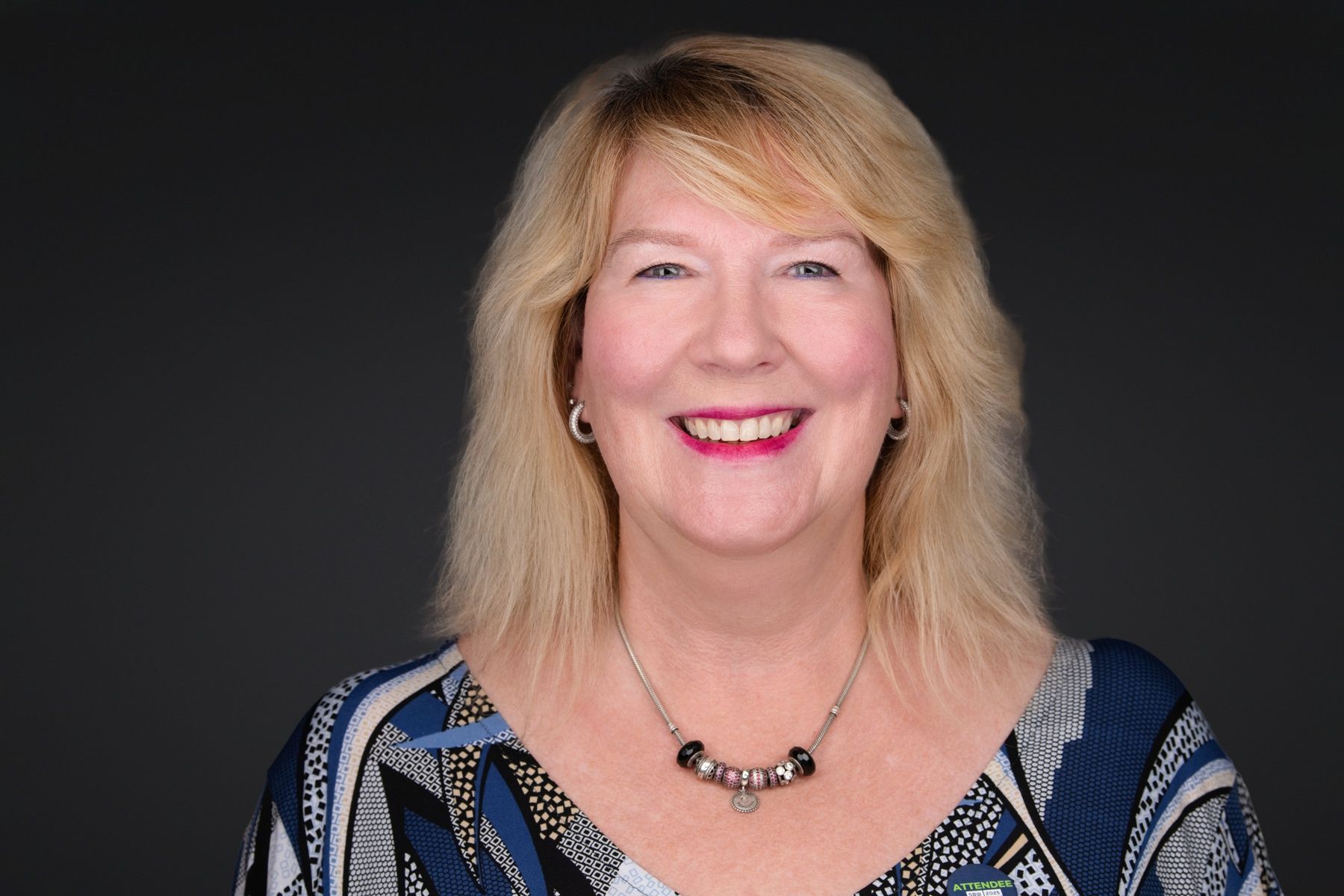
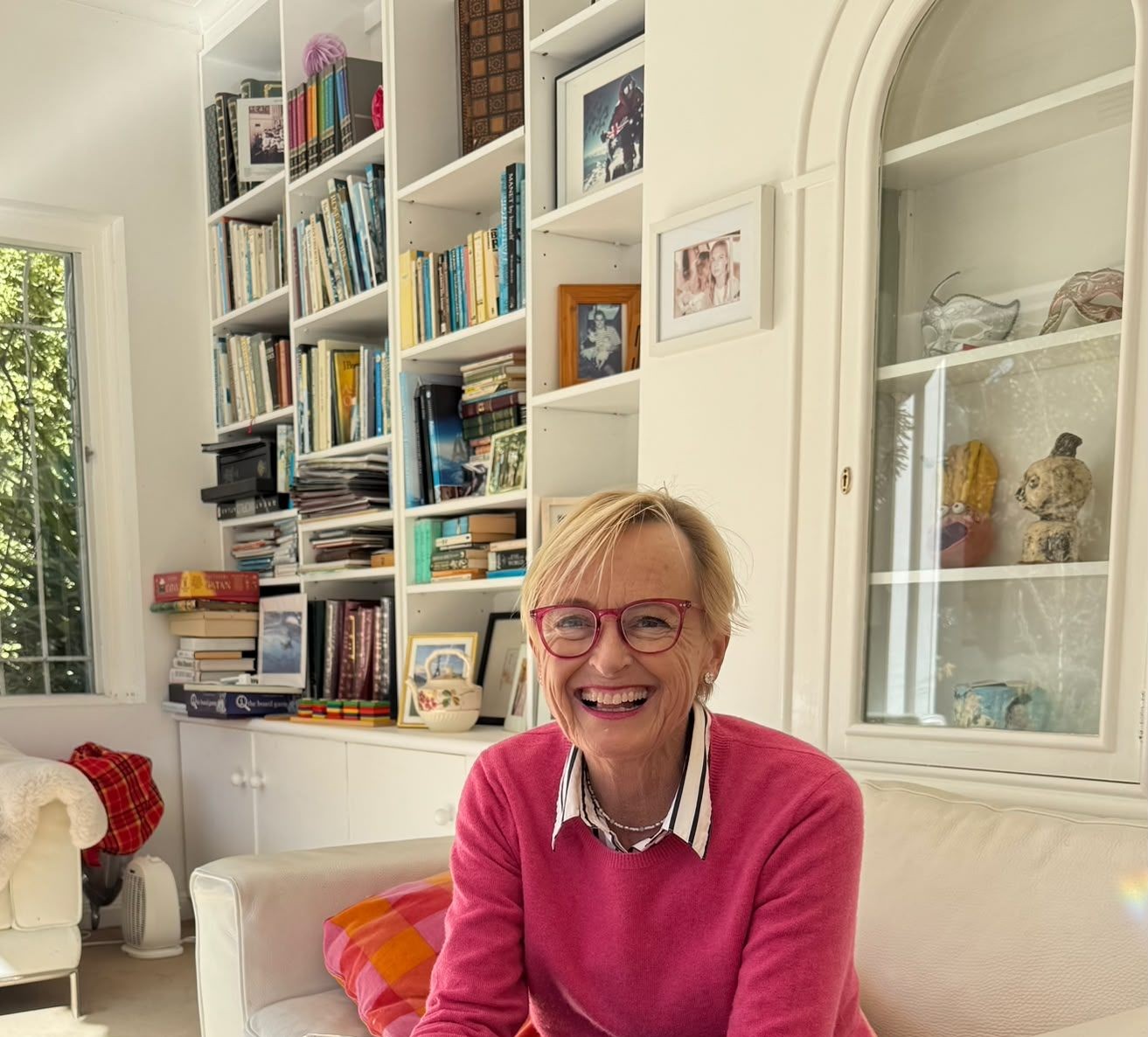
Kate Gunn
Kate Gunn
Kate Gunn
How did you break into AI?
My move into AI was an evolution rather than a single step. Having worked at the intersection of technology and operations, it became a natural extension of my work. What is clear now is that AI is fundamentally reshaping industries and how we work. It’s not a trend to observe from the sidelines, understanding and engaging with it will be essential as careers and organisations continue to evolve.
Startups are for the entrepreneurial-minded. Have you always been that way inclined?
Yes, I’ve always been comfortable with ambiguity and drawn to building rather than maintaining. That said, entrepreneurship is also developed over time through experience, resilience and learning to take calculated risks. The first step is the hardest, having the confidence to believe in yourself and your own abilities, to back yourself.
What do you enjoy most about the industry?
What I enjoy most about the AI industry is working in deep tech, where innovation is grounded in fundamental science (note – not what I studied at school!) and has the potential to create true, system-level change. It’s not just about incremental improvement. It is about solving complex problems in ways that can transform entire sectors, from healthcare to energy. Being part of that kind of progress, where technology can deliver meaningful and lasting impact for society, is incredibly motivating.
Is there something in AI you would suggest students at MGGS learn more about or pay particular attention to?
For students, my advice is to stay curious and adaptable. Build strong foundations in critical thinking and problem solving, develop a basic understanding of how AI works, and be willing to keep learning as the landscape changes. Start by using AI tools regularly and building a basic understanding of how they work, but recognise that AI is not just large language models (Chat GPT), it is rapidly evolving into agentic systems that can take actions and solve problems, so the key is to stay curious, read a lot, apply it to real-world tasks, and continuously adapt as the technology advances.
If someone wants to work in the AI and startup arena, how would you suggest they break in over the coming years?
If someone wants to work in AI and startups, it’s important to recognise that we are at the beginning of a broad shift where many industries will be redefined. Just as technologies like GPS and smartphones enabled entirely new business models such as Uber, AI will create new categories of companies that don’t yet exist.
The best way to break in is to understand both the technology and the industries it will transform. Stay close to real-world problems, experiment with AI tools, and look for opportunities where new capabilities can unlock entirely different ways of delivering value. The people who succeed will be those who can see what’s coming and move early.
What are you most excited about?
I’m most excited about the fundamental industrial transformation underway globally. AI and emerging technologies are reshaping entire industries, and it’s an extraordinary moment in history to be contributing to that change.
Where to next for you?
I’m continuing to expand my work in the US, particularly in AI, autonomous systems and deep tech. I’ve recently completed my board director certification and am now actively seeking paid board roles.
Throughout my career, I’ve found it incredibly important to have role models, people who demonstrate what is possible at the highest levels. For me, Robyn Denholm has been a standout example. Her leadership as Chair of Tesla reflects the kind of impact and governance I aspire to contribute.
Tell us a bit about what do you do on your downtime (if you have any?)
I enjoy exploring new places, attending events, and connecting with interesting people. Even in downtime, I tend to be learning or experiencing something new. I have now travelled to 38 US States and I'm on my way to visiting all 50 States. I also have a goal to visit all 63 US National Parks. And I have seen Bruno Mars perform twice in the past year.
How did you break into AI?
My move into AI was an evolution rather than a single step. Having worked at the intersection of technology and operations, it became a natural extension of my work. What is clear now is that AI is fundamentally reshaping industries and how we work. It’s not a trend to observe from the sidelines, understanding and engaging with it will be essential as careers and organisations continue to evolve.
Startups are for the entrepreneurial-minded. Have you always been that way inclined?
Yes, I’ve always been comfortable with ambiguity and drawn to building rather than maintaining. That said, entrepreneurship is also developed over time through experience, resilience and learning to take calculated risks. The first step is the hardest, having the confidence to believe in yourself and your own abilities, to back yourself.
What do you enjoy most about the industry?
What I enjoy most about the AI industry is working in deep tech, where innovation is grounded in fundamental science (note – not what I studied at school!) and has the potential to create true, system-level change. It’s not just about incremental improvement. It is about solving complex problems in ways that can transform entire sectors, from healthcare to energy. Being part of that kind of progress, where technology can deliver meaningful and lasting impact for society, is incredibly motivating.
Is there something in AI you would suggest students at MGGS learn more about or pay particular attention to?
For students, my advice is to stay curious and adaptable. Build strong foundations in critical thinking and problem solving, develop a basic understanding of how AI works, and be willing to keep learning as the landscape changes. Start by using AI tools regularly and building a basic understanding of how they work, but recognise that AI is not just large language models (Chat GPT), it is rapidly evolving into agentic systems that can take actions and solve problems, so the key is to stay curious, read a lot, apply it to real-world tasks, and continuously adapt as the technology advances.
If someone wants to work in the AI and startup arena, how would you suggest they break in over the coming years?
If someone wants to work in AI and startups, it’s important to recognise that we are at the beginning of a broad shift where many industries will be redefined. Just as technologies like GPS and smartphones enabled entirely new business models such as Uber, AI will create new categories of companies that don’t yet exist.
The best way to break in is to understand both the technology and the industries it will transform. Stay close to real-world problems, experiment with AI tools, and look for opportunities where new capabilities can unlock entirely different ways of delivering value. The people who succeed will be those who can see what’s coming and move early.
What are you most excited about?
I’m most excited about the fundamental industrial transformation underway globally. AI and emerging technologies are reshaping entire industries, and it’s an extraordinary moment in history to be contributing to that change.
Where to next for you?
I’m continuing to expand my work in the US, particularly in AI, autonomous systems and deep tech. I’ve recently completed my board director certification and am now actively seeking paid board roles.
Throughout my career, I’ve found it incredibly important to have role models, people who demonstrate what is possible at the highest levels. For me, Robyn Denholm has been a standout example. Her leadership as Chair of Tesla reflects the kind of impact and governance I aspire to contribute.
Tell us a bit about what do you do on your downtime (if you have any?)
I enjoy exploring new places, attending events, and connecting with interesting people. Even in downtime, I tend to be learning or experiencing something new. I have now travelled to 38 US States and I'm on my way to visiting all 50 States. I also have a goal to visit all 63 US National Parks. And I have seen Bruno Mars perform twice in the past year.
How did you break into AI?
My move into AI was an evolution rather than a single step. Having worked at the intersection of technology and operations, it became a natural extension of my work. What is clear now is that AI is fundamentally reshaping industries and how we work. It’s not a trend to observe from the sidelines, understanding and engaging with it will be essential as careers and organisations continue to evolve.
Startups are for the entrepreneurial-minded. Have you always been that way inclined?
Yes, I’ve always been comfortable with ambiguity and drawn to building rather than maintaining. That said, entrepreneurship is also developed over time through experience, resilience and learning to take calculated risks. The first step is the hardest, having the confidence to believe in yourself and your own abilities, to back yourself.
What do you enjoy most about the industry?
What I enjoy most about the AI industry is working in deep tech, where innovation is grounded in fundamental science (note – not what I studied at school!) and has the potential to create true, system-level change. It’s not just about incremental improvement. It is about solving complex problems in ways that can transform entire sectors, from healthcare to energy. Being part of that kind of progress, where technology can deliver meaningful and lasting impact for society, is incredibly motivating.
Is there something in AI you would suggest students at MGGS learn more about or pay particular attention to?
For students, my advice is to stay curious and adaptable. Build strong foundations in critical thinking and problem solving, develop a basic understanding of how AI works, and be willing to keep learning as the landscape changes. Start by using AI tools regularly and building a basic understanding of how they work, but recognise that AI is not just large language models (Chat GPT), it is rapidly evolving into agentic systems that can take actions and solve problems, so the key is to stay curious, read a lot, apply it to real-world tasks, and continuously adapt as the technology advances.
If someone wants to work in the AI and startup arena, how would you suggest they break in over the coming years?
If someone wants to work in AI and startups, it’s important to recognise that we are at the beginning of a broad shift where many industries will be redefined. Just as technologies like GPS and smartphones enabled entirely new business models such as Uber, AI will create new categories of companies that don’t yet exist.
The best way to break in is to understand both the technology and the industries it will transform. Stay close to real-world problems, experiment with AI tools, and look for opportunities where new capabilities can unlock entirely different ways of delivering value. The people who succeed will be those who can see what’s coming and move early.
What are you most excited about?
I’m most excited about the fundamental industrial transformation underway globally. AI and emerging technologies are reshaping entire industries, and it’s an extraordinary moment in history to be contributing to that change.
Where to next for you?
I’m continuing to expand my work in the US, particularly in AI, autonomous systems and deep tech. I’ve recently completed my board director certification and am now actively seeking paid board roles.
Throughout my career, I’ve found it incredibly important to have role models, people who demonstrate what is possible at the highest levels. For me, Robyn Denholm has been a standout example. Her leadership as Chair of Tesla reflects the kind of impact and governance I aspire to contribute.
Tell us a bit about what do you do on your downtime (if you have any?)
I enjoy exploring new places, attending events, and connecting with interesting people. Even in downtime, I tend to be learning or experiencing something new. I have now travelled to 38 US States and I'm on my way to visiting all 50 States. I also have a goal to visit all 63 US National Parks. And I have seen Bruno Mars perform twice in the past year.
.jpg)
Kate Gunn at AFP ICON 2026
Kate Gunn at AFP ICON 2026
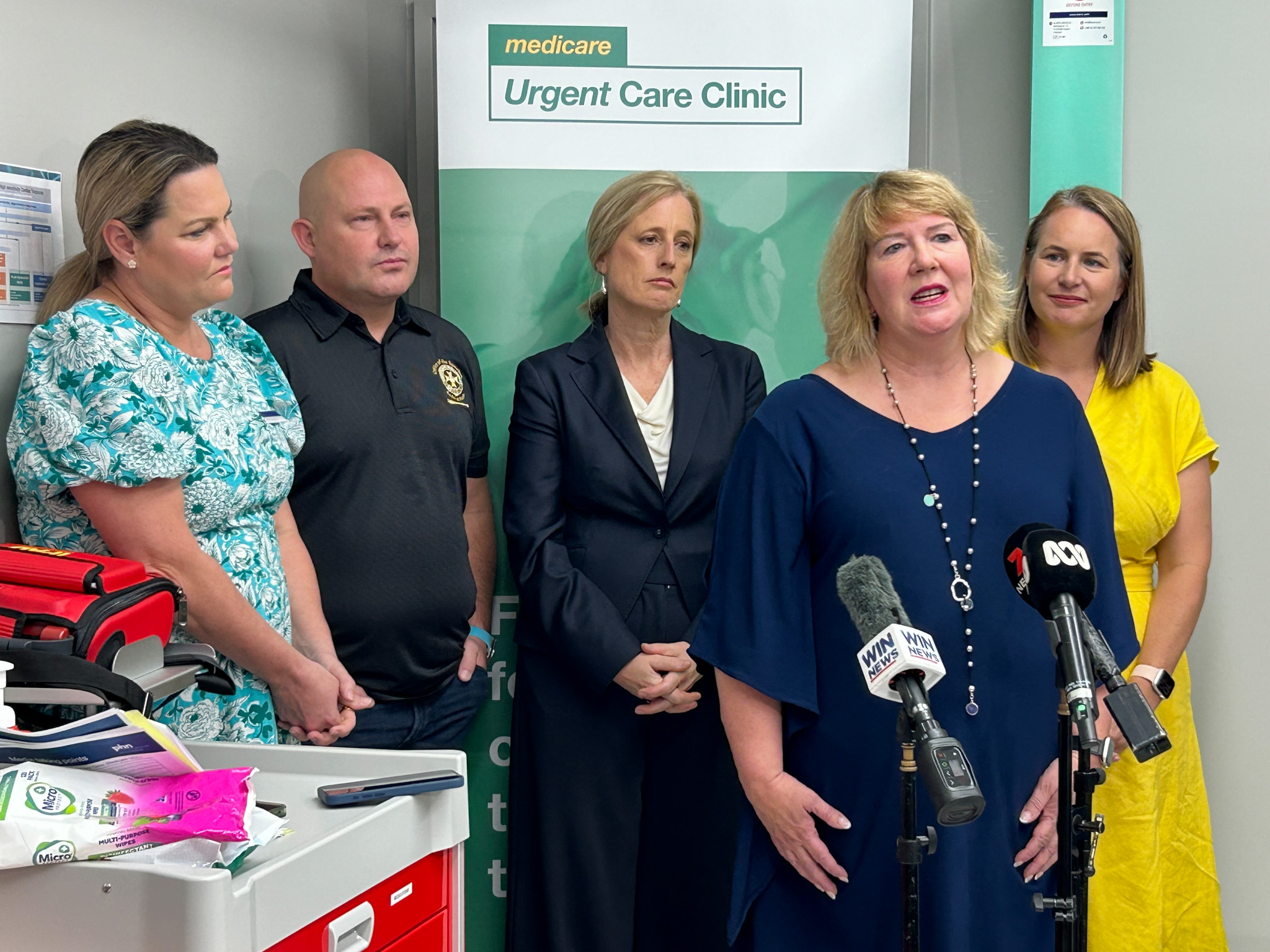
Kate Gunn speaking to media about Urgent Care Clinics
Kate Gunn at AFP ICON 2026
Kate Gunn speaking to media about Urgent Care Clinics