



.jpg)


.jpg)

.jpg)

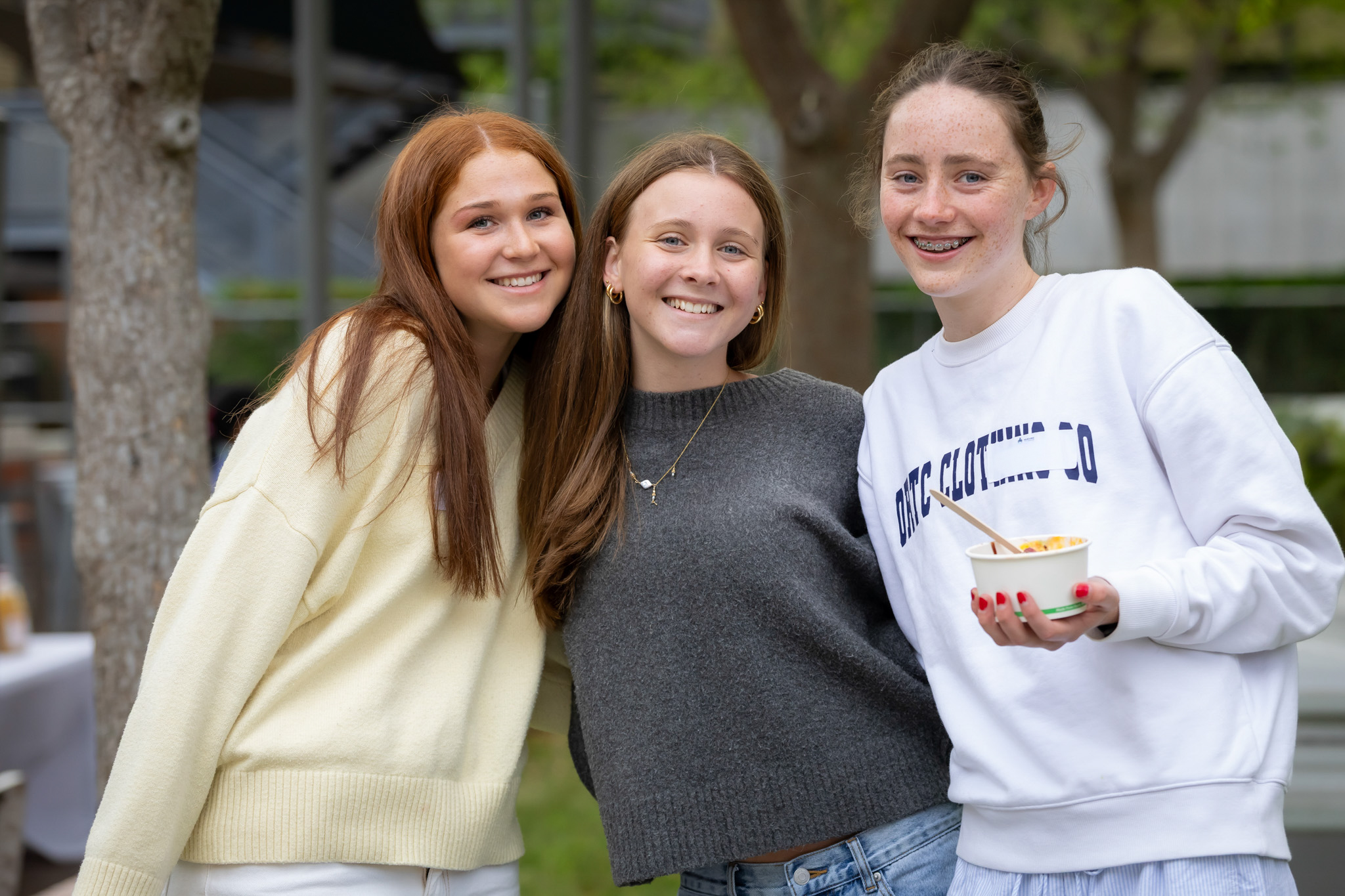
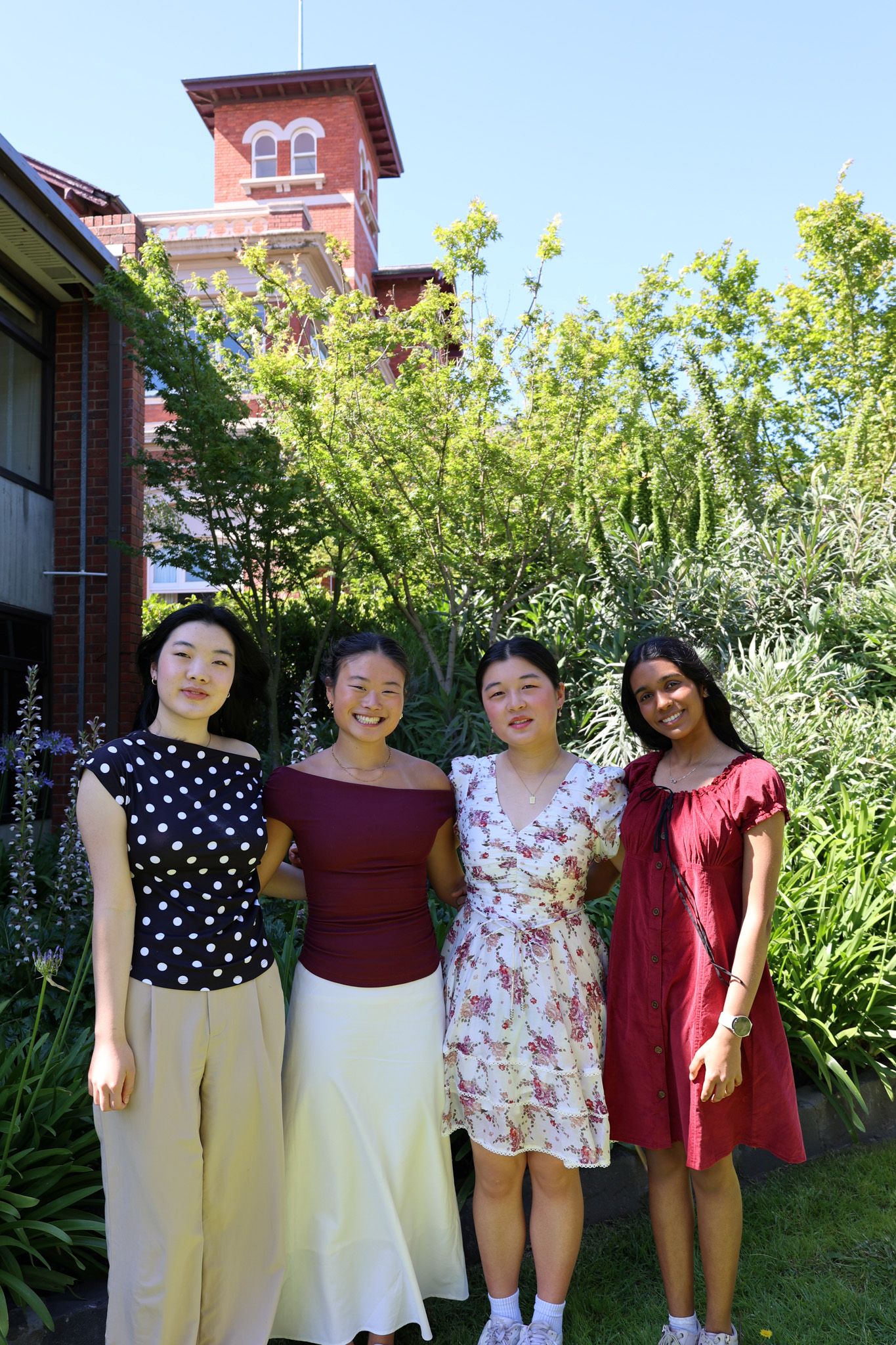
GSV Sports Leaders Breakfast L to R Imogen Sport Captain, Georgia, OG Abbie McKay, Jemima Vice Captain and Alexandra Sport Captain

GSV Sports Leaders Breakfast L to R Imogen Sport Captain, Georgia, OG Abbie McKay, Jemima Vice Captain and Alexandra Sport Captain
How Sport and Study Fuel Each Other
Sport, study habits and peer learning come together. Find out how participation in sports is correlated with high achievements.
Linden Hall, three-time Olympian, inspiring the cross country squad before camp

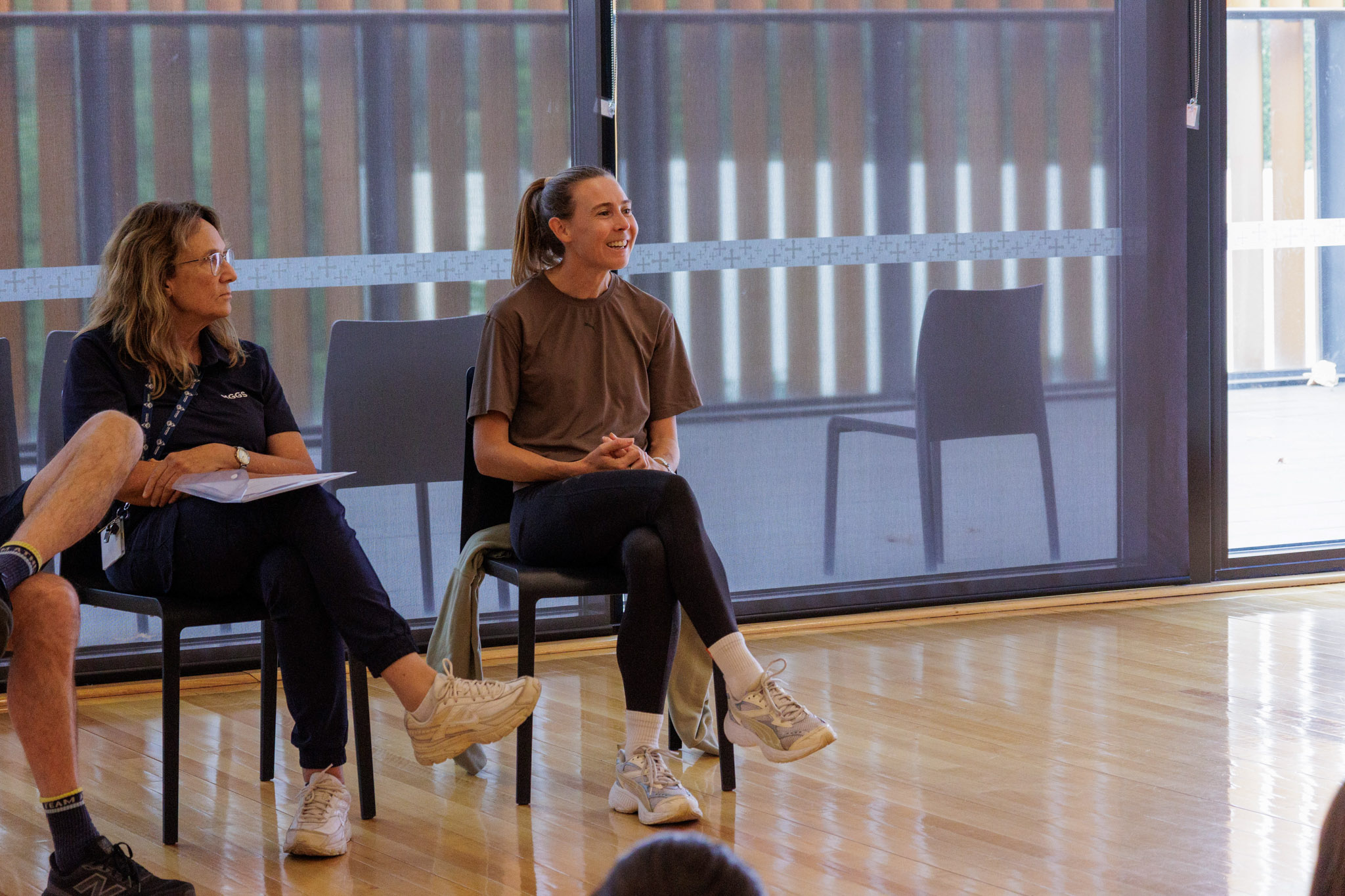
Linden Hall, three-time Olympian, inspiring the cross country squad before camp
At our annual Cross Country Camp early in Term 2, 53 students from Year 7 to Year 12 gathered at Portsea Surf Life Saving Club for two days of training, learning and living together.
The camp began with a talk from three-time Olympian Linden Hall. Just 24 hours earlier, she had run the equal-fastest time ever recorded around the 3.827km Tan track. At 34, she is still setting personal bests and breaking records. Her message wasn’t about talent. It was about habits. Routine. Discipline. The quiet, consistent work done day after day with her coach, her training group and her support team.
You can be what you can see.
Over the next two days, we watched that message come to life.
On the training ground, there was effort, of course, but more than that, there was connection. Older students setting the tone, younger students leaning in, learning, asking questions. There was encouragement, shared pacing, and a genuine sense of responsibility for one another. The Year 12 students led and nurtured. The Year 7 students brought energy and a wide-eyed optimism that was both infectious and, at times, quietly amusing.
But it was what happened off the track that stayed with me.
In the shared spaces of our temporary home, there were small pockets of focus everywhere. Students studying. Books open. Laptops out. A quiet understanding that while they were at camp, their learning didn’t pause.
Before dinner on the second night, I noticed two Year 7 students working on a complex maths problem. They were close, but not quite there. With a bit of encouragement, I connected them with two Year 9 students nearby. What followed was a moment of genuine peer learning. The Year 9 students didn’t give them the answer. They helped them find it, reinforcing that they were already on the right path.
At our annual Cross Country Camp early in Term 2, 53 students from Year 7 to Year 12 gathered at Portsea Surf Life Saving Club for two days of training, learning and living together.
The camp began with a talk from three-time Olympian Linden Hall. Just 24 hours earlier, she had run the equal-fastest time ever recorded around the 3.827km Tan track. At 34, she is still setting personal bests and breaking records. Her message wasn’t about talent. It was about habits. Routine. Discipline. The quiet, consistent work done day after day with her coach, her training group and her support team.
You can be what you can see.
Over the next two days, we watched that message come to life.
On the training ground, there was effort, of course, but more than that, there was connection. Older students setting the tone, younger students leaning in, learning, asking questions. There was encouragement, shared pacing, and a genuine sense of responsibility for one another. The Year 12 students led and nurtured. The Year 7 students brought energy and a wide-eyed optimism that was both infectious and, at times, quietly amusing.
But it was what happened off the track that stayed with me.
In the shared spaces of our temporary home, there were small pockets of focus everywhere. Students studying. Books open. Laptops out. A quiet understanding that while they were at camp, their learning didn’t pause.
Before dinner on the second night, I noticed two Year 7 students working on a complex maths problem. They were close, but not quite there. With a bit of encouragement, I connected them with two Year 9 students nearby. What followed was a moment of genuine peer learning. The Year 9 students didn’t give them the answer. They helped them find it, reinforcing that they were already on the right path.
At our annual Cross Country Camp early in Term 2, 53 students from Year 7 to Year 12 gathered at Portsea Surf Life Saving Club for two days of training, learning and living together.
The camp began with a talk from three-time Olympian Linden Hall. Just 24 hours earlier, she had run the equal-fastest time ever recorded around the 3.827km Tan track. At 34, she is still setting personal bests and breaking records. Her message wasn’t about talent. It was about habits. Routine. Discipline. The quiet, consistent work done day after day with her coach, her training group and her support team.
You can be what you can see.
Over the next two days, we watched that message come to life.
On the training ground, there was effort, of course, but more than that, there was connection. Older students setting the tone, younger students leaning in, learning, asking questions. There was encouragement, shared pacing, and a genuine sense of responsibility for one another. The Year 12 students led and nurtured. The Year 7 students brought energy and a wide-eyed optimism that was both infectious and, at times, quietly amusing.
But it was what happened off the track that stayed with me.
In the shared spaces of our temporary home, there were small pockets of focus everywhere. Students studying. Books open. Laptops out. A quiet understanding that while they were at camp, their learning didn’t pause.
Before dinner on the second night, I noticed two Year 7 students working on a complex maths problem. They were close, but not quite there. With a bit of encouragement, I connected them with two Year 9 students nearby. What followed was a moment of genuine peer learning. The Year 9 students didn’t give them the answer. They helped them find it, reinforcing that they were already on the right path.
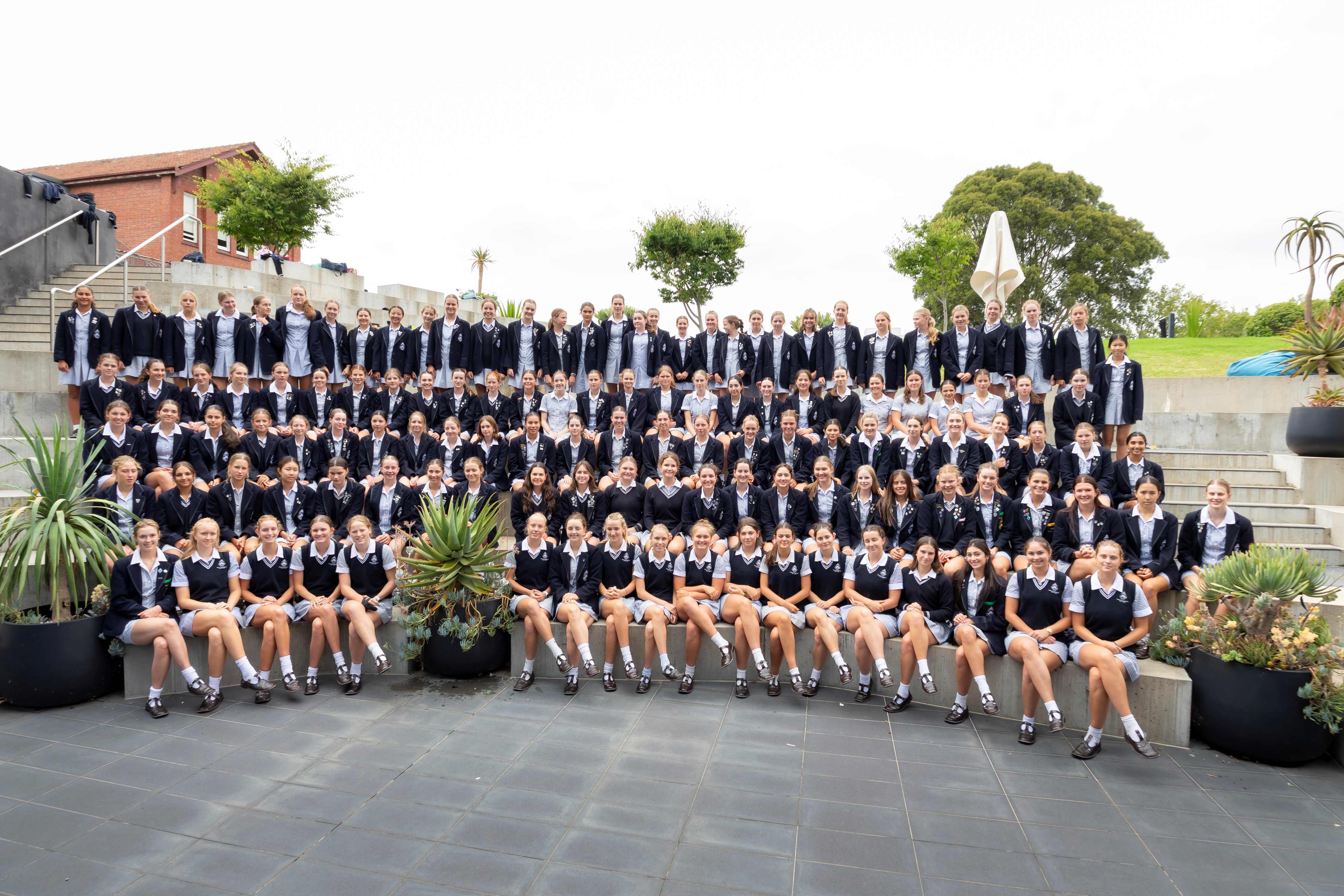
Rowing Squad group photo taken prior to the Head of Schoolgirls Regatta 2026
Rowing Squad group photo taken prior to the Head of Schoolgirls Regatta 2026
"Sustained engagement in sport supports not only physical development, but also the cognitive, behavioural and social capabilities that underpin learning."
This is a story about how learning happens. It is about habits, routines and relationships. About the way sport and study intersect; not as competing demands, but as complementary experiences that shape how students think, behave and engage.
From the classroom to the rowing shed, from the netball court to the swimming pool, our students engage in learning in ways that are both rigorous and enriching. Central to this is a belief at the heart of the Artemis Program: participation and performance are not competing priorities.
It’s not one or the other.
It’s one through the other.
There is a growing body of research linking sport participation with academic success. What is increasingly clear is that sustained engagement in sport supports not only physical development, but also the cognitive, behavioural and social capabilities that underpin learning.
A longitudinal study from the University of Sydney (2024) followed more than 4,000 Australian students over time and found that those who consistently participated in sport demonstrated stronger attention and working memory, higher literacy and numeracy outcomes, and a greater likelihood of completing school and pursuing university pathways.
The critical insight?
The benefits are not linked to talent or elite performance. They are linked to participation.
This aligns directly with our vision: Every Grammarian Active, Every Day.
At MGGS, we intentionally create environments where every student can engage in movement, sport and physical activity in ways that are meaningful to them. Whether through competitive pathways, social sport, or individual fitness pursuits, they build the foundations for lifelong participation and positive health outcomes.
We see this play out in everyday moments across the school.
A Morris Hall student trying multiple sports across the year begins to build movement skills and confidence. A Middle Years athlete learns to navigate the competing demands of sport and study, developing organisation and self-management. A Senior Years student takes ownership of her physical development, aligning her training with her academic and personal goals. She builds routines that support both; early mornings, structured sessions, and deliberate recovery.
There is a rhythm to this.
"Sustained engagement in sport supports not only physical development, but also the cognitive, behavioural and social capabilities that underpin learning."
This is a story about how learning happens. It is about habits, routines and relationships. About the way sport and study intersect; not as competing demands, but as complementary experiences that shape how students think, behave and engage.
From the classroom to the rowing shed, from the netball court to the swimming pool, our students engage in learning in ways that are both rigorous and enriching. Central to this is a belief at the heart of the Artemis Program: participation and performance are not competing priorities.
It’s not one or the other.
It’s one through the other.
There is a growing body of research linking sport participation with academic success. What is increasingly clear is that sustained engagement in sport supports not only physical development, but also the cognitive, behavioural and social capabilities that underpin learning.
A longitudinal study from the University of Sydney (2024) followed more than 4,000 Australian students over time and found that those who consistently participated in sport demonstrated stronger attention and working memory, higher literacy and numeracy outcomes, and a greater likelihood of completing school and pursuing university pathways.
The critical insight?
The benefits are not linked to talent or elite performance. They are linked to participation.
This aligns directly with our vision: Every Grammarian Active, Every Day.
At MGGS, we intentionally create environments where every student can engage in movement, sport and physical activity in ways that are meaningful to them. Whether through competitive pathways, social sport, or individual fitness pursuits, they build the foundations for lifelong participation and positive health outcomes.
We see this play out in everyday moments across the school.
A Morris Hall student trying multiple sports across the year begins to build movement skills and confidence. A Middle Years athlete learns to navigate the competing demands of sport and study, developing organisation and self-management. A Senior Years student takes ownership of her physical development, aligning her training with her academic and personal goals. She builds routines that support both; early mornings, structured sessions, and deliberate recovery.
There is a rhythm to this.
"Sustained engagement in sport supports not only physical development, but also the cognitive, behavioural and social capabilities that underpin learning."
This is a story about how learning happens. It is about habits, routines and relationships. About the way sport and study intersect; not as competing demands, but as complementary experiences that shape how students think, behave and engage.
From the classroom to the rowing shed, from the netball court to the swimming pool, our students engage in learning in ways that are both rigorous and enriching. Central to this is a belief at the heart of the Artemis Program: participation and performance are not competing priorities.
It’s not one or the other.
It’s one through the other.
There is a growing body of research linking sport participation with academic success. What is increasingly clear is that sustained engagement in sport supports not only physical development, but also the cognitive, behavioural and social capabilities that underpin learning.
A longitudinal study from the University of Sydney (2024) followed more than 4,000 Australian students over time and found that those who consistently participated in sport demonstrated stronger attention and working memory, higher literacy and numeracy outcomes, and a greater likelihood of completing school and pursuing university pathways.
The critical insight?
The benefits are not linked to talent or elite performance. They are linked to participation.
This aligns directly with our vision: Every Grammarian Active, Every Day.
At MGGS, we intentionally create environments where every student can engage in movement, sport and physical activity in ways that are meaningful to them. Whether through competitive pathways, social sport, or individual fitness pursuits, they build the foundations for lifelong participation and positive health outcomes.
We see this play out in everyday moments across the school.
A Morris Hall student trying multiple sports across the year begins to build movement skills and confidence. A Middle Years athlete learns to navigate the competing demands of sport and study, developing organisation and self-management. A Senior Years student takes ownership of her physical development, aligning her training with her academic and personal goals. She builds routines that support both; early mornings, structured sessions, and deliberate recovery.
There is a rhythm to this.
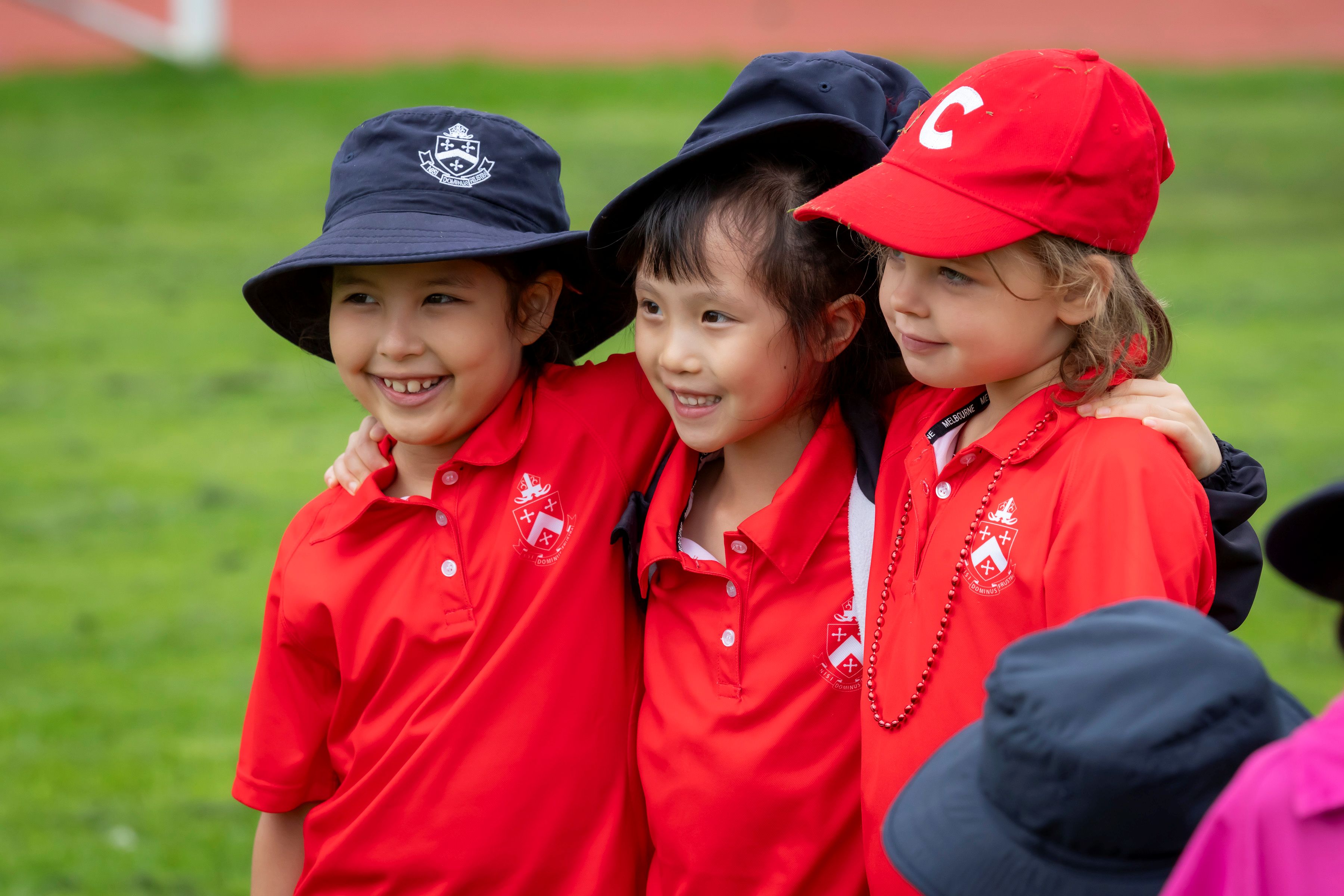
Morris Hall House Athletics
Morris Hall House Athletics
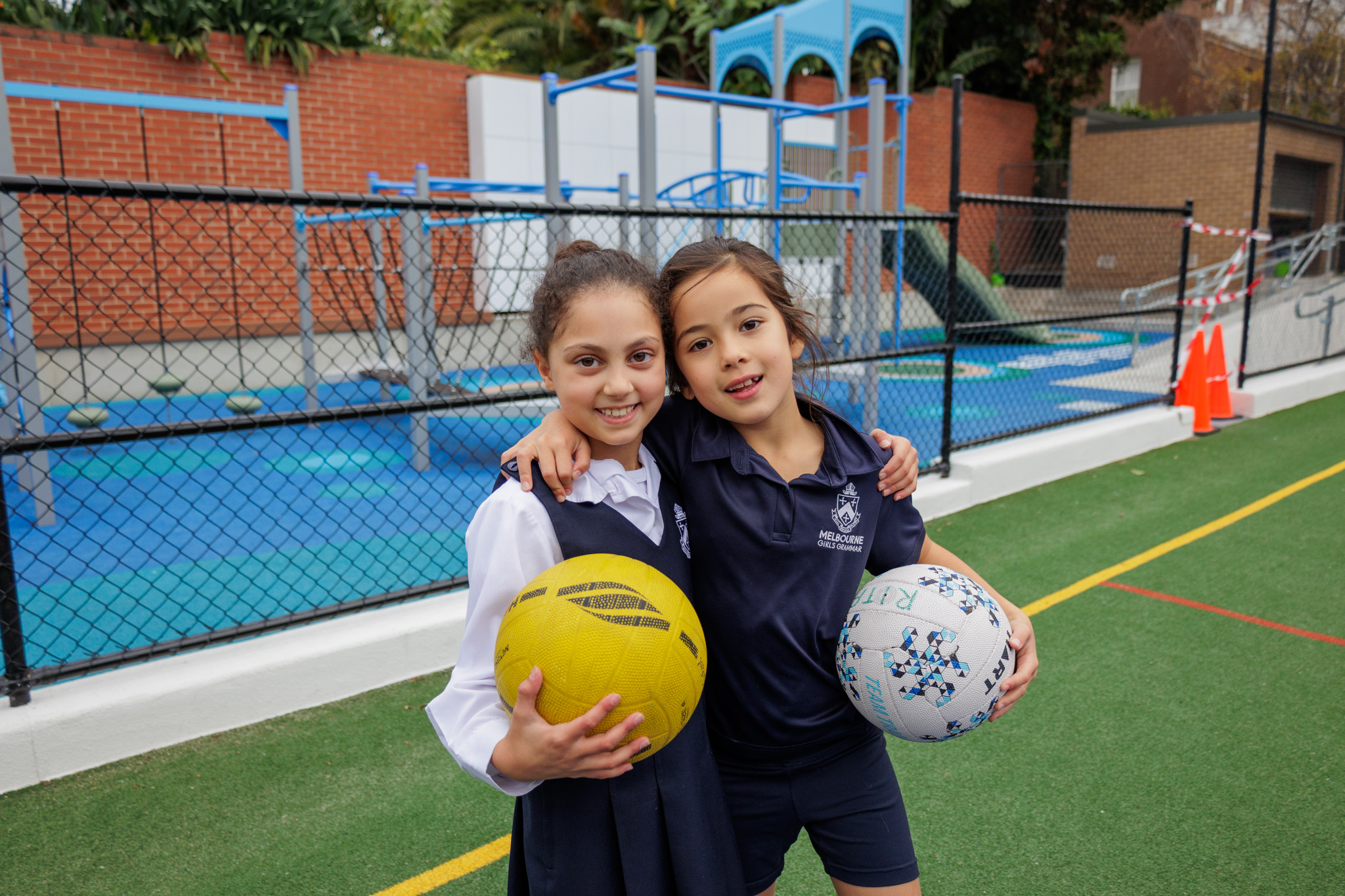
Morris Hall students at Netball Fundamentals
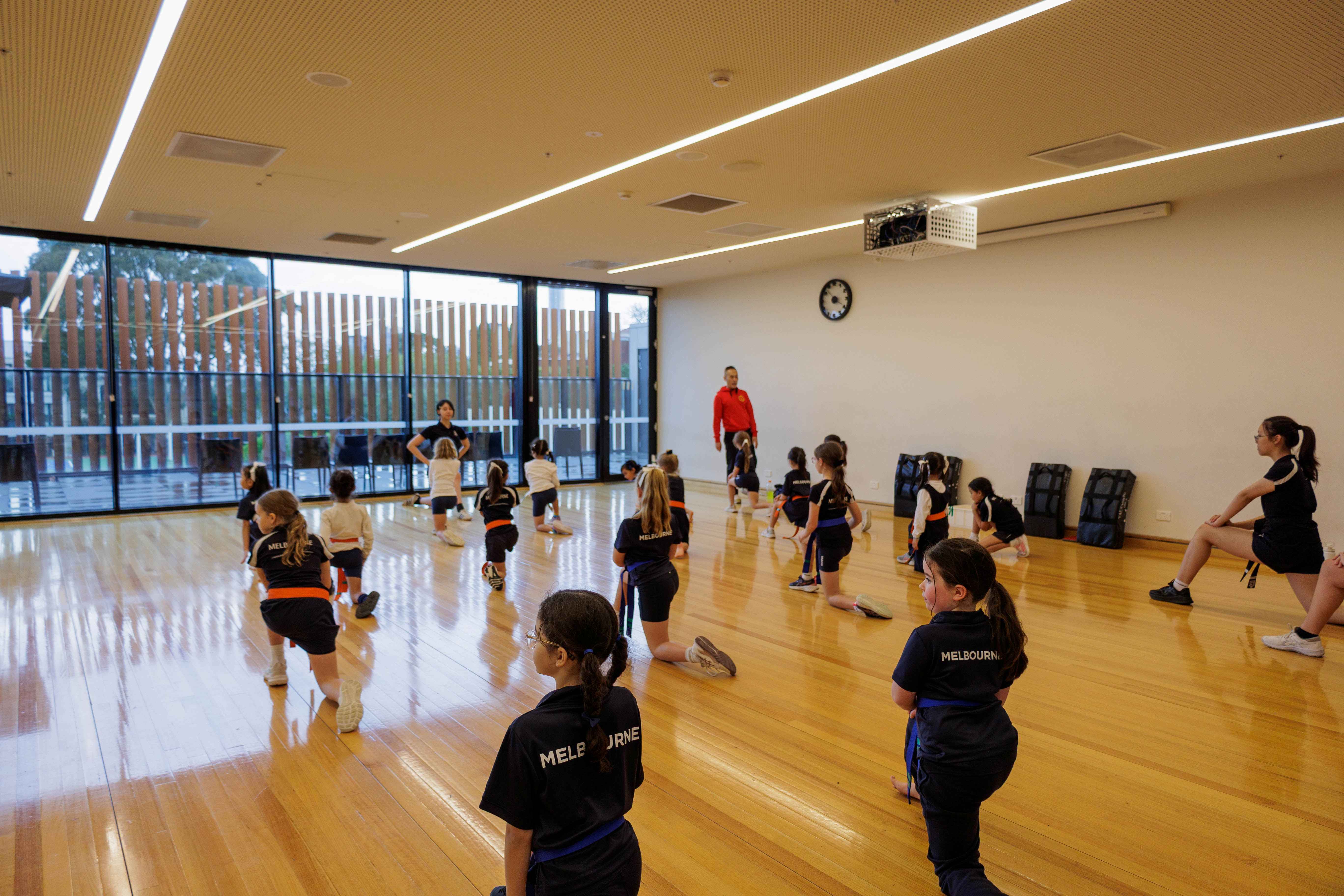
Morris Hall Taekwondo
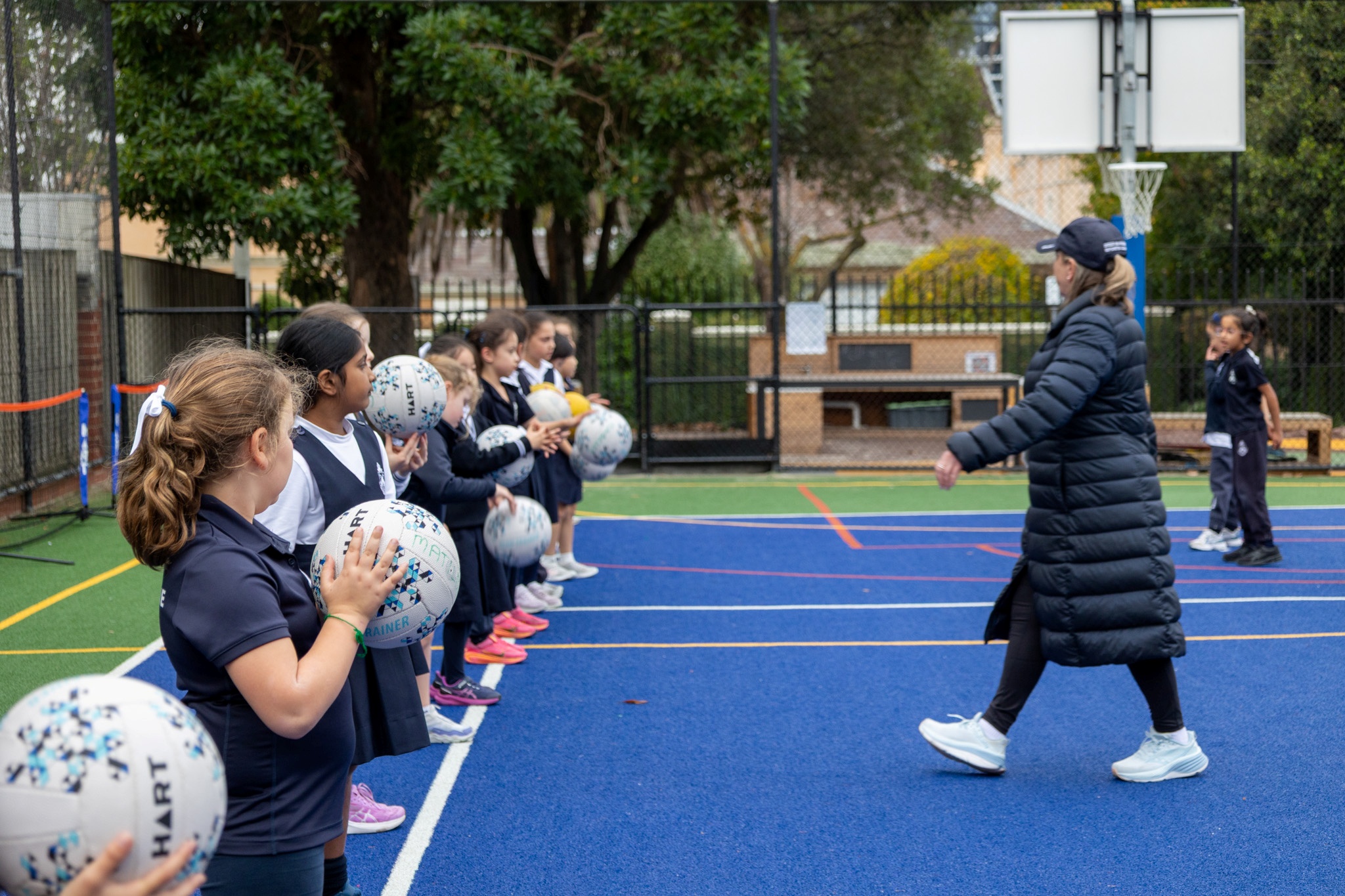
Morris Hall Netball Fundamentals
"When students engage fully in both sport and study, they strengthen both"
As writer Isabel Allende reflects, “Writing is pretty much like training for sports. You train and train and train to be able to play the game.” The same is true of learning. The visible outcome, whether it is a performance, an exam, or a result, is built on hours of unseen preparation, discipline and routine.
Our data reflects this connection. In 2025, the Year 12 cohort achieved a median ATAR of 94.3. Among students deeply engaged in sport, results were equally strong: Year 12 rowers (n=15) recorded a median ATAR of 95.5, the 1st VIII (n=6) 97.28, and AFLW Herald Sun Shield players’ (n=9) median ATAR was 94. These outcomes reinforce a consistent pattern: when students engage fully in both sport and study, they strengthen both.
The research also highlights an important nuance. Different types of sport develop different capabilities.
Team sports foster connection, collaboration and a sense of belonging; factors that are strongly linked to engagement in school and consistent attendance. Individual sports develop self-regulation, discipline and goal setting; attributes that translate directly into effective study habits and exam preparation.
Together, these experiences enrich a student’s learning journey in complementary ways.
This is where the theme of Enrich and Engage comes to life.
Sport enriches learning by providing challenge, diversity of experience and opportunities for growth beyond the classroom. It engages students by giving them a sense of purpose, connection and enjoyment; elements that are critical to sustained motivation.
Internationally, systems such as Norway’s “Joy of Sport for All” reinforce this same principle: when enjoyment, belonging and participation are prioritised, performance follows.
This is ultimately our goal.
To develop young women who are engaged, capable and confident learners; equipped with the habits, mindset, and love of learning and movement that form the bedrock for a high-performing life and sustained wellbeing well beyond their years at MGGS.
"When students engage fully in both sport and study, they strengthen both"
As writer Isabel Allende reflects, “Writing is pretty much like training for sports. You train and train and train to be able to play the game.” The same is true of learning. The visible outcome, whether it is a performance, an exam, or a result, is built on hours of unseen preparation, discipline and routine.
Our data reflects this connection. In 2025, the Year 12 cohort achieved a median ATAR of 94.3. Among students deeply engaged in sport, results were equally strong: Year 12 rowers (n=15) recorded a median ATAR of 95.5, the 1st VIII (n=6) 97.28, and AFLW Herald Sun Shield players’ (n=9) median ATAR was 94. These outcomes reinforce a consistent pattern: when students engage fully in both sport and study, they strengthen both.
The research also highlights an important nuance. Different types of sport develop different capabilities.
Team sports foster connection, collaboration and a sense of belonging; factors that are strongly linked to engagement in school and consistent attendance. Individual sports develop self-regulation, discipline and goal setting; attributes that translate directly into effective study habits and exam preparation.
Together, these experiences enrich a student’s learning journey in complementary ways.
This is where the theme of Enrich and Engage comes to life.
Sport enriches learning by providing challenge, diversity of experience and opportunities for growth beyond the classroom. It engages students by giving them a sense of purpose, connection and enjoyment; elements that are critical to sustained motivation.
Internationally, systems such as Norway’s “Joy of Sport for All” reinforce this same principle: when enjoyment, belonging and participation are prioritised, performance follows.
This is ultimately our goal.
To develop young women who are engaged, capable and confident learners; equipped with the habits, mindset, and love of learning and movement that form the bedrock for a high-performing life and sustained wellbeing well beyond their years at MGGS.
"When students engage fully in both sport and study, they strengthen both"
As writer Isabel Allende reflects, “Writing is pretty much like training for sports. You train and train and train to be able to play the game.” The same is true of learning. The visible outcome, whether it is a performance, an exam, or a result, is built on hours of unseen preparation, discipline and routine.
Our data reflects this connection. In 2025, the Year 12 cohort achieved a median ATAR of 94.3. Among students deeply engaged in sport, results were equally strong: Year 12 rowers (n=15) recorded a median ATAR of 95.5, the 1st VIII (n=6) 97.28, and AFLW Herald Sun Shield players’ (n=9) median ATAR was 94. These outcomes reinforce a consistent pattern: when students engage fully in both sport and study, they strengthen both.
The research also highlights an important nuance. Different types of sport develop different capabilities.
Team sports foster connection, collaboration and a sense of belonging; factors that are strongly linked to engagement in school and consistent attendance. Individual sports develop self-regulation, discipline and goal setting; attributes that translate directly into effective study habits and exam preparation.
Together, these experiences enrich a student’s learning journey in complementary ways.
This is where the theme of Enrich and Engage comes to life.
Sport enriches learning by providing challenge, diversity of experience and opportunities for growth beyond the classroom. It engages students by giving them a sense of purpose, connection and enjoyment; elements that are critical to sustained motivation.
Internationally, systems such as Norway’s “Joy of Sport for All” reinforce this same principle: when enjoyment, belonging and participation are prioritised, performance follows.
This is ultimately our goal.
To develop young women who are engaged, capable and confident learners; equipped with the habits, mindset, and love of learning and movement that form the bedrock for a high-performing life and sustained wellbeing well beyond their years at MGGS.
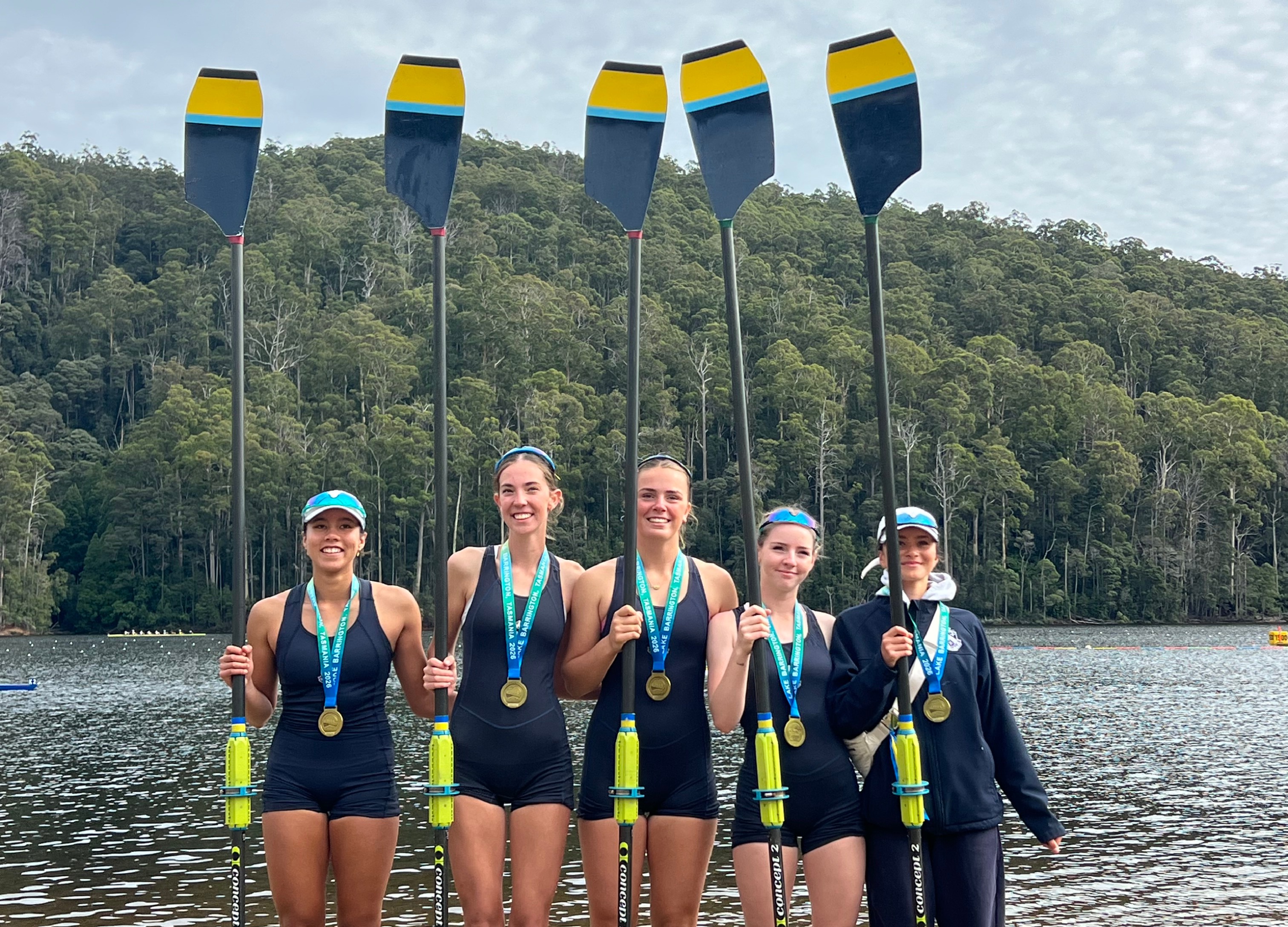
The Gough Family Crew (Year 10A) National Champions
The Gough Family Crew (Year 10A) National Champions
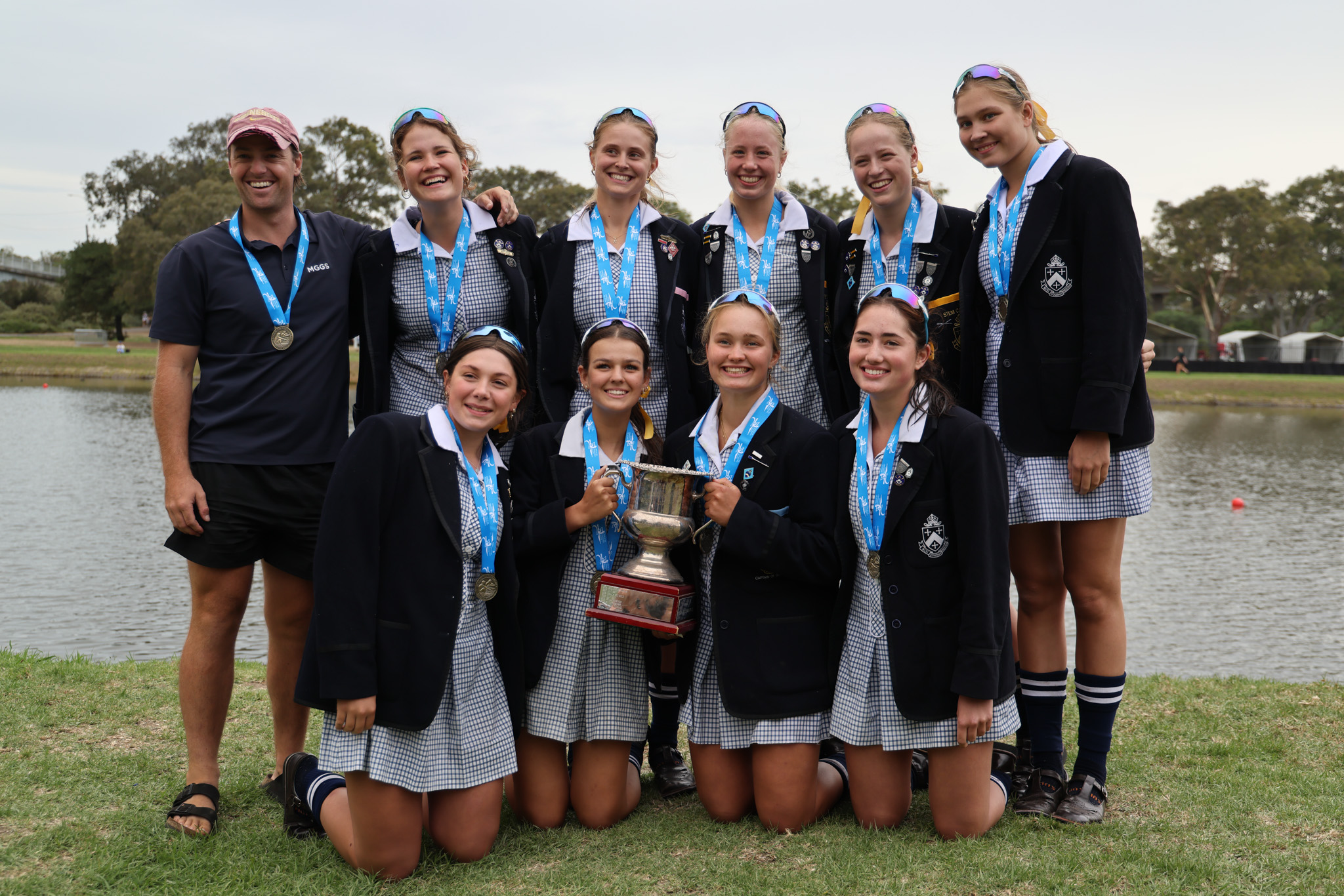
The Merton Crew (First VIII) were Triumphant at Head of Schoolgirls 2026
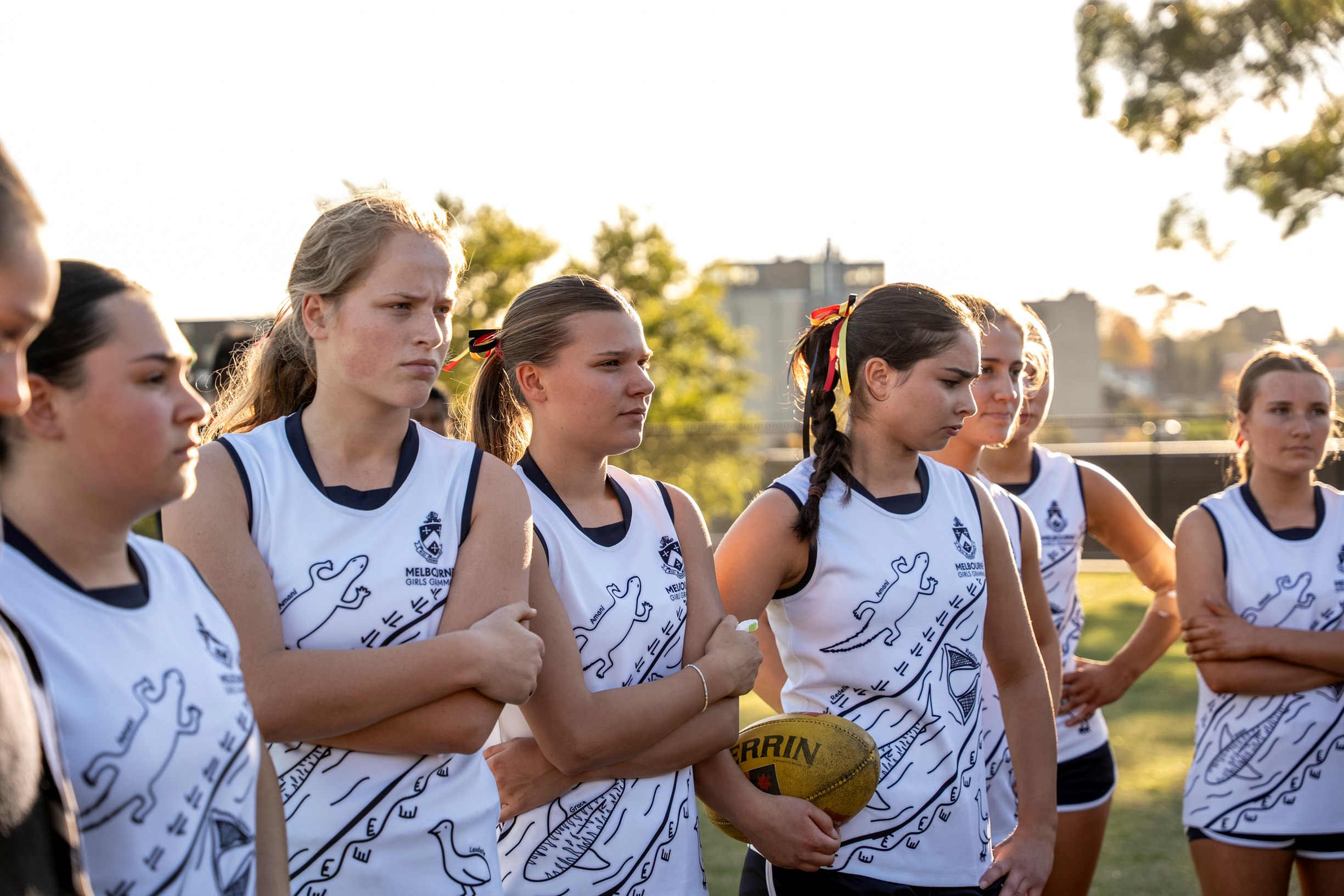
GSV Indigenous Round MGGS vs MLC 2026
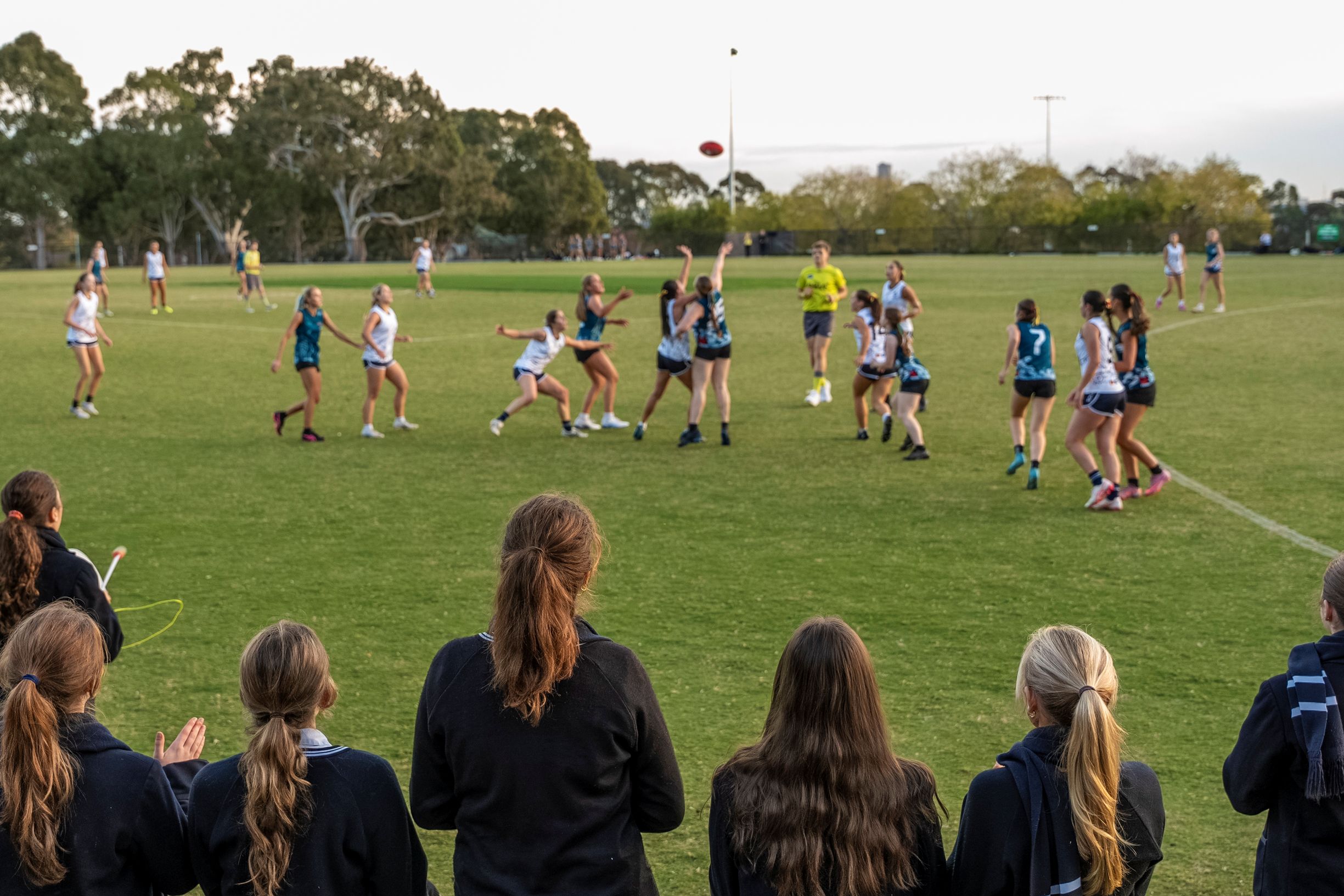
GSV Indigenous Round MGGS vs MLC 2206
The Gough Family Crew (Year 10A) National Champions
The Merton Crew (First VIII) were Triumphant at Head of Schoolgirls 2026
GSV Indigenous Round MGGS vs MLC 2026
GSV Indigenous Round MGGS vs MLC 2206
References
Owen, K. B., Foley, B. C., Smith, B. J., Manera, K. E., Corbett, L., Lim, M., Phongsavan, P., Qualter, P., Ding, D., & Clare, P. J. (2024). Sport participation for academic success: Evidence from the Longitudinal Study of Australian Children. Journal of Physical Activity and Health, 21(3), 238–246.
References
Owen, K. B., Foley, B. C., Smith, B. J., Manera, K. E., Corbett, L., Lim, M., Phongsavan, P., Qualter, P., Ding, D., & Clare, P. J. (2024). Sport participation for academic success: Evidence from the Longitudinal Study of Australian Children. Journal of Physical Activity and Health, 21(3), 238–246.