

01

Giving Voice to our Values

Within the Humanities department at Melbourne Girls Grammar, our School values are brought to life through learning.

When our students debate a moral dilemma in Philosophy, wrestle with change and continuity in History, examine environmental challenges in Geography, or discuss democratic principles in Politics, they are acquiring essential skills: analytical reasoning, nuanced communication, cultural empathy, ethical reflection, collaborative problem‑solving, imagination and leadership. These are the marks of an education that prepares young women not just for their assessments, but for a life of impact.  

The humanities encourage observation and inquiry, asking questions about who we are and how our societies work. They teach us to research and consider thoughtfully; to critique and reflect. They invite us to see the stories behind statistics, challenge assumptions, to hear diverse voices and to understand perspectives beyond our own. Above all, they provide a rich foundation for ethical action. By grounding thought in compassion and integrity, our students are shaped into principled women of action.

I have always thought that the power of this School is to inspire not only academic excellence, but also deep, principled engagement with the world. The ability to think critically, communicate with clarity, and approach complex issues with ethical reasoning and cultural awareness has been foundational to my practice as a lawyer and business leader. Humanities disciplines have taught me to listen, to reflect, and to lead with integrity, qualities that remain essential in every boardroom, courtroom and conversation. And now, in my role as Chair of Council I am continually reminded of how these studies, at all stages of education, nurture students to think deeply and speak confidently. I feel very fortunate to work with bright, kind and talented people across diverse fields. The curiosity and empathy fostered through these fields that examine the human experience, are what allow us to collaborate effectively and solve problems creatively.

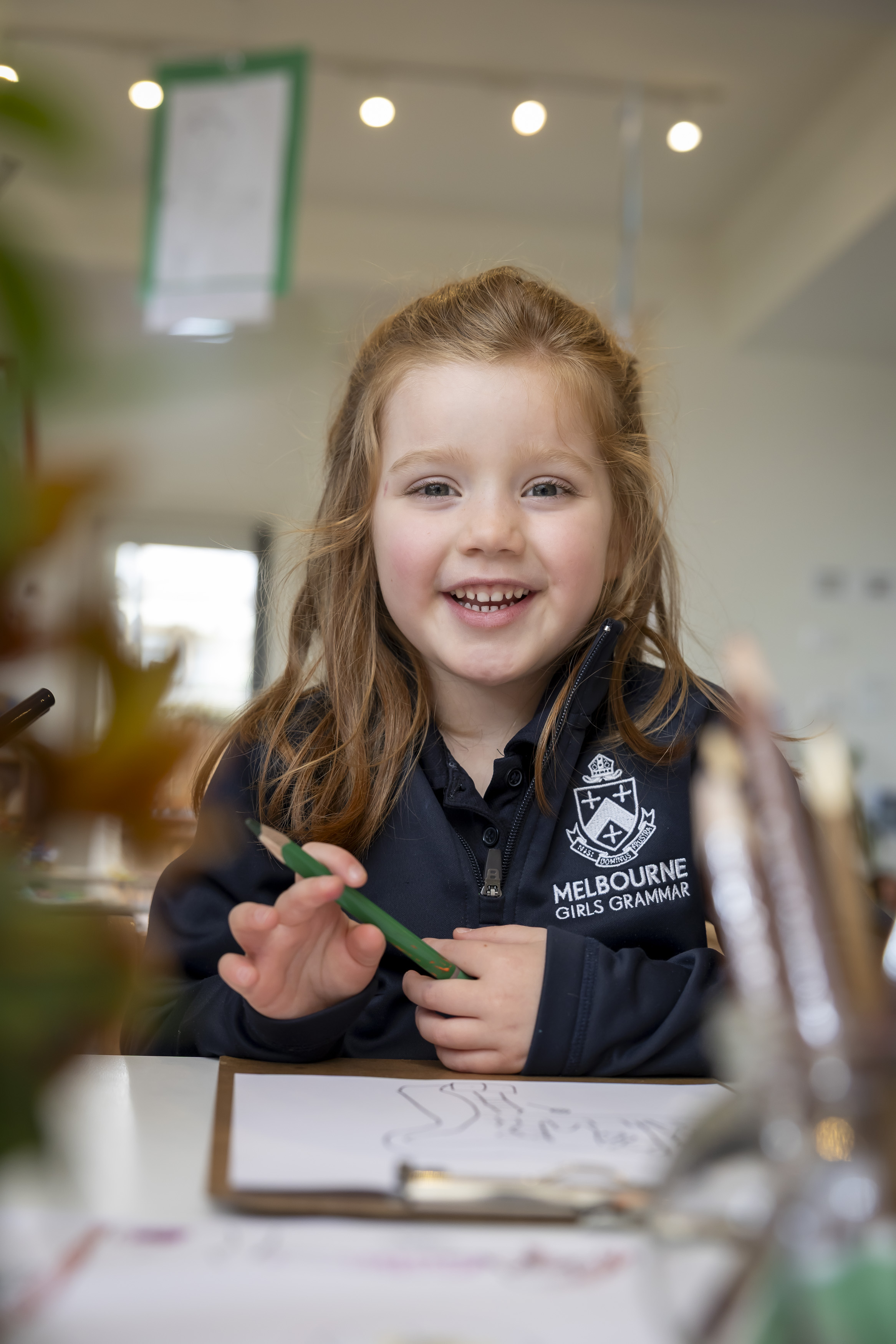
What makes this edition of Information Exchange especially compelling is its breadth of insight, from ELC learners marvelling at their world, to History and Politics students debating contemporary civic issues in Morris Hall and Merton Hall, through to our Old Grammarians who stand as testaments to the power and potential afforded through a Melbourne Girls Grammar education. Our girls are supported to think independently, to reason with courage, to research with integrity and to communicate with compassion. They graduate with the self-belief and self-determination to shape their own futures. They emerge as women who know their own capacity and who trust their understanding of the world.

The red brick walls of MGGS have fostered generations of creative thinkers, compassionate leaders and problem‑solvers. Today’s Grammarians continue that proud tradition, exploring academic excellence while growing their curiosity and confidence. In the stories you will read, across essays, reflections, interviews and vibrant visuals, you’ll witness their thoughtful, action‑oriented perspectives, ready for any path they choose.  

To our students, teachers, staff and Old Grammarians: thank you for weaving your passion into this celebration of excellence in humanities. May this edition inspire us all and remind us that exploring the human story is both our heritage and our greatest adventure.

When our students debate a moral dilemma in Philosophy, wrestle with change and continuity in History, examine environmental challenges in Geography, or discuss democratic principles in Politics, they are acquiring essential skills: analytical reasoning, nuanced communication, cultural empathy, ethical reflection, collaborative problem‑solving, imagination and leadership. These are the marks of an education that prepares young women not just for their assessments, but for a life of impact.  

The humanities encourage observation and inquiry, asking questions about who we are and how our societies work. They teach us to research and consider thoughtfully; to critique and reflect. They invite us to see the stories behind statistics, challenge assumptions, to hear diverse voices and to understand perspectives beyond our own. Above all, they provide a rich foundation for ethical action. By grounding thought in compassion and integrity, our students are shaped into principled women of action.

I have always thought that the power of this School is to inspire not only academic excellence, but also deep, principled engagement with the world. The ability to think critically, communicate with clarity, and approach complex issues with ethical reasoning and cultural awareness has been foundational to my practice as a lawyer and business leader. Humanities disciplines have taught me to listen, to reflect, and to lead with integrity, qualities that remain essential in every boardroom, courtroom and conversation. And now, in my role as Chair of Council I am continually reminded of how these studies, at all stages of education, nurture students to think deeply and speak confidently. I feel very fortunate to work with bright, kind and talented people across diverse fields. The curiosity and empathy fostered through these fields that examine the human experience, are what allow us to collaborate effectively and solve problems creatively.

What makes this edition of Information Exchange especially compelling is its breadth of insight, from ELC learners marvelling at their world, to History and Politics students debating contemporary civic issues in Morris Hall and Merton Hall, through to our Old Grammarians who stand as testaments to the power and potential afforded through a Melbourne Girls Grammar education. Our girls are supported to think independently, to reason with courage, to research with integrity and to communicate with compassion. They graduate with the self-belief and self-determination to shape their own futures. They emerge as women who know their own capacity and who trust their understanding of the world.

The red brick walls of MGGS have fostered generations of creative thinkers, compassionate leaders and problem‑solvers. Today’s Grammarians continue that proud tradition, exploring academic excellence while growing their curiosity and confidence. In the stories you will read, across essays, reflections, interviews and vibrant visuals, you’ll witness their thoughtful, action‑oriented perspectives, ready for any path they choose.  

To our students, teachers, staff and Old Grammarians: thank you for weaving your passion into this celebration of excellence in humanities. May this edition inspire us all and remind us that exploring the human story is both our heritage and our greatest adventure.

When our students debate a moral dilemma in Philosophy, wrestle with change and continuity in History, examine environmental challenges in Geography, or discuss democratic principles in Politics, they are acquiring essential skills: analytical reasoning, nuanced communication, cultural empathy, ethical reflection, collaborative problem‑solving, imagination and leadership. These are the marks of an education that prepares young women not just for their assessments, but for a life of impact.  

The humanities encourage observation and inquiry, asking questions about who we are and how our societies work. They teach us to research and consider thoughtfully; to critique and reflect. They invite us to see the stories behind statistics, challenge assumptions, to hear diverse voices and to understand perspectives beyond our own. Above all, they provide a rich foundation for ethical action. By grounding thought in compassion and integrity, our students are shaped into principled women of action.

I have always thought that the power of this School is to inspire not only academic excellence, but also deep, principled engagement with the world. The ability to think critically, communicate with clarity, and approach complex issues with ethical reasoning and cultural awareness has been foundational to my practice as a lawyer and business leader. Humanities disciplines have taught me to listen, to reflect, and to lead with integrity, qualities that remain essential in every boardroom, courtroom and conversation. And now, in my role as Chair of Council I am continually reminded of how these studies, at all stages of education, nurture students to think deeply and speak confidently. I feel very fortunate to work with bright, kind and talented people across diverse fields. The curiosity and empathy fostered through these fields that examine the human experience, are what allow us to collaborate effectively and solve problems creatively.

What makes this edition of Information Exchange especially compelling is its breadth of insight, from ELC learners marvelling at their world, to History and Politics students debating contemporary civic issues in Morris Hall and Merton Hall, through to our Old Grammarians who stand as testaments to the power and potential afforded through a Melbourne Girls Grammar education. Our girls are supported to think independently, to reason with courage, to research with integrity and to communicate with compassion. They graduate with the self-belief and self-determination to shape their own futures. They emerge as women who know their own capacity and who trust their understanding of the world.

The red brick walls of MGGS have fostered generations of creative thinkers, compassionate leaders and problem‑solvers. Today’s Grammarians continue that proud tradition, exploring academic excellence while growing their curiosity and confidence. In the stories you will read, across essays, reflections, interviews and vibrant visuals, you’ll witness their thoughtful, action‑oriented perspectives, ready for any path they choose.  

To our students, teachers, staff and Old Grammarians: thank you for weaving your passion into this celebration of excellence in humanities. May this edition inspire us all and remind us that exploring the human story is both our heritage and our greatest adventure.

No items found.
No items found.
No items found.
No items found.
No items found.
No items found.
No items found.
No items found.
No items found.
01

Giving Voice to our Values

Within the Humanities department at Melbourne Girls Grammar, our School values are brought to life through learning.

When our students debate a moral dilemma in Philosophy, wrestle with change and continuity in History, examine environmental challenges in Geography, or discuss democratic principles in Politics, they are acquiring essential skills: analytical reasoning, nuanced communication, cultural empathy, ethical reflection, collaborative problem‑solving, imagination and leadership. These are the marks of an education that prepares young women not just for their assessments, but for a life of impact.  

The humanities encourage observation and inquiry, asking questions about who we are and how our societies work. They teach us to research and consider thoughtfully; to critique and reflect. They invite us to see the stories behind statistics, challenge assumptions, to hear diverse voices and to understand perspectives beyond our own. Above all, they provide a rich foundation for ethical action. By grounding thought in compassion and integrity, our students are shaped into principled women of action.

I have always thought that the power of this School is to inspire not only academic excellence, but also deep, principled engagement with the world. The ability to think critically, communicate with clarity, and approach complex issues with ethical reasoning and cultural awareness has been foundational to my practice as a lawyer and business leader. Humanities disciplines have taught me to listen, to reflect, and to lead with integrity, qualities that remain essential in every boardroom, courtroom and conversation. And now, in my role as Chair of Council I am continually reminded of how these studies, at all stages of education, nurture students to think deeply and speak confidently. I feel very fortunate to work with bright, kind and talented people across diverse fields. The curiosity and empathy fostered through these fields that examine the human experience, are what allow us to collaborate effectively and solve problems creatively.

What makes this edition of Information Exchange especially compelling is its breadth of insight, from ELC learners marvelling at their world, to History and Politics students debating contemporary civic issues in Morris Hall and Merton Hall, through to our Old Grammarians who stand as testaments to the power and potential afforded through a Melbourne Girls Grammar education. Our girls are supported to think independently, to reason with courage, to research with integrity and to communicate with compassion. They graduate with the self-belief and self-determination to shape their own futures. They emerge as women who know their own capacity and who trust their understanding of the world.

The red brick walls of MGGS have fostered generations of creative thinkers, compassionate leaders and problem‑solvers. Today’s Grammarians continue that proud tradition, exploring academic excellence while growing their curiosity and confidence. In the stories you will read, across essays, reflections, interviews and vibrant visuals, you’ll witness their thoughtful, action‑oriented perspectives, ready for any path they choose.  

To our students, teachers, staff and Old Grammarians: thank you for weaving your passion into this celebration of excellence in humanities. May this edition inspire us all and remind us that exploring the human story is both our heritage and our greatest adventure.

When our students debate a moral dilemma in Philosophy, wrestle with change and continuity in History, examine environmental challenges in Geography, or discuss democratic principles in Politics, they are acquiring essential skills: analytical reasoning, nuanced communication, cultural empathy, ethical reflection, collaborative problem‑solving, imagination and leadership. These are the marks of an education that prepares young women not just for their assessments, but for a life of impact.  

The humanities encourage observation and inquiry, asking questions about who we are and how our societies work. They teach us to research and consider thoughtfully; to critique and reflect. They invite us to see the stories behind statistics, challenge assumptions, to hear diverse voices and to understand perspectives beyond our own. Above all, they provide a rich foundation for ethical action. By grounding thought in compassion and integrity, our students are shaped into principled women of action.

I have always thought that the power of this School is to inspire not only academic excellence, but also deep, principled engagement with the world. The ability to think critically, communicate with clarity, and approach complex issues with ethical reasoning and cultural awareness has been foundational to my practice as a lawyer and business leader. Humanities disciplines have taught me to listen, to reflect, and to lead with integrity, qualities that remain essential in every boardroom, courtroom and conversation. And now, in my role as Chair of Council I am continually reminded of how these studies, at all stages of education, nurture students to think deeply and speak confidently. I feel very fortunate to work with bright, kind and talented people across diverse fields. The curiosity and empathy fostered through these fields that examine the human experience, are what allow us to collaborate effectively and solve problems creatively.

What makes this edition of Information Exchange especially compelling is its breadth of insight, from ELC learners marvelling at their world, to History and Politics students debating contemporary civic issues in Morris Hall and Merton Hall, through to our Old Grammarians who stand as testaments to the power and potential afforded through a Melbourne Girls Grammar education. Our girls are supported to think independently, to reason with courage, to research with integrity and to communicate with compassion. They graduate with the self-belief and self-determination to shape their own futures. They emerge as women who know their own capacity and who trust their understanding of the world.

The red brick walls of MGGS have fostered generations of creative thinkers, compassionate leaders and problem‑solvers. Today’s Grammarians continue that proud tradition, exploring academic excellence while growing their curiosity and confidence. In the stories you will read, across essays, reflections, interviews and vibrant visuals, you’ll witness their thoughtful, action‑oriented perspectives, ready for any path they choose.  

To our students, teachers, staff and Old Grammarians: thank you for weaving your passion into this celebration of excellence in humanities. May this edition inspire us all and remind us that exploring the human story is both our heritage and our greatest adventure.

When our students debate a moral dilemma in Philosophy, wrestle with change and continuity in History, examine environmental challenges in Geography, or discuss democratic principles in Politics, they are acquiring essential skills: analytical reasoning, nuanced communication, cultural empathy, ethical reflection, collaborative problem‑solving, imagination and leadership. These are the marks of an education that prepares young women not just for their assessments, but for a life of impact.  

The humanities encourage observation and inquiry, asking questions about who we are and how our societies work. They teach us to research and consider thoughtfully; to critique and reflect. They invite us to see the stories behind statistics, challenge assumptions, to hear diverse voices and to understand perspectives beyond our own. Above all, they provide a rich foundation for ethical action. By grounding thought in compassion and integrity, our students are shaped into principled women of action.

I have always thought that the power of this School is to inspire not only academic excellence, but also deep, principled engagement with the world. The ability to think critically, communicate with clarity, and approach complex issues with ethical reasoning and cultural awareness has been foundational to my practice as a lawyer and business leader. Humanities disciplines have taught me to listen, to reflect, and to lead with integrity, qualities that remain essential in every boardroom, courtroom and conversation. And now, in my role as Chair of Council I am continually reminded of how these studies, at all stages of education, nurture students to think deeply and speak confidently. I feel very fortunate to work with bright, kind and talented people across diverse fields. The curiosity and empathy fostered through these fields that examine the human experience, are what allow us to collaborate effectively and solve problems creatively.

What makes this edition of Information Exchange especially compelling is its breadth of insight, from ELC learners marvelling at their world, to History and Politics students debating contemporary civic issues in Morris Hall and Merton Hall, through to our Old Grammarians who stand as testaments to the power and potential afforded through a Melbourne Girls Grammar education. Our girls are supported to think independently, to reason with courage, to research with integrity and to communicate with compassion. They graduate with the self-belief and self-determination to shape their own futures. They emerge as women who know their own capacity and who trust their understanding of the world.

The red brick walls of MGGS have fostered generations of creative thinkers, compassionate leaders and problem‑solvers. Today’s Grammarians continue that proud tradition, exploring academic excellence while growing their curiosity and confidence. In the stories you will read, across essays, reflections, interviews and vibrant visuals, you’ll witness their thoughtful, action‑oriented perspectives, ready for any path they choose.  

To our students, teachers, staff and Old Grammarians: thank you for weaving your passion into this celebration of excellence in humanities. May this edition inspire us all and remind us that exploring the human story is both our heritage and our greatest adventure.

No items found.
No items found.
No items found.
No items found.
No items found.
No items found.
}