


.JPG)



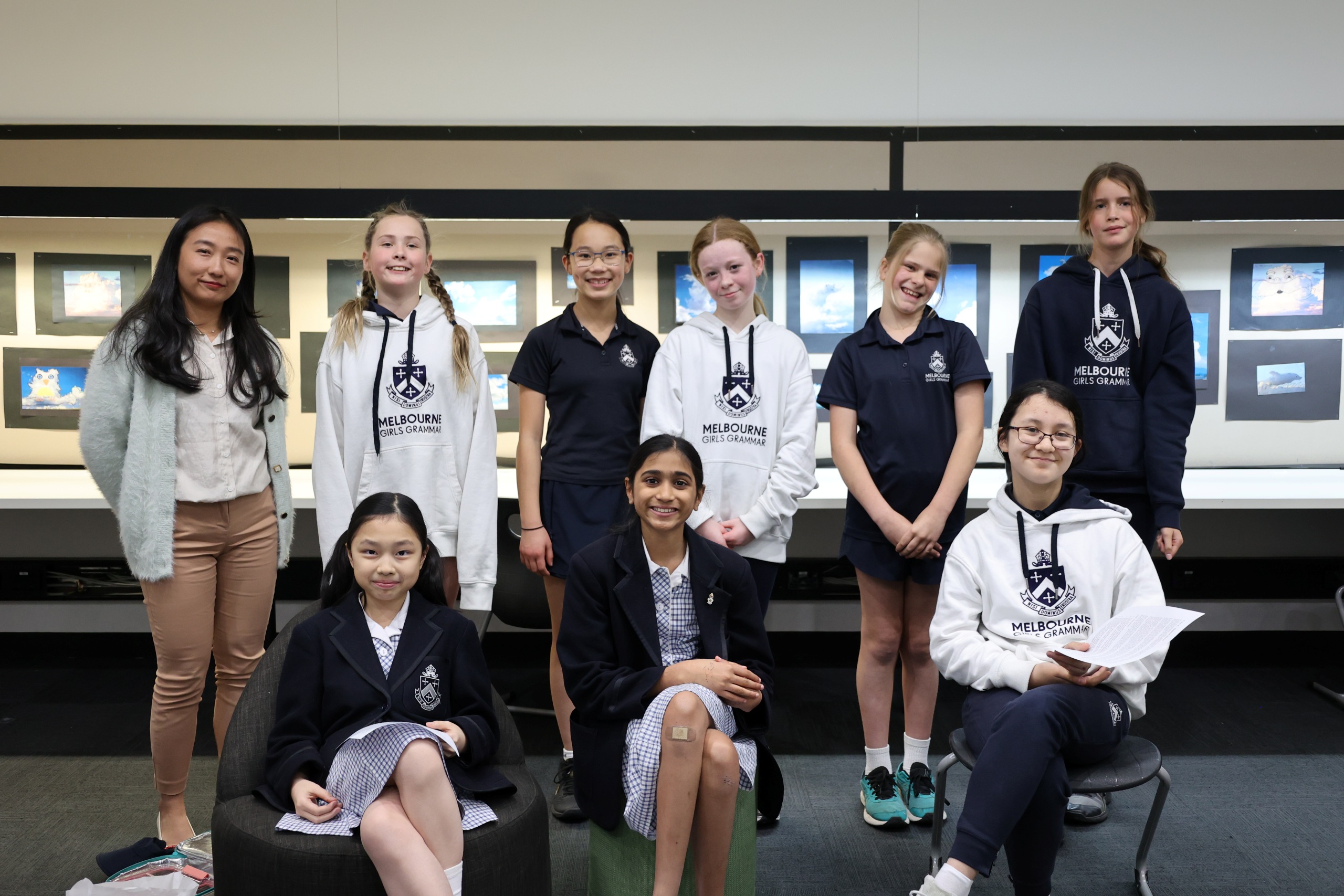





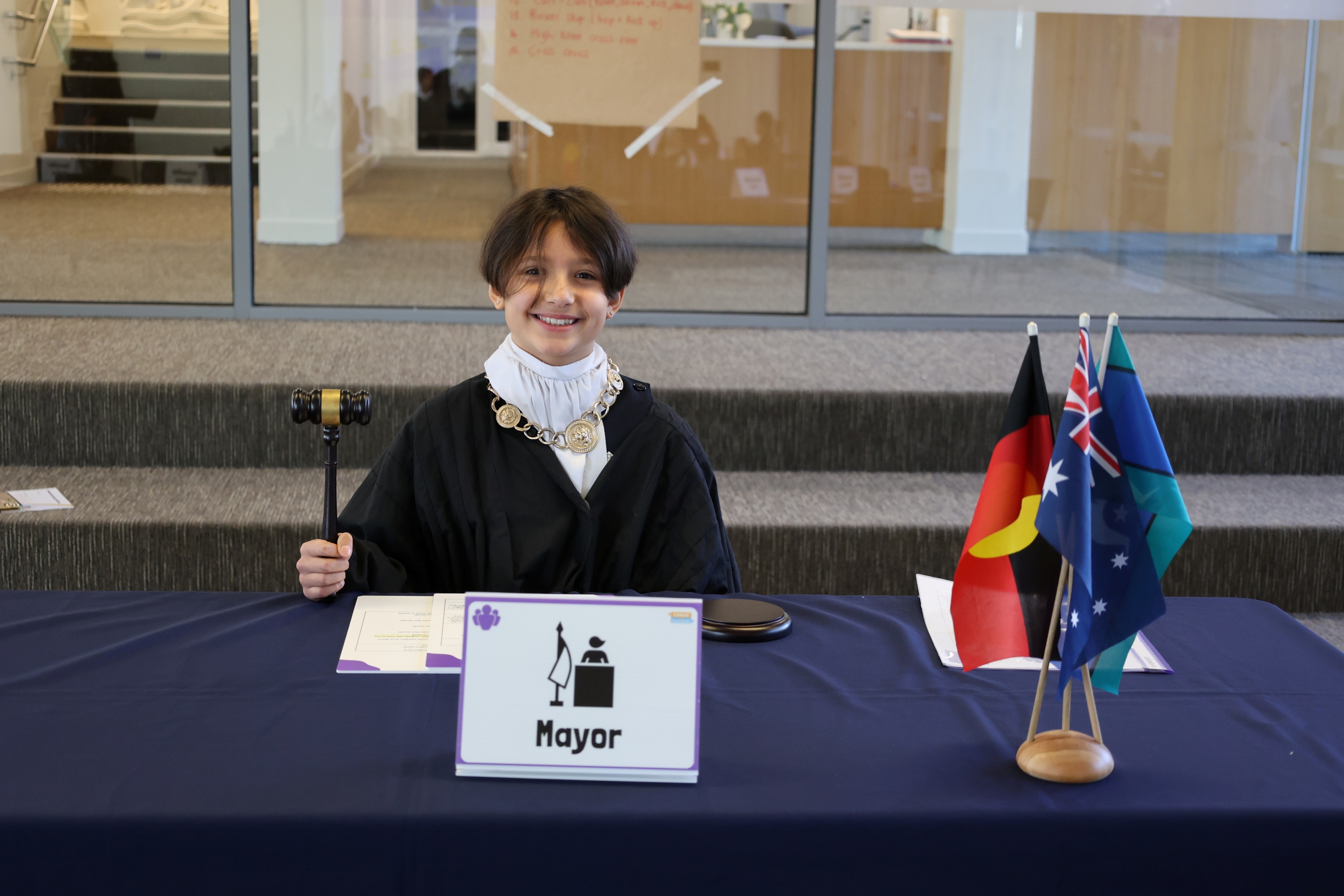

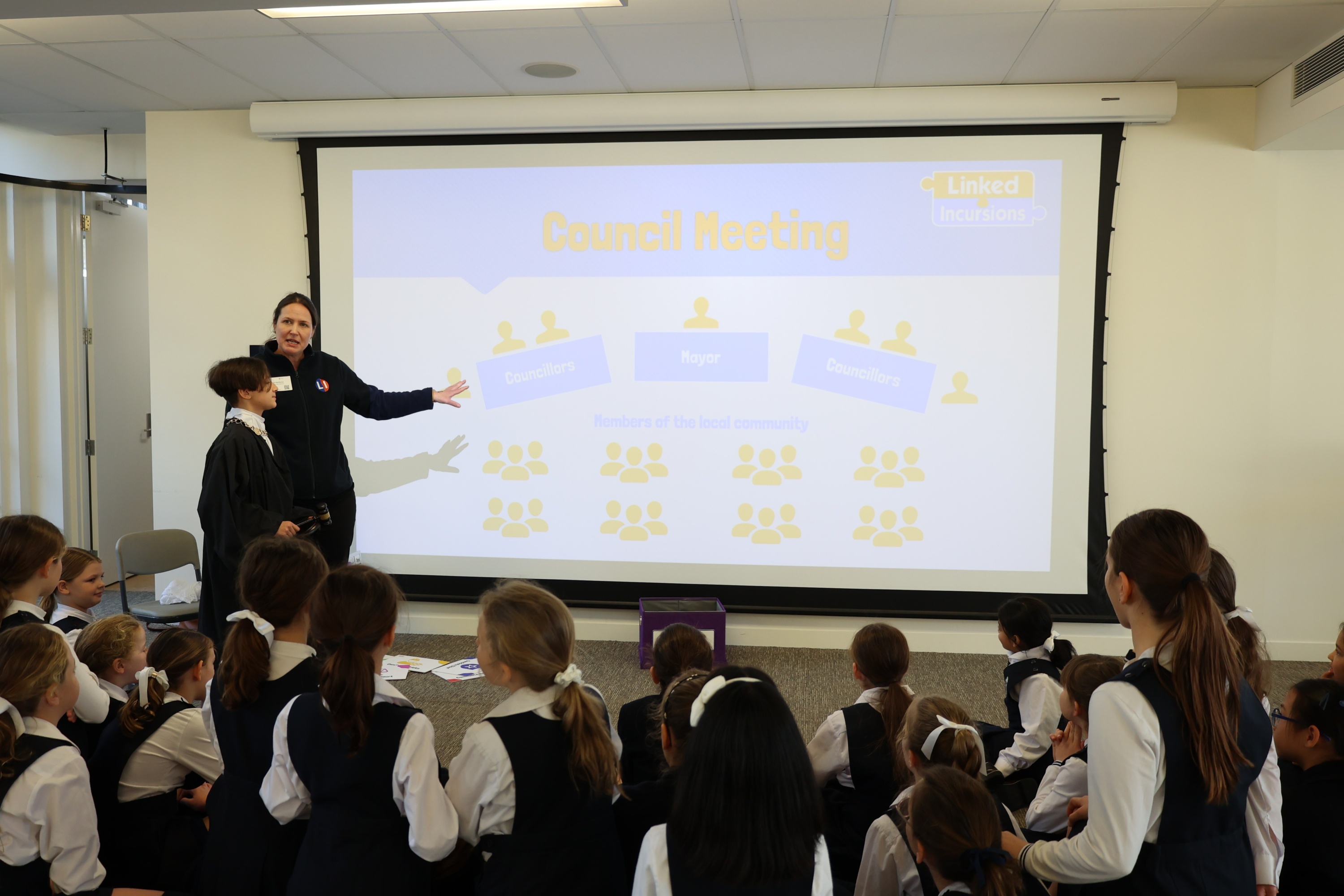
Penelope was Mayor in the Democracy Incursion

Penelope was Mayor in the Democracy Incursion
Democracy in Action
In Term 3, our ‘Law and Order’ unit introduced the Year 3s to the foundations of Australian democracy and civic responsibility. It was an exciting journey of discovery about the values that shape our society.

This immersive learning experience combined hands-on activities, role play and inquiry-based exploration to bring democratic principles to life.
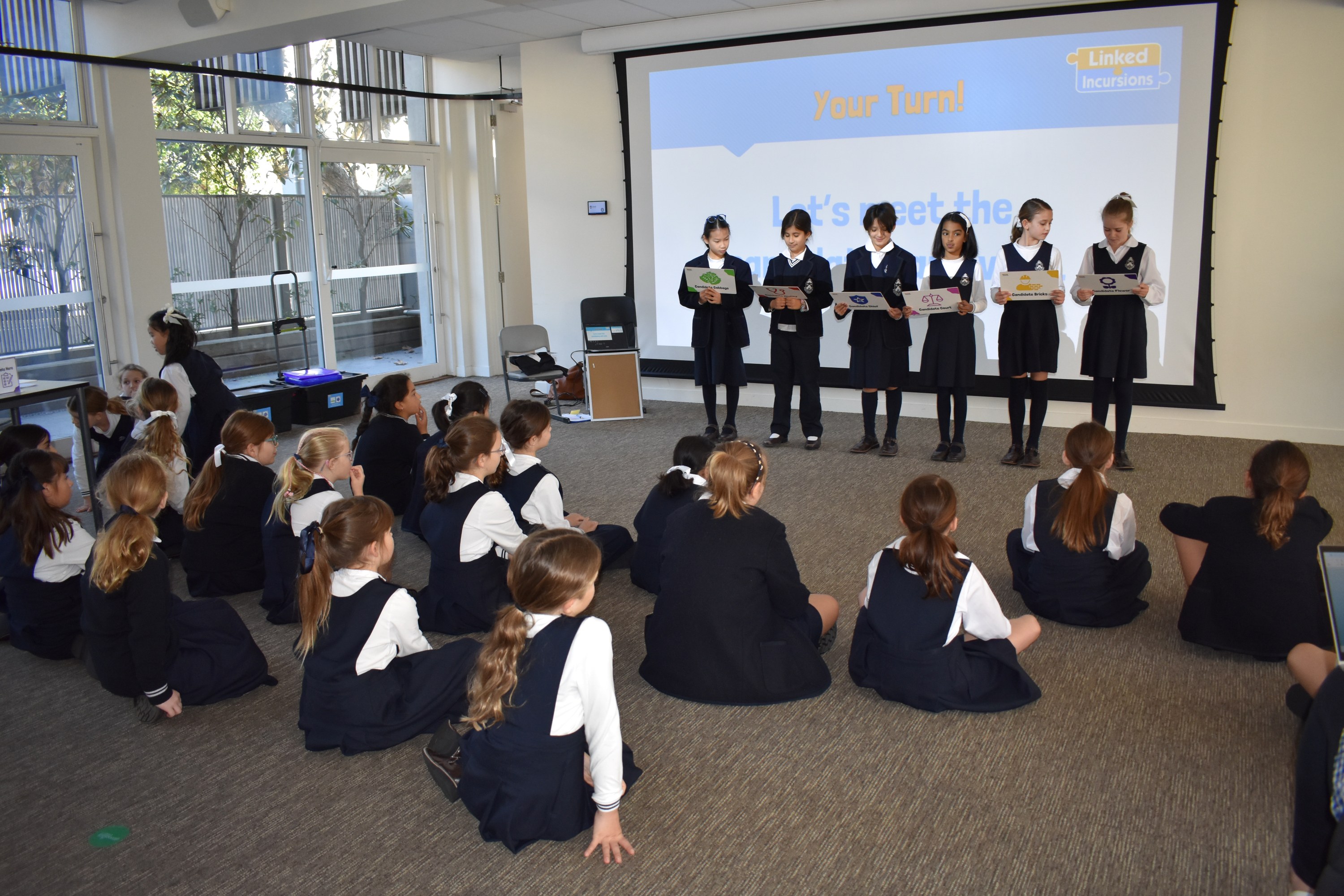
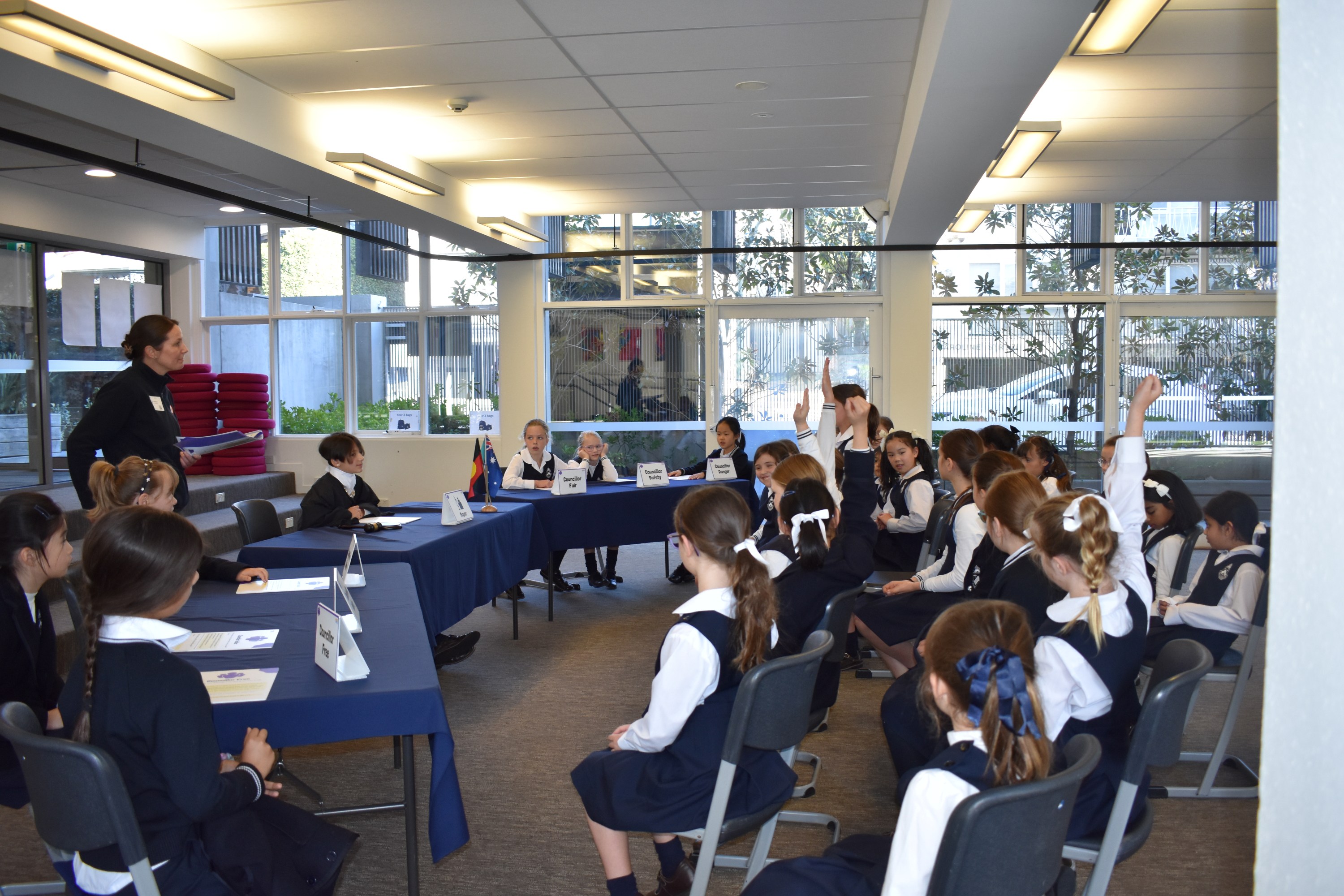
The unit began with an engaging incursion that allowed students to witness the democratic process firsthand and sparked their curiosity about how laws are made, and how governments operate. “I loved pretending to be a mayor and using my gavel. It made me feel like I was really in a council meeting,” said student Penelope. The girls also gained a hands-on experience with voting, role playing as electoral officials and running a mini election, complete with learning about preferential voting and the redistribution of votes.
This immersive learning experience combined hands-on activities, role play and inquiry-based exploration to bring democratic principles to life.
The unit began with an engaging incursion that allowed students to witness the democratic process firsthand and sparked their curiosity about how laws are made, and how governments operate. “I loved pretending to be a mayor and using my gavel. It made me feel like I was really in a council meeting,” said student Penelope. The girls also gained a hands-on experience with voting, role playing as electoral officials and running a mini election, complete with learning about preferential voting and the redistribution of votes.
This immersive learning experience combined hands-on activities, role play and inquiry-based exploration to bring democratic principles to life.
The unit began with an engaging incursion that allowed students to witness the democratic process firsthand and sparked their curiosity about how laws are made, and how governments operate. “I loved pretending to be a mayor and using my gavel. It made me feel like I was really in a council meeting,” said student Penelope. The girls also gained a hands-on experience with voting, role playing as electoral officials and running a mini election, complete with learning about preferential voting and the redistribution of votes.
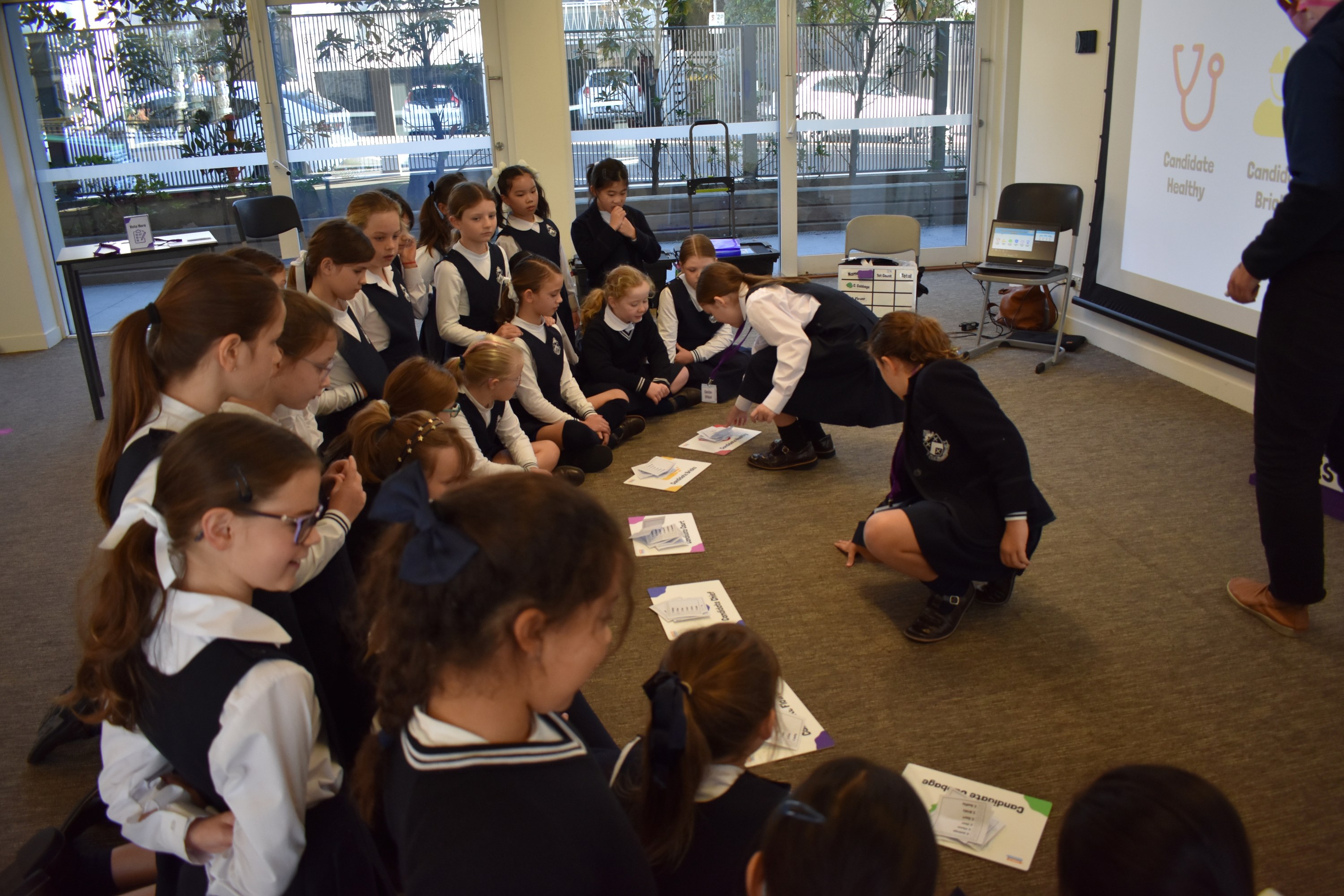
Year 3 engaging in the democracy incursion
Year 3 engaging in the democracy incursion
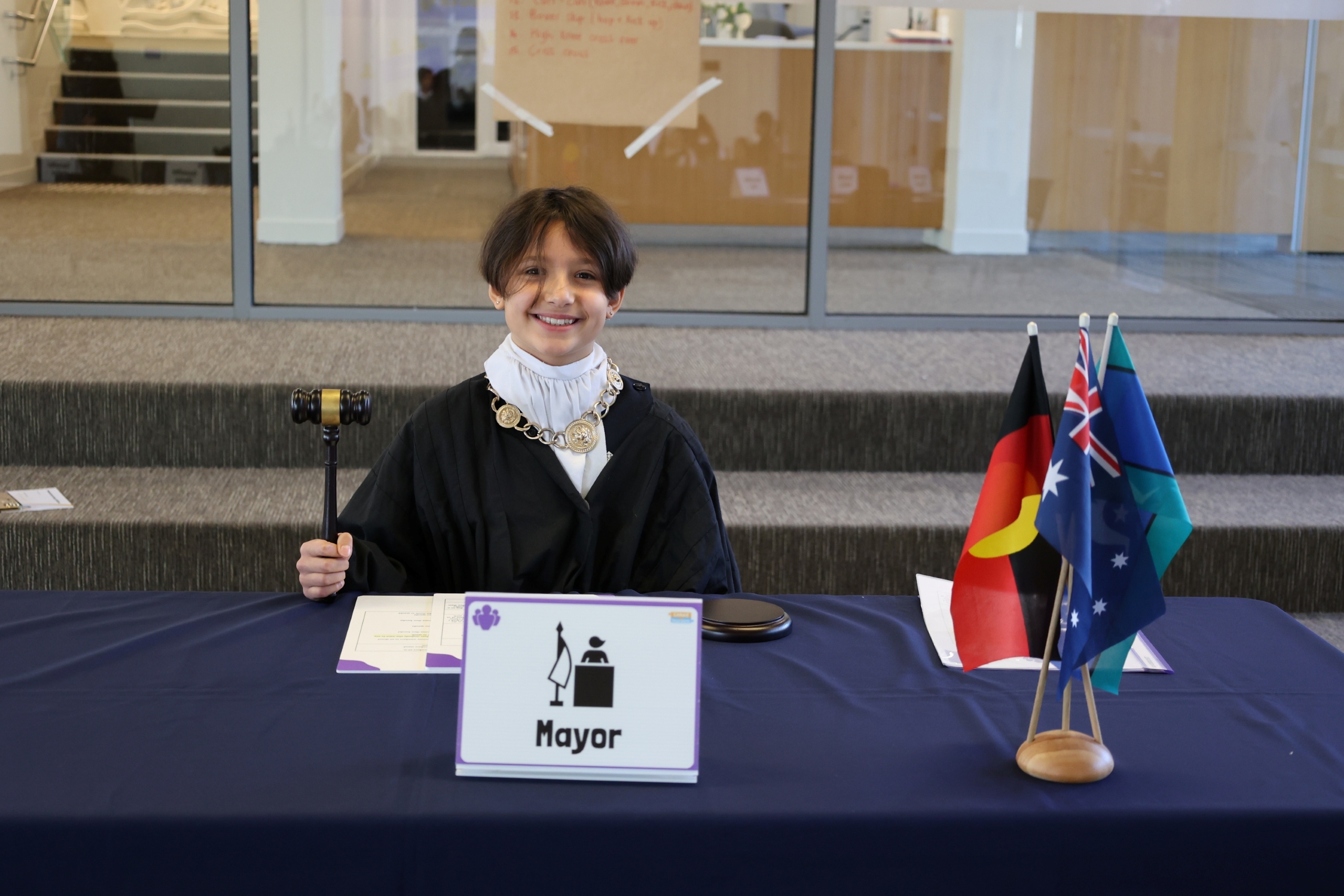
“...I loved pretending to be a mayor and using my gavel. It made me feel like I was really in a council meeting...”
Building on this incursion, students then explored key concepts such as the difference between rules and laws, the roles of the three levels of government (local, state and federal) and essential democratic terminology. These lessons helped develop civic literacy and laid the groundwork for our next experience: a visit from Rebecca Cohrssen, Founder and Director of Cohrssen Partners Lawyers. Rebecca explained how trials and courts operate and the role of prosecution and defence lawyers. Many of the girls finished this session inspired to study and practise law in the future – an industry, Cohrssen said, that “has a lot of smart and powerful women stepping into it.”
Another highlight of the unit was the mock classroom trial, where the girls explored the physical layout of a courtroom and the roles of clerks, juries and judges. As a class, we worked through three laws that had been broken, at a local, state and federal level. Both the prosecution and defence lawyers did their best but, ultimately, the defendants proved too honest, showing our School value of integrity even in a mock court!
Throughout the unit, our Grammarians were very interested to discover that rules and laws can change over time to reflect the values of the society we live in. They were amazed to learn how children’s rights have improved over time and delighted in writing their own propositions for rule and law changes in their everyday lives. Their propositions were presented to the class and votes were taken to pass their bills. It seems that later bedtimes, unlimited snack breaks and more pocket money were all very popular.
“...I loved pretending to be a mayor and using my gavel. It made me feel like I was really in a council meeting...”
Building on this incursion, students then explored key concepts such as the difference between rules and laws, the roles of the three levels of government (local, state and federal) and essential democratic terminology. These lessons helped develop civic literacy and laid the groundwork for our next experience: a visit from Rebecca Cohrssen, Founder and Director of Cohrssen Partners Lawyers. Rebecca explained how trials and courts operate and the role of prosecution and defence lawyers. Many of the girls finished this session inspired to study and practise law in the future – an industry, Cohrssen said, that “has a lot of smart and powerful women stepping into it.”
Another highlight of the unit was the mock classroom trial, where the girls explored the physical layout of a courtroom and the roles of clerks, juries and judges. As a class, we worked through three laws that had been broken, at a local, state and federal level. Both the prosecution and defence lawyers did their best but, ultimately, the defendants proved too honest, showing our School value of integrity even in a mock court!
Throughout the unit, our Grammarians were very interested to discover that rules and laws can change over time to reflect the values of the society we live in. They were amazed to learn how children’s rights have improved over time and delighted in writing their own propositions for rule and law changes in their everyday lives. Their propositions were presented to the class and votes were taken to pass their bills. It seems that later bedtimes, unlimited snack breaks and more pocket money were all very popular.
“...I loved pretending to be a mayor and using my gavel. It made me feel like I was really in a council meeting...”
Building on this incursion, students then explored key concepts such as the difference between rules and laws, the roles of the three levels of government (local, state and federal) and essential democratic terminology. These lessons helped develop civic literacy and laid the groundwork for our next experience: a visit from Rebecca Cohrssen, Founder and Director of Cohrssen Partners Lawyers. Rebecca explained how trials and courts operate and the role of prosecution and defence lawyers. Many of the girls finished this session inspired to study and practise law in the future – an industry, Cohrssen said, that “has a lot of smart and powerful women stepping into it.”
Another highlight of the unit was the mock classroom trial, where the girls explored the physical layout of a courtroom and the roles of clerks, juries and judges. As a class, we worked through three laws that had been broken, at a local, state and federal level. Both the prosecution and defence lawyers did their best but, ultimately, the defendants proved too honest, showing our School value of integrity even in a mock court!
Throughout the unit, our Grammarians were very interested to discover that rules and laws can change over time to reflect the values of the society we live in. They were amazed to learn how children’s rights have improved over time and delighted in writing their own propositions for rule and law changes in their everyday lives. Their propositions were presented to the class and votes were taken to pass their bills. It seems that later bedtimes, unlimited snack breaks and more pocket money were all very popular.
Education Consultant Kath Murdoch states “Inquiry is not a subject. Inquiry is not something we do on Tuesday and Thursday afternoons... Inquiry is a stance, a culture and a way of being". By actively incorporating our learning about democratic processes into our learning throughout the term, students developed not only content and contextual knowledge but also a sense of ethical responsibility and connection to their communities. They have developed their observational, inquiry and critical thinking skills to becoming engaged, ethical and active members of society, equipped with the confidence and knowledge to participate meaningfully in democracy.
This unit laid important foundations for our Grammarians’ understanding of the world around them, encouraging them to ask questions, consider different perspectives and reflect on the values that shape our society. At this early stage in their educational journey, curiosity is a powerful driver of learning, and it was evident in every discussion, role play and proposition they crafted. By nurturing this inquisitive spirit and embedding humanities-based thinking into their experiences, we are helping our students build a lifelong love of learning and a deep understanding of the human experience. Their enthusiasm and thoughtful engagement remind us that, even in the Junior Years, students are capable of grappling with big ideas and contributing meaningfully to conversations about fairness, justice and community.
If you ever find yourself needing a lawyer in a few decades, there’s no doubt you’ll find a capable, confident MGGS learner ready to stand in your corner! These girls truly relished every moment of their journey through democracy and law.
Education Consultant Kath Murdoch states “Inquiry is not a subject. Inquiry is not something we do on Tuesday and Thursday afternoons... Inquiry is a stance, a culture and a way of being". By actively incorporating our learning about democratic processes into our learning throughout the term, students developed not only content and contextual knowledge but also a sense of ethical responsibility and connection to their communities. They have developed their observational, inquiry and critical thinking skills to becoming engaged, ethical and active members of society, equipped with the confidence and knowledge to participate meaningfully in democracy.
This unit laid important foundations for our Grammarians’ understanding of the world around them, encouraging them to ask questions, consider different perspectives and reflect on the values that shape our society. At this early stage in their educational journey, curiosity is a powerful driver of learning, and it was evident in every discussion, role play and proposition they crafted. By nurturing this inquisitive spirit and embedding humanities-based thinking into their experiences, we are helping our students build a lifelong love of learning and a deep understanding of the human experience. Their enthusiasm and thoughtful engagement remind us that, even in the Junior Years, students are capable of grappling with big ideas and contributing meaningfully to conversations about fairness, justice and community.
If you ever find yourself needing a lawyer in a few decades, there’s no doubt you’ll find a capable, confident MGGS learner ready to stand in your corner! These girls truly relished every moment of their journey through democracy and law.
Education Consultant Kath Murdoch states “Inquiry is not a subject. Inquiry is not something we do on Tuesday and Thursday afternoons... Inquiry is a stance, a culture and a way of being". By actively incorporating our learning about democratic processes into our learning throughout the term, students developed not only content and contextual knowledge but also a sense of ethical responsibility and connection to their communities. They have developed their observational, inquiry and critical thinking skills to becoming engaged, ethical and active members of society, equipped with the confidence and knowledge to participate meaningfully in democracy.
This unit laid important foundations for our Grammarians’ understanding of the world around them, encouraging them to ask questions, consider different perspectives and reflect on the values that shape our society. At this early stage in their educational journey, curiosity is a powerful driver of learning, and it was evident in every discussion, role play and proposition they crafted. By nurturing this inquisitive spirit and embedding humanities-based thinking into their experiences, we are helping our students build a lifelong love of learning and a deep understanding of the human experience. Their enthusiasm and thoughtful engagement remind us that, even in the Junior Years, students are capable of grappling with big ideas and contributing meaningfully to conversations about fairness, justice and community.
If you ever find yourself needing a lawyer in a few decades, there’s no doubt you’ll find a capable, confident MGGS learner ready to stand in your corner! These girls truly relished every moment of their journey through democracy and law.