


.JPG)


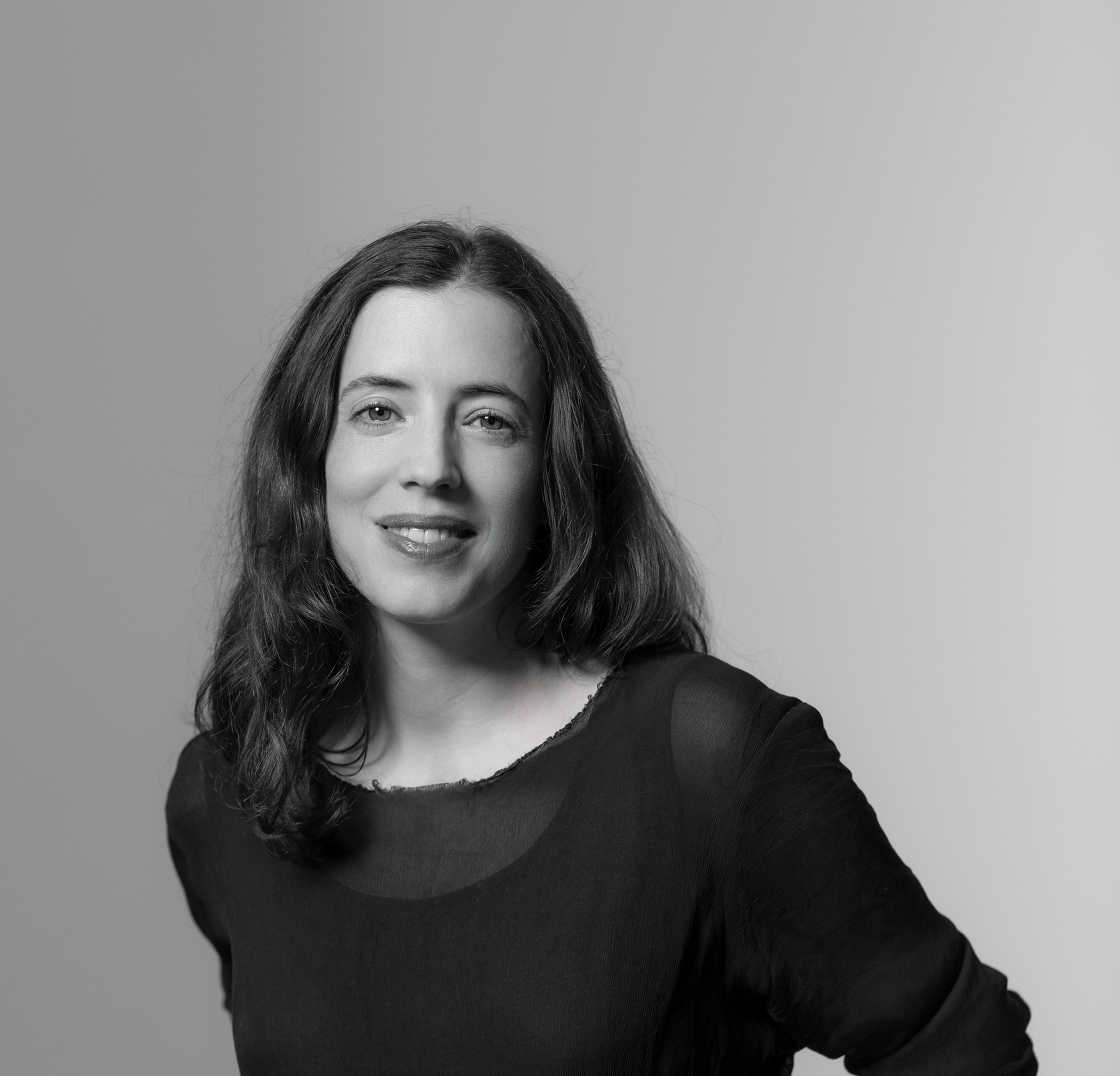



Pip Wallis, Monash 2024, Photo by Andrew Curtis

Pip Wallis, Monash 2024, Photo by Andrew Curtis
Where Are They Now?
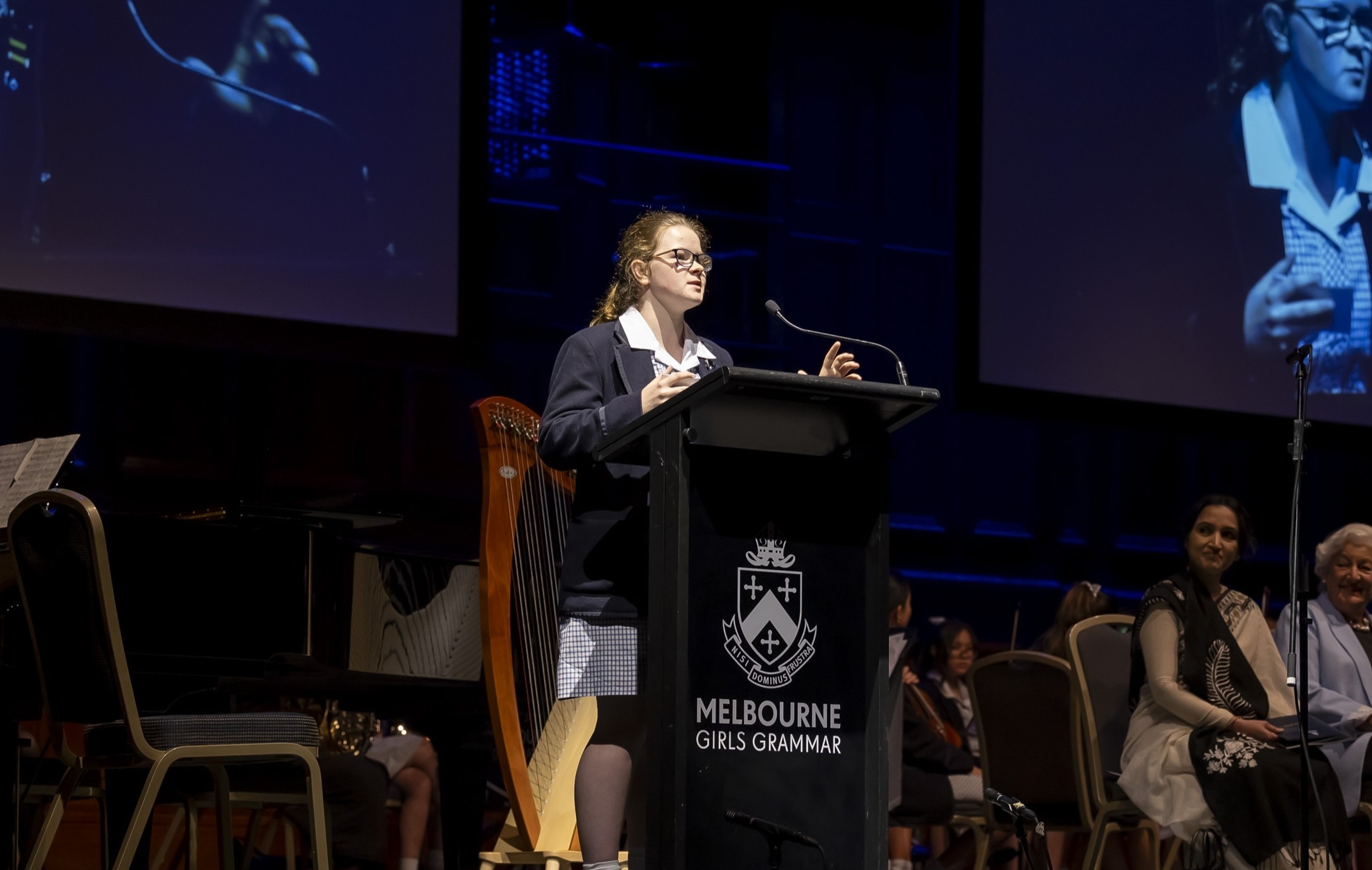
Please enjoy reading about the achievements of Old Grammarians Pip Wallis (2002), an art curator, and Charlie Hoskins (2020), a historian.
We look forward to following their careers and sharing the highlights of their personal and professional development since leaving MGGS.

Meet Pip Wallis (2002)
Tell us about your background and your time at MGGS. Were you always artistic?
Yes, I was. I grew up in Central Victoria on a wool farm near Yea, and went to the very small primary school of 20 students up there.
I very clearly remember the tour of Melbourne Girls Grammar with my mother, and seeing the new arts wing which had just been built. I was already very passionate about art and a very keen drawer and maker of art, and I thought, this was the spot for me. Seeing the way the School valued art enough to put the resources into capital works of that kind, laid the path for me. We also had such a brilliant experience meeting Polly Winterton, who was Head of the Boarding House at that time, and such a feature of my teenage years and remembered very fondly, I'm sure, by many boarders. Of course, the standard of the students is just so much higher at Merton Hall, so I went from being the A+ student in the country to being the C student at Merton Hall, and I had to really work to raise the bar again. I think it did wonderful things for me to be around students and teachers who were expecting more, doing more, hoping for more. The other huge shift for me was of course going from rural life to being in the city, where the major feature for me was that I could go and see art exhibitions, dance performances and all kinds of cultural things that expanded my understanding of what art was, and also provided me with a vision of where I could fit in all of that.
So, you were already very interested in art. Did that come from home? How did that passion develop?
We grew up 30 kilometres from the nearest anything, there was nothing around us, so we had to make our own fun. Mum got us into the paints and drawing very early, and creative play and creating was a part of my life from the very beginning. It became a passion, and it became something that I felt good doing.
From there, I took all the Art classes at Merton Hall. I had the lovely Jacqui Turner, who let me spend my lunchtimes in the art room, throwing pottery on the wheel. In my final years, there was not a day that my uniform wasn't covered in clay, and I didn't have it in my hair. It was a bit of a place of solace for me as well. I'm a social creature, but I also loved hiding away, creating. I remember very clearly, I did not have a maths or science brain, despite the best efforts of the beautiful teachers in those departments. Helen Kennedy and Kathryn Hendy-Ekers were passionate art teachers too, and I still see Kathy, as our work now intersects.
So, after graduating from MGGS, where did you go from there?
I applied to fine art schools, and I did get accepted for some, but I decided that I would rather become an art historian or a curator and, not make, but read, write, research and support artists in that way. So, I went on to do an arts degree at the University of Melbourne, majoring in Art History and French, and then I did a Master’s in Art Curatorship, also at the University of Melbourne.
On completing your Master’s, what were your next steps?
I have a bit of wanderlust, and the beautiful thing about contemporary art and the contemporary art world is that it's very global by nature. So, it's given me the kind of connectivity to move around the sector internationally. I interned and volunteered like mad for small artist-run art galleries and Gertrude Contemporary, a really important, non-profit space in Melbourne. I did an internship as part of my Master’s with the National Gallery of Victoria in their prints and drawings department. That was an incredible education, because it's really rigorous curatorial research work in the historic sense.
After working at Gertrude Contemporary as curator and becoming part of the thriving artistic community in Melbourne through that organisation, I took a job in London. We had a visiting curator from an organisation called Chisenhale Gallery, which is a Non-profit Art Centre in London. I convinced her to let me come and work for her for a year, which I did, and loved. From there, I went to work in Los Angeles for an art journal called X-Tra Contemporary Art Quarterly, which was fabulous, because that kind of threw me into this very West Coast arts community, to learn the history of that artistic community and be exposed to the US sector.
What were your next steps after Los Angeles?
I returned to Melbourne, and was appointed Curator of Contemporary Art at the National Gallery of Victoria (NGV), and that was a huge step to work in that scale of institution and to learn about curating for a very, very wide public. The remit of the gallery is to serve the entire Victorian community, and it was great to think about expanded curatorial practice in that context.
How did that differ from what you had done before?
Moving to the NGV shifted my focus, not just toward creating opportunities for artists, but toward finding ways to communicate their work to audiences who might never have visited an art gallery or who feel uncertain about contemporary art. This became a crucial skill.
The scale of the organisation, working with enormous touring exhibitions, working with experts across different curatorial areas, from antiquity to fashion and textiles, was a much more diverse context to be working in.
What incredible experiences you've had up to this point!
Yes. I think I was very hungry for everything, as people often are in their 20s, keen to experience everything and explore all the art world had to offer. I was thrilled to find out that the area that I was working in provided access to a global community. It does feel like in some ways the contemporary art world is very small because no matter where you go, we feel like a community across the world.
After your time at the NGV, what came next?
I was there for six years and then decided that I wanted to get some new experience internationally, and I went to work in Berlin for an organisation called Callie’s. I was interested in it as an organisation because it was started by a curator who I was familiar with from my time in Los Angeles. She had gone from the museum sector, to opening a non-profit organisation focused on creation. Rather than thinking about the exhibiting end of the of the process, she was thinking about how to support the creation part. The organisation provides artist residencies for artists from around the world and gives them a space to work in and to stay in. It's provided without cost and sometimes with additional support. The crucial thing for me was that it didn't expect artists to have a particular outcome, or to have an outcome even at all. It really gave them that room and that space without the pressure of exhibition content, which is really unusual for a residency program. So, I was inspired by this kind of, almost utopian belief in the in the artistic process and the importance of that.
That sounds incredible. How was it funded?
The funding is through a combination of private philanthropy and grants. That experience was amazing because after working for a big institution for six years, it was really great to work with a very, very small team and a very nimble program. A very artist-centric program, and to kind of deprogram my brain a bit, and also to be in Berlin, which of course is just overflowing with art.
Meet Pip Wallis (2002)
Tell us about your background and your time at MGGS. Were you always artistic?
Yes, I was. I grew up in Central Victoria on a wool farm near Yea, and went to the very small primary school of 20 students up there.
I very clearly remember the tour of Melbourne Girls Grammar with my mother, and seeing the new arts wing which had just been built. I was already very passionate about art and a very keen drawer and maker of art, and I thought, this was the spot for me. Seeing the way the School valued art enough to put the resources into capital works of that kind, laid the path for me. We also had such a brilliant experience meeting Polly Winterton, who was Head of the Boarding House at that time, and such a feature of my teenage years and remembered very fondly, I'm sure, by many boarders. Of course, the standard of the students is just so much higher at Merton Hall, so I went from being the A+ student in the country to being the C student at Merton Hall, and I had to really work to raise the bar again. I think it did wonderful things for me to be around students and teachers who were expecting more, doing more, hoping for more. The other huge shift for me was of course going from rural life to being in the city, where the major feature for me was that I could go and see art exhibitions, dance performances and all kinds of cultural things that expanded my understanding of what art was, and also provided me with a vision of where I could fit in all of that.
So, you were already very interested in art. Did that come from home? How did that passion develop?
We grew up 30 kilometres from the nearest anything, there was nothing around us, so we had to make our own fun. Mum got us into the paints and drawing very early, and creative play and creating was a part of my life from the very beginning. It became a passion, and it became something that I felt good doing.
From there, I took all the Art classes at Merton Hall. I had the lovely Jacqui Turner, who let me spend my lunchtimes in the art room, throwing pottery on the wheel. In my final years, there was not a day that my uniform wasn't covered in clay, and I didn't have it in my hair. It was a bit of a place of solace for me as well. I'm a social creature, but I also loved hiding away, creating. I remember very clearly, I did not have a maths or science brain, despite the best efforts of the beautiful teachers in those departments. Helen Kennedy and Kathryn Hendy-Ekers were passionate art teachers too, and I still see Kathy, as our work now intersects.
So, after graduating from MGGS, where did you go from there?
I applied to fine art schools, and I did get accepted for some, but I decided that I would rather become an art historian or a curator and, not make, but read, write, research and support artists in that way. So, I went on to do an arts degree at the University of Melbourne, majoring in Art History and French, and then I did a Master’s in Art Curatorship, also at the University of Melbourne.
On completing your Master’s, what were your next steps?
I have a bit of wanderlust, and the beautiful thing about contemporary art and the contemporary art world is that it's very global by nature. So, it's given me the kind of connectivity to move around the sector internationally. I interned and volunteered like mad for small artist-run art galleries and Gertrude Contemporary, a really important, non-profit space in Melbourne. I did an internship as part of my Master’s with the National Gallery of Victoria in their prints and drawings department. That was an incredible education, because it's really rigorous curatorial research work in the historic sense.
After working at Gertrude Contemporary as curator and becoming part of the thriving artistic community in Melbourne through that organisation, I took a job in London. We had a visiting curator from an organisation called Chisenhale Gallery, which is a Non-profit Art Centre in London. I convinced her to let me come and work for her for a year, which I did, and loved. From there, I went to work in Los Angeles for an art journal called X-Tra Contemporary Art Quarterly, which was fabulous, because that kind of threw me into this very West Coast arts community, to learn the history of that artistic community and be exposed to the US sector.
What were your next steps after Los Angeles?
I returned to Melbourne, and was appointed Curator of Contemporary Art at the National Gallery of Victoria (NGV), and that was a huge step to work in that scale of institution and to learn about curating for a very, very wide public. The remit of the gallery is to serve the entire Victorian community, and it was great to think about expanded curatorial practice in that context.
How did that differ from what you had done before?
Moving to the NGV shifted my focus, not just toward creating opportunities for artists, but toward finding ways to communicate their work to audiences who might never have visited an art gallery or who feel uncertain about contemporary art. This became a crucial skill.
The scale of the organisation, working with enormous touring exhibitions, working with experts across different curatorial areas, from antiquity to fashion and textiles, was a much more diverse context to be working in.
What incredible experiences you've had up to this point!
Yes. I think I was very hungry for everything, as people often are in their 20s, keen to experience everything and explore all the art world had to offer. I was thrilled to find out that the area that I was working in provided access to a global community. It does feel like in some ways the contemporary art world is very small because no matter where you go, we feel like a community across the world.
After your time at the NGV, what came next?
I was there for six years and then decided that I wanted to get some new experience internationally, and I went to work in Berlin for an organisation called Callie’s. I was interested in it as an organisation because it was started by a curator who I was familiar with from my time in Los Angeles. She had gone from the museum sector, to opening a non-profit organisation focused on creation. Rather than thinking about the exhibiting end of the of the process, she was thinking about how to support the creation part. The organisation provides artist residencies for artists from around the world and gives them a space to work in and to stay in. It's provided without cost and sometimes with additional support. The crucial thing for me was that it didn't expect artists to have a particular outcome, or to have an outcome even at all. It really gave them that room and that space without the pressure of exhibition content, which is really unusual for a residency program. So, I was inspired by this kind of, almost utopian belief in the in the artistic process and the importance of that.
That sounds incredible. How was it funded?
The funding is through a combination of private philanthropy and grants. That experience was amazing because after working for a big institution for six years, it was really great to work with a very, very small team and a very nimble program. A very artist-centric program, and to kind of deprogram my brain a bit, and also to be in Berlin, which of course is just overflowing with art.
Meet Pip Wallis (2002)
Tell us about your background and your time at MGGS. Were you always artistic?
Yes, I was. I grew up in Central Victoria on a wool farm near Yea, and went to the very small primary school of 20 students up there.
I very clearly remember the tour of Melbourne Girls Grammar with my mother, and seeing the new arts wing which had just been built. I was already very passionate about art and a very keen drawer and maker of art, and I thought, this was the spot for me. Seeing the way the School valued art enough to put the resources into capital works of that kind, laid the path for me. We also had such a brilliant experience meeting Polly Winterton, who was Head of the Boarding House at that time, and such a feature of my teenage years and remembered very fondly, I'm sure, by many boarders. Of course, the standard of the students is just so much higher at Merton Hall, so I went from being the A+ student in the country to being the C student at Merton Hall, and I had to really work to raise the bar again. I think it did wonderful things for me to be around students and teachers who were expecting more, doing more, hoping for more. The other huge shift for me was of course going from rural life to being in the city, where the major feature for me was that I could go and see art exhibitions, dance performances and all kinds of cultural things that expanded my understanding of what art was, and also provided me with a vision of where I could fit in all of that.
So, you were already very interested in art. Did that come from home? How did that passion develop?
We grew up 30 kilometres from the nearest anything, there was nothing around us, so we had to make our own fun. Mum got us into the paints and drawing very early, and creative play and creating was a part of my life from the very beginning. It became a passion, and it became something that I felt good doing.
From there, I took all the Art classes at Merton Hall. I had the lovely Jacqui Turner, who let me spend my lunchtimes in the art room, throwing pottery on the wheel. In my final years, there was not a day that my uniform wasn't covered in clay, and I didn't have it in my hair. It was a bit of a place of solace for me as well. I'm a social creature, but I also loved hiding away, creating. I remember very clearly, I did not have a maths or science brain, despite the best efforts of the beautiful teachers in those departments. Helen Kennedy and Kathryn Hendy-Ekers were passionate art teachers too, and I still see Kathy, as our work now intersects.
So, after graduating from MGGS, where did you go from there?
I applied to fine art schools, and I did get accepted for some, but I decided that I would rather become an art historian or a curator and, not make, but read, write, research and support artists in that way. So, I went on to do an arts degree at the University of Melbourne, majoring in Art History and French, and then I did a Master’s in Art Curatorship, also at the University of Melbourne.
On completing your Master’s, what were your next steps?
I have a bit of wanderlust, and the beautiful thing about contemporary art and the contemporary art world is that it's very global by nature. So, it's given me the kind of connectivity to move around the sector internationally. I interned and volunteered like mad for small artist-run art galleries and Gertrude Contemporary, a really important, non-profit space in Melbourne. I did an internship as part of my Master’s with the National Gallery of Victoria in their prints and drawings department. That was an incredible education, because it's really rigorous curatorial research work in the historic sense.
After working at Gertrude Contemporary as curator and becoming part of the thriving artistic community in Melbourne through that organisation, I took a job in London. We had a visiting curator from an organisation called Chisenhale Gallery, which is a Non-profit Art Centre in London. I convinced her to let me come and work for her for a year, which I did, and loved. From there, I went to work in Los Angeles for an art journal called X-Tra Contemporary Art Quarterly, which was fabulous, because that kind of threw me into this very West Coast arts community, to learn the history of that artistic community and be exposed to the US sector.
What were your next steps after Los Angeles?
I returned to Melbourne, and was appointed Curator of Contemporary Art at the National Gallery of Victoria (NGV), and that was a huge step to work in that scale of institution and to learn about curating for a very, very wide public. The remit of the gallery is to serve the entire Victorian community, and it was great to think about expanded curatorial practice in that context.
How did that differ from what you had done before?
Moving to the NGV shifted my focus, not just toward creating opportunities for artists, but toward finding ways to communicate their work to audiences who might never have visited an art gallery or who feel uncertain about contemporary art. This became a crucial skill.
The scale of the organisation, working with enormous touring exhibitions, working with experts across different curatorial areas, from antiquity to fashion and textiles, was a much more diverse context to be working in.
What incredible experiences you've had up to this point!
Yes. I think I was very hungry for everything, as people often are in their 20s, keen to experience everything and explore all the art world had to offer. I was thrilled to find out that the area that I was working in provided access to a global community. It does feel like in some ways the contemporary art world is very small because no matter where you go, we feel like a community across the world.
After your time at the NGV, what came next?
I was there for six years and then decided that I wanted to get some new experience internationally, and I went to work in Berlin for an organisation called Callie’s. I was interested in it as an organisation because it was started by a curator who I was familiar with from my time in Los Angeles. She had gone from the museum sector, to opening a non-profit organisation focused on creation. Rather than thinking about the exhibiting end of the of the process, she was thinking about how to support the creation part. The organisation provides artist residencies for artists from around the world and gives them a space to work in and to stay in. It's provided without cost and sometimes with additional support. The crucial thing for me was that it didn't expect artists to have a particular outcome, or to have an outcome even at all. It really gave them that room and that space without the pressure of exhibition content, which is really unusual for a residency program. So, I was inspired by this kind of, almost utopian belief in the in the artistic process and the importance of that.
That sounds incredible. How was it funded?
The funding is through a combination of private philanthropy and grants. That experience was amazing because after working for a big institution for six years, it was really great to work with a very, very small team and a very nimble program. A very artist-centric program, and to kind of deprogram my brain a bit, and also to be in Berlin, which of course is just overflowing with art.

Pip speaking about Lawrence Weiner, National Gallery of Victoria, 2017
Pip speaking about Lawrence Weiner, National Gallery of Victoria, 2017
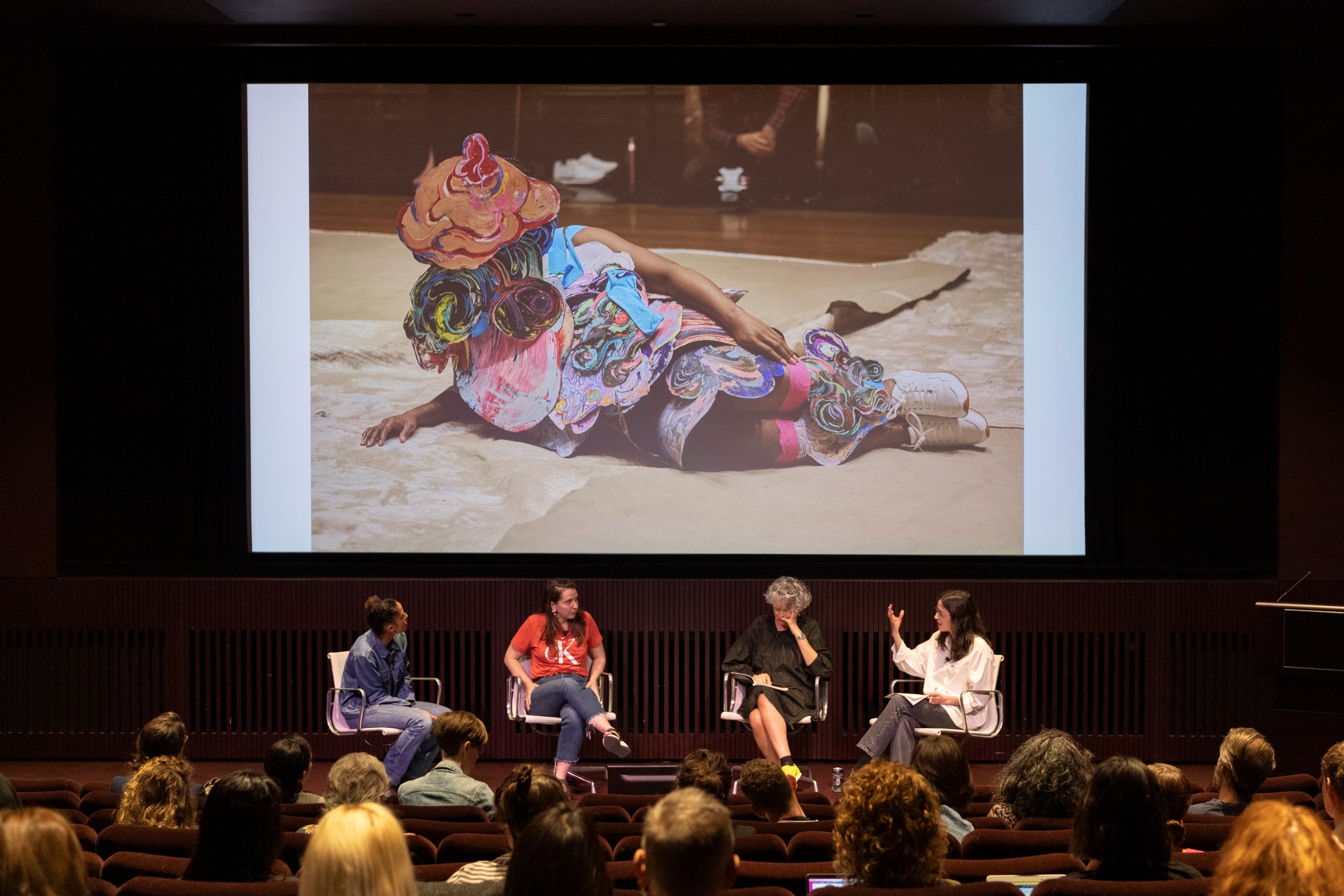
Pip, Tate Modern London Precarious Movements Symposium, 2023
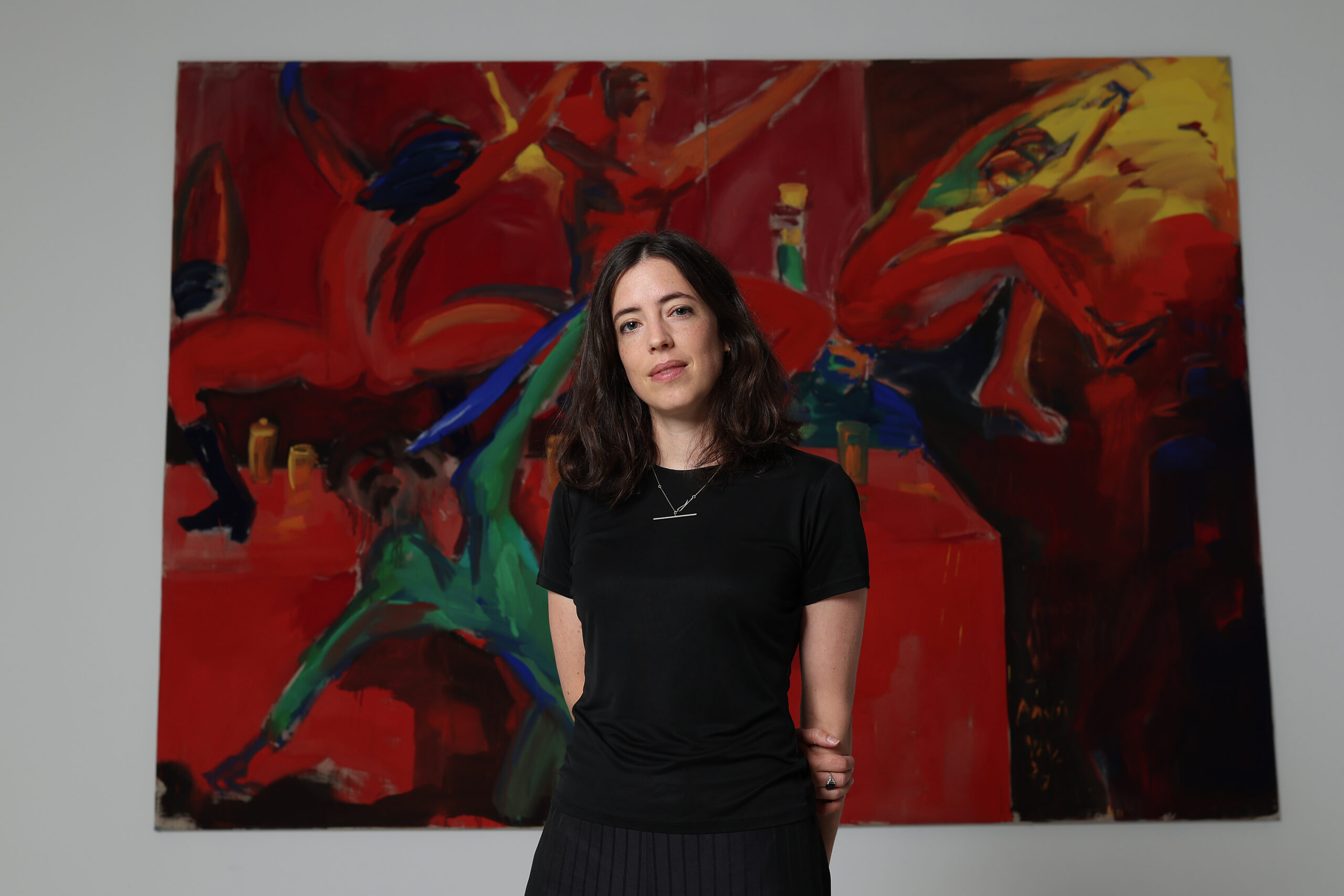
Pip, National Gallery of Victoria, 2022
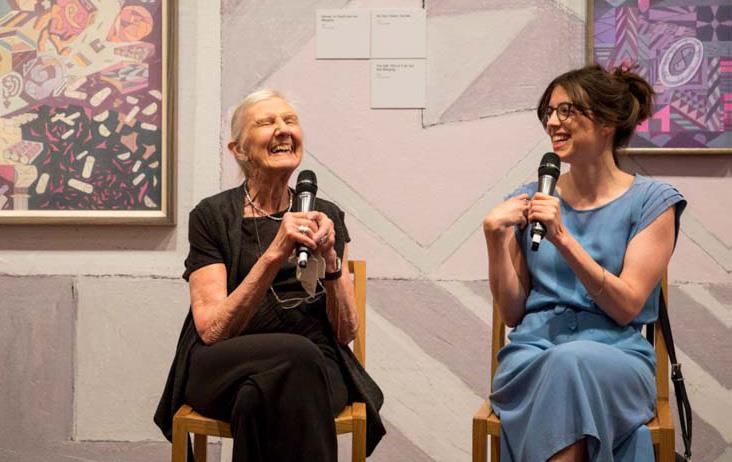
Pip with Helen Maudsley, NGV 2021
Can you talk to me a little about your role as Chief Investigator on the Australian Research Council (ARC) funded study Precarious Movements: Choreography and the Museum (2020–24)?
In my career, I've focused a lot on performance art, and that came from a great love of dance. When I was younger, my grandmother used to take me to the ballet and I dreamed of being a ballerina, although in Seymour there was no ballet teacher, so that dream was crushed pretty early. I have continued to love dance, and found that I was drawn to artists who use performance art. A performance is ephemeral. It seemed to me and a few of my colleagues that it was an area that we, as arts professionals, needed to learn more about and to become better familiarised with how to support artists and museums in presenting performance art. We formed a group called Precarious Movements and we were awarded a major Australian Research Council grant. A three-year research project involving the National Gallery of Victoria, the University of New South Wales, Art Gallery of NSW, Tate in London, Monash University Museum of Art (MUMA), Perth Institute of Contemporary Arts (PICA) and artist Shelley Lassica, and we spent three years interviewing artists, commissioning performance works and producing a kind of toolkit for museums and artists to assist them in creating and presenting performance work. So, we're hoping that those resources will improve the way the sector deals with this area.
What do you do in your down time ?
The distinctive part about a life in the arts for me is that it really is a whole life. Your whole social world, work world, leisure world, intellectual world is ensconced in art. I spend my weekends looking at exhibitions. The book I'm reading in bed at night is usually about the artwork that I'm working with. There's no part of my life that goes untouched by my work or by art. Sometimes I think that's why people who work in the arts give so much, and sometimes too much unpaid. You know, we know that the arts has this problem because the community are so passionate and it is so rewarding. Your cup overflows because it fills all those parts of your life. My artistic community is my social community, is my parenting community, is my work community.
You’ve travelled so extensively with your work. What has been the significance of that?
I think I was very aware that art is a global language and if I wanted to really understand artists of today and how they're working, then I needed to have experience in different parts of the world. That international exposure has allowed me to have a better understanding of what it means to be an artist today, the concerns they're dealing with, and just be exposed to different ways of working within the sector professionally.
It's funny, I keep coming home. I go away and then I keep coming home. In some ways, when you talk about contemporary global art, people think, “Oh, Australia, it's so far away”, but it's so distinctive. The community is small, it is very supportive and alive and generates opportunities for each other. And, of course, the incredible and fierce First Nations work makes our cultural landscape so distinctive, so I keep finding myself drawn back.
Looking toward the future, is there anything you would like to achieve?
If I can keep being involved in the creative part of curating exhibitions throughout my life, then that will be success. You know, there's so much about working in the museum that is about process, but if I can keep connecting to artists along the way, having studio visits, making exhibitions, writing on their work, then that would be a rewarding career to me.
As long as the creativity stays at the heart of it, then that's a win.
Can you talk to me a little about your role as Chief Investigator on the Australian Research Council (ARC) funded study Precarious Movements: Choreography and the Museum (2020–24)?
In my career, I've focused a lot on performance art, and that came from a great love of dance. When I was younger, my grandmother used to take me to the ballet and I dreamed of being a ballerina, although in Seymour there was no ballet teacher, so that dream was crushed pretty early. I have continued to love dance, and found that I was drawn to artists who use performance art. A performance is ephemeral. It seemed to me and a few of my colleagues that it was an area that we, as arts professionals, needed to learn more about and to become better familiarised with how to support artists and museums in presenting performance art. We formed a group called Precarious Movements and we were awarded a major Australian Research Council grant. A three-year research project involving the National Gallery of Victoria, the University of New South Wales, Art Gallery of NSW, Tate in London, Monash University Museum of Art (MUMA), Perth Institute of Contemporary Arts (PICA) and artist Shelley Lassica, and we spent three years interviewing artists, commissioning performance works and producing a kind of toolkit for museums and artists to assist them in creating and presenting performance work. So, we're hoping that those resources will improve the way the sector deals with this area.
What do you do in your down time ?
The distinctive part about a life in the arts for me is that it really is a whole life. Your whole social world, work world, leisure world, intellectual world is ensconced in art. I spend my weekends looking at exhibitions. The book I'm reading in bed at night is usually about the artwork that I'm working with. There's no part of my life that goes untouched by my work or by art. Sometimes I think that's why people who work in the arts give so much, and sometimes too much unpaid. You know, we know that the arts has this problem because the community are so passionate and it is so rewarding. Your cup overflows because it fills all those parts of your life. My artistic community is my social community, is my parenting community, is my work community.
You’ve travelled so extensively with your work. What has been the significance of that?
I think I was very aware that art is a global language and if I wanted to really understand artists of today and how they're working, then I needed to have experience in different parts of the world. That international exposure has allowed me to have a better understanding of what it means to be an artist today, the concerns they're dealing with, and just be exposed to different ways of working within the sector professionally.
It's funny, I keep coming home. I go away and then I keep coming home. In some ways, when you talk about contemporary global art, people think, “Oh, Australia, it's so far away”, but it's so distinctive. The community is small, it is very supportive and alive and generates opportunities for each other. And, of course, the incredible and fierce First Nations work makes our cultural landscape so distinctive, so I keep finding myself drawn back.
Looking toward the future, is there anything you would like to achieve?
If I can keep being involved in the creative part of curating exhibitions throughout my life, then that will be success. You know, there's so much about working in the museum that is about process, but if I can keep connecting to artists along the way, having studio visits, making exhibitions, writing on their work, then that would be a rewarding career to me.
As long as the creativity stays at the heart of it, then that's a win.
Can you talk to me a little about your role as Chief Investigator on the Australian Research Council (ARC) funded study Precarious Movements: Choreography and the Museum (2020–24)?
In my career, I've focused a lot on performance art, and that came from a great love of dance. When I was younger, my grandmother used to take me to the ballet and I dreamed of being a ballerina, although in Seymour there was no ballet teacher, so that dream was crushed pretty early. I have continued to love dance, and found that I was drawn to artists who use performance art. A performance is ephemeral. It seemed to me and a few of my colleagues that it was an area that we, as arts professionals, needed to learn more about and to become better familiarised with how to support artists and museums in presenting performance art. We formed a group called Precarious Movements and we were awarded a major Australian Research Council grant. A three-year research project involving the National Gallery of Victoria, the University of New South Wales, Art Gallery of NSW, Tate in London, Monash University Museum of Art (MUMA), Perth Institute of Contemporary Arts (PICA) and artist Shelley Lassica, and we spent three years interviewing artists, commissioning performance works and producing a kind of toolkit for museums and artists to assist them in creating and presenting performance work. So, we're hoping that those resources will improve the way the sector deals with this area.
What do you do in your down time ?
The distinctive part about a life in the arts for me is that it really is a whole life. Your whole social world, work world, leisure world, intellectual world is ensconced in art. I spend my weekends looking at exhibitions. The book I'm reading in bed at night is usually about the artwork that I'm working with. There's no part of my life that goes untouched by my work or by art. Sometimes I think that's why people who work in the arts give so much, and sometimes too much unpaid. You know, we know that the arts has this problem because the community are so passionate and it is so rewarding. Your cup overflows because it fills all those parts of your life. My artistic community is my social community, is my parenting community, is my work community.
You’ve travelled so extensively with your work. What has been the significance of that?
I think I was very aware that art is a global language and if I wanted to really understand artists of today and how they're working, then I needed to have experience in different parts of the world. That international exposure has allowed me to have a better understanding of what it means to be an artist today, the concerns they're dealing with, and just be exposed to different ways of working within the sector professionally.
It's funny, I keep coming home. I go away and then I keep coming home. In some ways, when you talk about contemporary global art, people think, “Oh, Australia, it's so far away”, but it's so distinctive. The community is small, it is very supportive and alive and generates opportunities for each other. And, of course, the incredible and fierce First Nations work makes our cultural landscape so distinctive, so I keep finding myself drawn back.
Looking toward the future, is there anything you would like to achieve?
If I can keep being involved in the creative part of curating exhibitions throughout my life, then that will be success. You know, there's so much about working in the museum that is about process, but if I can keep connecting to artists along the way, having studio visits, making exhibitions, writing on their work, then that would be a rewarding career to me.
As long as the creativity stays at the heart of it, then that's a win.
Introducing Charlie Hoskins (2020)
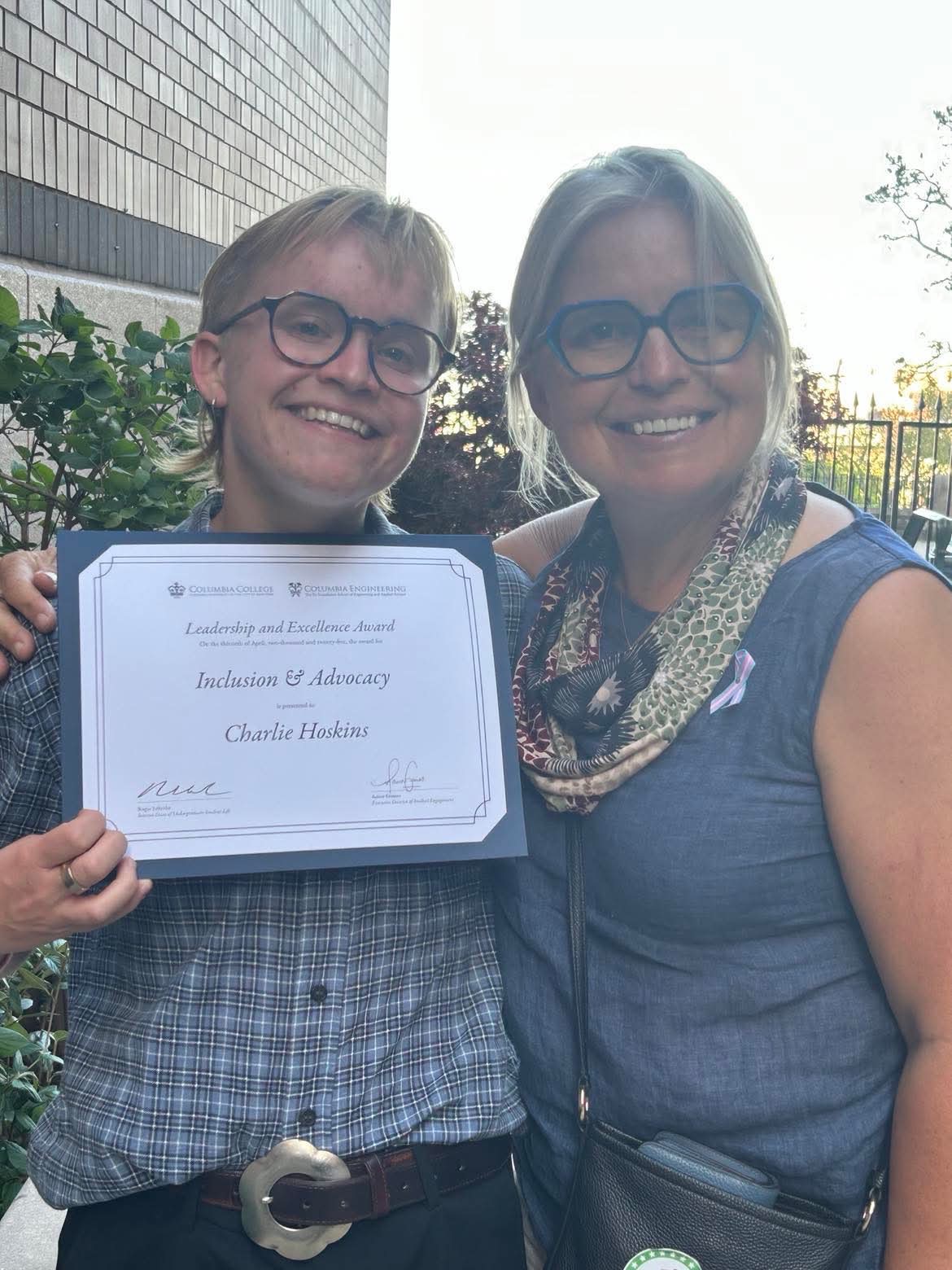
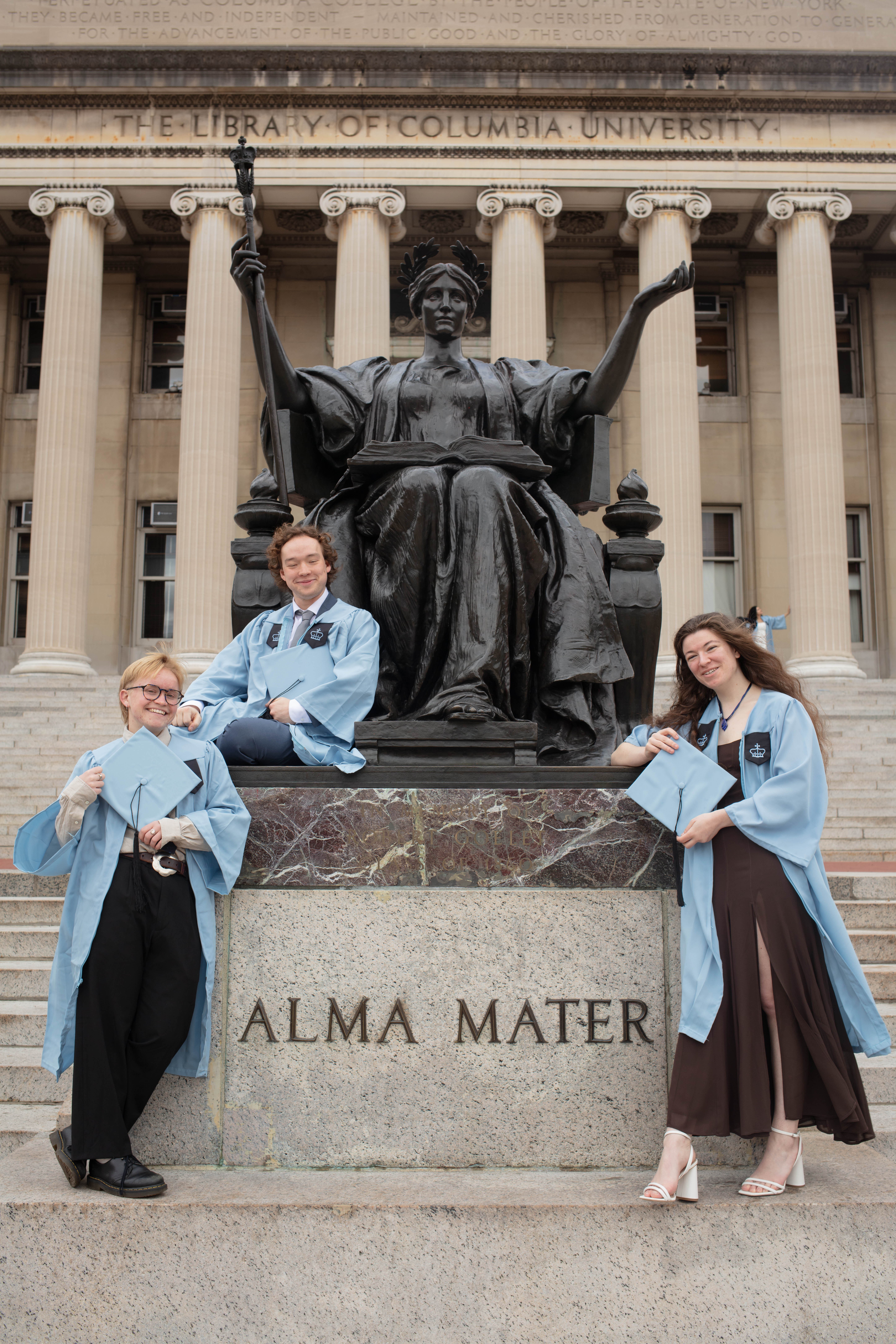
Gilman Jones Scholarship recipient, Charlie (Charlotte) Hoskins (2020) has followed a passion for history, beginning from a young age watching history programs on the ABC. Charlie was fostered as an intern at the Victorian Aboriginal Legal Services, developed further as a Laidlaw Scholar at Colombia University in the US, and is now studying a Masters by Research in Scottish History at the University of Edinburgh in Scotland.
Introducing Charlie Hoskins (2020)
Gilman Jones Scholarship recipient, Charlie (Charlotte) Hoskins (2020) has followed a passion for history, beginning from a young age watching history programs on the ABC. Charlie was fostered as an intern at the Victorian Aboriginal Legal Services, developed further as a Laidlaw Scholar at Colombia University in the US, and is now studying a Masters by Research in Scottish History at the University of Edinburgh in Scotland.
Tell us about your time at MGGS. You went on a School humanities trip to the US. Did that influence your post-MGGS study and career trajectory?
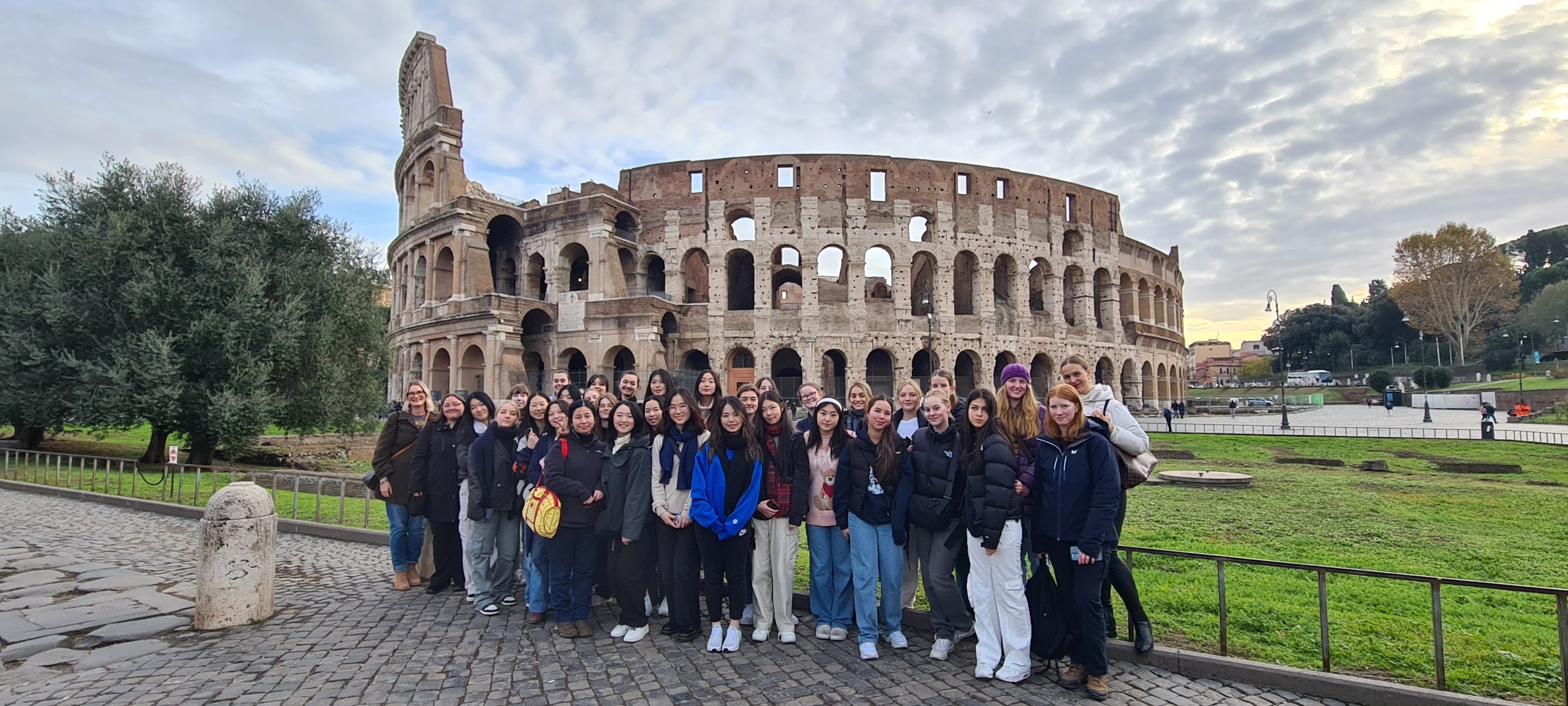
Commencing at MGGS in Year 7 in 2015 I think it did significantly change the trajectory of my study and career aspirations. Initially, I wanted to study medicine at university and become a doctor. In 2018, when I was fortunate to go on a history and politics trip to the United States with the School, I re-evaluated that aspiration. On this trip, going to museums and seeing world-class academic institutions like Harvard and my later alma mater, Columbia, I came to understand that history was a viable career path for me to pursue. I was also fortunate to have teachers like Ms Barton, Ms Jongebloed, Mrs Huon and Ms Foster, who also helped foster my love for the humanities.
Were you always interested in history? Which specific areas interested you at School?
Yes! From a young age, I was obsessed with the TV show Horrible Histories that played on ABC 3 most nights, which is a very accessible introduction to a variety of historic time periods and cultures. I was especially interested in Classics, so Ancient Greece and Ancient Rome. I loved their mythologies, battle histories and learning about what everyday life might have entailed. In Years 11 and 12, I developed my fascination with the Enlightenment era of Revolutions and Industrialisation when I took VCE Global Empires and VCE Revolutions, which has led me to my current scholarship.
You were awarded the Gilman Jones Scholarship. Tell us a bit about what that meant to you?
It was an honour to receive the Gilman Jones Scholarship. Aside from the financial aspect, which allowed me to purchase technology to use for my readings and research at university, it represented the culmination of all my hard work studying during VCE. Now, it serves as a reminder that hard work pays off.
You interned at the Victorian Aboriginal Legal Services, a non-profit law firm that providing legal representation and services for First Nations people. Can you talk to us about what you were doing there?
Before I settled on becoming a historian, I was very interested in pursuing a career in non-profit law, either looking at civil rights or criminal justice. My experience at VALS was largely shaped by my interest in history, particularly as I learnt more about settler colonialism in Australia and how it continues to harm First Nations communities. VALS does incredible work to fight for First Nations Victorians and undo the systematic inequalities present in the justice system. I was working with the Criminal Law and Corporate Services teams, largely doing archival work with their paper resources, digitising a vast array of documents.
You were a member of the 2022 Laidlaw Scholars Programme at Columbia University which fosters leadership and research across a global network. Can you tell us a bit about the program and your involvement in it?
The Laidlaw Scholars Programme was my first introduction to undertaking solo academic research. I applied at the end of my first year of university, and much to my surprise, I was accepted. We spent a week doing leadership training, which involved working out what kind of leadership we gravitate towards, before we spent five weeks doing our own research. I researched settler colonialism in literature across the United States and Australia, looking particularly at settler colonial views on land, Indigenous peoples and expansionist agendas while using literature as a primary source.
In terms of fostering a deeper intellectual environment, how do institutions like Columbia foster interdisciplinary thinking?
Columbia is the institution that it is because of the people who study and teach there. The administration is primarily motivated by money and power, but deeper intellectual environments develop when people come together to learn collectively and collaboratively.
You were President of the Columbia Policy Institute. Can you tell us about what you did there?
The Columbia Policy Institute is a progressive, nonpartisan, student-run think tank at Columbia. Prior to being President, I ran the Human Rights Policy Centre and organised a 50-page research paper on the history of transgender rights at Columbia University from the 1980s to 2021. As President, I was in charge of the administrative side of the organisation, arranging our weekly discussions and making sure the eight different policy centres were on track with their policy goals.
What advice would you give to an MGGS student looking to study humanities at a world-leading institution like Columbia?
Stay curious! Be passionate! Most importantly, don’t change how you present yourself to become what you think these institutions are looking for. They want diversity!
You are currently attending the University of Edinburgh studying your Masters by Research in Scottish History. What does this entail?
A Master’s by Research is basically a baby PhD – I have a year to research and write a 30,000-word dissertation about a topic of my choice! The Scottish History Masters by Research is just a little bit more niche in that I have to study Scottish History (which I love). I don’t have any classes because it’s a research degree, so I am essentially an independent researcher with access to the University of Edinburgh as an institution, and I get to work with two supervisors to make sure my research stays on track. I am studying the agricultural and social history of Caithness (which is the county in the far north of Scotland) between 1760 and 1830, with a particular interest in how agricultural ‘improvements’ affected the lives of the tenants, subtenants, labourers and cottagers who lived on the estates in that part of the country. I go to the archives to look at 18th-century manuscripts and estate records, and also spend a good bit of time in the library reading the works produced by other historians.
You’ve had two significant moves, one to the US and then to Scotland. What have been the most memorable parts of living and studying on the other side of the world?
Honestly, I think the most memorable part of living and studying on the other side of the world has been meeting the people I wouldn’t have otherwise encountered if I stayed in Melbourne. It has also forced me to live out of my comfort zone, which I think has been very beneficial for my self-awareness and confidence.
What is next for you?
I have just started my PhD applications, so hopefully I will be undertaking another three to six years of research on Scottish History with the hopes of becoming an academic.
Tell us about your time at MGGS. You went on a School humanities trip to the US. Did that influence your post-MGGS study and career trajectory?
Commencing at MGGS in Year 7 in 2015 I think it did significantly change the trajectory of my study and career aspirations. Initially, I wanted to study medicine at university and become a doctor. In 2018, when I was fortunate to go on a history and politics trip to the United States with the School, I re-evaluated that aspiration. On this trip, going to museums and seeing world-class academic institutions like Harvard and my later alma mater, Columbia, I came to understand that history was a viable career path for me to pursue. I was also fortunate to have teachers like Ms Barton, Ms Jongebloed, Mrs Huon and Ms Foster, who also helped foster my love for the humanities.
Were you always interested in history? Which specific areas interested you at School?
Yes! From a young age, I was obsessed with the TV show Horrible Histories that played on ABC 3 most nights, which is a very accessible introduction to a variety of historic time periods and cultures. I was especially interested in Classics, so Ancient Greece and Ancient Rome. I loved their mythologies, battle histories and learning about what everyday life might have entailed. In Years 11 and 12, I developed my fascination with the Enlightenment era of Revolutions and Industrialisation when I took VCE Global Empires and VCE Revolutions, which has led me to my current scholarship.
You were awarded the Gilman Jones Scholarship. Tell us a bit about what that meant to you?
It was an honour to receive the Gilman Jones Scholarship. Aside from the financial aspect, which allowed me to purchase technology to use for my readings and research at university, it represented the culmination of all my hard work studying during VCE. Now, it serves as a reminder that hard work pays off.
You interned at the Victorian Aboriginal Legal Services, a non-profit law firm that providing legal representation and services for First Nations people. Can you talk to us about what you were doing there?
Before I settled on becoming a historian, I was very interested in pursuing a career in non-profit law, either looking at civil rights or criminal justice. My experience at VALS was largely shaped by my interest in history, particularly as I learnt more about settler colonialism in Australia and how it continues to harm First Nations communities. VALS does incredible work to fight for First Nations Victorians and undo the systematic inequalities present in the justice system. I was working with the Criminal Law and Corporate Services teams, largely doing archival work with their paper resources, digitising a vast array of documents.
You were a member of the 2022 Laidlaw Scholars Programme at Columbia University which fosters leadership and research across a global network. Can you tell us a bit about the program and your involvement in it?
The Laidlaw Scholars Programme was my first introduction to undertaking solo academic research. I applied at the end of my first year of university, and much to my surprise, I was accepted. We spent a week doing leadership training, which involved working out what kind of leadership we gravitate towards, before we spent five weeks doing our own research. I researched settler colonialism in literature across the United States and Australia, looking particularly at settler colonial views on land, Indigenous peoples and expansionist agendas while using literature as a primary source.
In terms of fostering a deeper intellectual environment, how do institutions like Columbia foster interdisciplinary thinking?
Columbia is the institution that it is because of the people who study and teach there. The administration is primarily motivated by money and power, but deeper intellectual environments develop when people come together to learn collectively and collaboratively.
You were President of the Columbia Policy Institute. Can you tell us about what you did there?
The Columbia Policy Institute is a progressive, nonpartisan, student-run think tank at Columbia. Prior to being President, I ran the Human Rights Policy Centre and organised a 50-page research paper on the history of transgender rights at Columbia University from the 1980s to 2021. As President, I was in charge of the administrative side of the organisation, arranging our weekly discussions and making sure the eight different policy centres were on track with their policy goals.
What advice would you give to an MGGS student looking to study humanities at a world-leading institution like Columbia?
Stay curious! Be passionate! Most importantly, don’t change how you present yourself to become what you think these institutions are looking for. They want diversity!
You are currently attending the University of Edinburgh studying your Masters by Research in Scottish History. What does this entail?
A Master’s by Research is basically a baby PhD – I have a year to research and write a 30,000-word dissertation about a topic of my choice! The Scottish History Masters by Research is just a little bit more niche in that I have to study Scottish History (which I love). I don’t have any classes because it’s a research degree, so I am essentially an independent researcher with access to the University of Edinburgh as an institution, and I get to work with two supervisors to make sure my research stays on track. I am studying the agricultural and social history of Caithness (which is the county in the far north of Scotland) between 1760 and 1830, with a particular interest in how agricultural ‘improvements’ affected the lives of the tenants, subtenants, labourers and cottagers who lived on the estates in that part of the country. I go to the archives to look at 18th-century manuscripts and estate records, and also spend a good bit of time in the library reading the works produced by other historians.
You’ve had two significant moves, one to the US and then to Scotland. What have been the most memorable parts of living and studying on the other side of the world?
Honestly, I think the most memorable part of living and studying on the other side of the world has been meeting the people I wouldn’t have otherwise encountered if I stayed in Melbourne. It has also forced me to live out of my comfort zone, which I think has been very beneficial for my self-awareness and confidence.
What is next for you?
I have just started my PhD applications, so hopefully I will be undertaking another three to six years of research on Scottish History with the hopes of becoming an academic.
Tell us about your time at MGGS. You went on a School humanities trip to the US. Did that influence your post-MGGS study and career trajectory?
Commencing at MGGS in Year 7 in 2015 I think it did significantly change the trajectory of my study and career aspirations. Initially, I wanted to study medicine at university and become a doctor. In 2018, when I was fortunate to go on a history and politics trip to the United States with the School, I re-evaluated that aspiration. On this trip, going to museums and seeing world-class academic institutions like Harvard and my later alma mater, Columbia, I came to understand that history was a viable career path for me to pursue. I was also fortunate to have teachers like Ms Barton, Ms Jongebloed, Mrs Huon and Ms Foster, who also helped foster my love for the humanities.
Were you always interested in history? Which specific areas interested you at School?
Yes! From a young age, I was obsessed with the TV show Horrible Histories that played on ABC 3 most nights, which is a very accessible introduction to a variety of historic time periods and cultures. I was especially interested in Classics, so Ancient Greece and Ancient Rome. I loved their mythologies, battle histories and learning about what everyday life might have entailed. In Years 11 and 12, I developed my fascination with the Enlightenment era of Revolutions and Industrialisation when I took VCE Global Empires and VCE Revolutions, which has led me to my current scholarship.
You were awarded the Gilman Jones Scholarship. Tell us a bit about what that meant to you?
It was an honour to receive the Gilman Jones Scholarship. Aside from the financial aspect, which allowed me to purchase technology to use for my readings and research at university, it represented the culmination of all my hard work studying during VCE. Now, it serves as a reminder that hard work pays off.
You interned at the Victorian Aboriginal Legal Services, a non-profit law firm that providing legal representation and services for First Nations people. Can you talk to us about what you were doing there?
Before I settled on becoming a historian, I was very interested in pursuing a career in non-profit law, either looking at civil rights or criminal justice. My experience at VALS was largely shaped by my interest in history, particularly as I learnt more about settler colonialism in Australia and how it continues to harm First Nations communities. VALS does incredible work to fight for First Nations Victorians and undo the systematic inequalities present in the justice system. I was working with the Criminal Law and Corporate Services teams, largely doing archival work with their paper resources, digitising a vast array of documents.
You were a member of the 2022 Laidlaw Scholars Programme at Columbia University which fosters leadership and research across a global network. Can you tell us a bit about the program and your involvement in it?
The Laidlaw Scholars Programme was my first introduction to undertaking solo academic research. I applied at the end of my first year of university, and much to my surprise, I was accepted. We spent a week doing leadership training, which involved working out what kind of leadership we gravitate towards, before we spent five weeks doing our own research. I researched settler colonialism in literature across the United States and Australia, looking particularly at settler colonial views on land, Indigenous peoples and expansionist agendas while using literature as a primary source.
In terms of fostering a deeper intellectual environment, how do institutions like Columbia foster interdisciplinary thinking?
Columbia is the institution that it is because of the people who study and teach there. The administration is primarily motivated by money and power, but deeper intellectual environments develop when people come together to learn collectively and collaboratively.
You were President of the Columbia Policy Institute. Can you tell us about what you did there?
The Columbia Policy Institute is a progressive, nonpartisan, student-run think tank at Columbia. Prior to being President, I ran the Human Rights Policy Centre and organised a 50-page research paper on the history of transgender rights at Columbia University from the 1980s to 2021. As President, I was in charge of the administrative side of the organisation, arranging our weekly discussions and making sure the eight different policy centres were on track with their policy goals.
What advice would you give to an MGGS student looking to study humanities at a world-leading institution like Columbia?
Stay curious! Be passionate! Most importantly, don’t change how you present yourself to become what you think these institutions are looking for. They want diversity!
You are currently attending the University of Edinburgh studying your Masters by Research in Scottish History. What does this entail?
A Master’s by Research is basically a baby PhD – I have a year to research and write a 30,000-word dissertation about a topic of my choice! The Scottish History Masters by Research is just a little bit more niche in that I have to study Scottish History (which I love). I don’t have any classes because it’s a research degree, so I am essentially an independent researcher with access to the University of Edinburgh as an institution, and I get to work with two supervisors to make sure my research stays on track. I am studying the agricultural and social history of Caithness (which is the county in the far north of Scotland) between 1760 and 1830, with a particular interest in how agricultural ‘improvements’ affected the lives of the tenants, subtenants, labourers and cottagers who lived on the estates in that part of the country. I go to the archives to look at 18th-century manuscripts and estate records, and also spend a good bit of time in the library reading the works produced by other historians.
You’ve had two significant moves, one to the US and then to Scotland. What have been the most memorable parts of living and studying on the other side of the world?
Honestly, I think the most memorable part of living and studying on the other side of the world has been meeting the people I wouldn’t have otherwise encountered if I stayed in Melbourne. It has also forced me to live out of my comfort zone, which I think has been very beneficial for my self-awareness and confidence.
What is next for you?
I have just started my PhD applications, so hopefully I will be undertaking another three to six years of research on Scottish History with the hopes of becoming an academic.