


.JPG)








In Conversation with Dr Lenny Robinson
The intellectual rigour and creative energy of Dr Lenny Robinson has transformed the study of Philosophy at MGGS.
Since joining MGGS in 2021 Lenny has reshaped the Philosophy curriculum and created a culture of critical inquiry and fearless thinking among her students.

With a background in philosophy, history and creative writing, Lenny brings analytical precision and emotional depth to her teaching. Her classroom is a space where ideas are dissected and refined to foster empathy and intellectual courage. She teaches her classes to critique ideas, not people, and to embrace the discomfort of being wrong as a necessary step toward growth.
As a VCE Chief Examiner and contributor to the new VCE Philosophy study design, Lenny has helped shape the philosophical education of students across the state. Her strategic curriculum development, backward-mapping from Year 12 to Year 9, has created a coherent, rigorous pathway that prepares our Grammarians for life as engaged and thoughtful citizens. Lenny’s commitment to integrity and questioning our world and its systems of power is embedded in the very structure of this curriculum she’s built for our Grammarians.
Recently, Lenny added ‘author’ to her list of achievements, with a historical fiction novel that explores the silenced voices of women in wartime. Drawing inspiration from her own family history and philosophical curiosity, the novel reflects her enduring interest in the complexity of human experience. She sees writing and philosophy as twin pursuits: both interrogate what it means to live meaningfully in the world.
Lenny’s critique of philosophy’s traditional canon is both personal and pedagogical. As a woman in a male-dominated field, she’s acutely aware of the need to question whose voices are privileged and whose are excluded. She’s looking forward to the implementation of the incoming Study Design with a new unit exploring these gaps, that she’ll get to unpack with the 2026 Year 11 cohort. It will examine race, gender and class in philosophical thought, and encourage students to ask not just “what is truth?” but “whose truth is being told?”
As MGGS prepares for a new wave of students engaging with Philosophy, Lenny’s impact is already visible, in our confident, articulate young thinkers who challenge assumptions and interrogate the world around them.
With a background in philosophy, history and creative writing, Lenny brings analytical precision and emotional depth to her teaching. Her classroom is a space where ideas are dissected and refined to foster empathy and intellectual courage. She teaches her classes to critique ideas, not people, and to embrace the discomfort of being wrong as a necessary step toward growth.
As a VCE Chief Examiner and contributor to the new VCE Philosophy study design, Lenny has helped shape the philosophical education of students across the state. Her strategic curriculum development, backward-mapping from Year 12 to Year 9, has created a coherent, rigorous pathway that prepares our Grammarians for life as engaged and thoughtful citizens. Lenny’s commitment to integrity and questioning our world and its systems of power is embedded in the very structure of this curriculum she’s built for our Grammarians.
Recently, Lenny added ‘author’ to her list of achievements, with a historical fiction novel that explores the silenced voices of women in wartime. Drawing inspiration from her own family history and philosophical curiosity, the novel reflects her enduring interest in the complexity of human experience. She sees writing and philosophy as twin pursuits: both interrogate what it means to live meaningfully in the world.
Lenny’s critique of philosophy’s traditional canon is both personal and pedagogical. As a woman in a male-dominated field, she’s acutely aware of the need to question whose voices are privileged and whose are excluded. She’s looking forward to the implementation of the incoming Study Design with a new unit exploring these gaps, that she’ll get to unpack with the 2026 Year 11 cohort. It will examine race, gender and class in philosophical thought, and encourage students to ask not just “what is truth?” but “whose truth is being told?”
As MGGS prepares for a new wave of students engaging with Philosophy, Lenny’s impact is already visible, in our confident, articulate young thinkers who challenge assumptions and interrogate the world around them.
With a background in philosophy, history and creative writing, Lenny brings analytical precision and emotional depth to her teaching. Her classroom is a space where ideas are dissected and refined to foster empathy and intellectual courage. She teaches her classes to critique ideas, not people, and to embrace the discomfort of being wrong as a necessary step toward growth.
As a VCE Chief Examiner and contributor to the new VCE Philosophy study design, Lenny has helped shape the philosophical education of students across the state. Her strategic curriculum development, backward-mapping from Year 12 to Year 9, has created a coherent, rigorous pathway that prepares our Grammarians for life as engaged and thoughtful citizens. Lenny’s commitment to integrity and questioning our world and its systems of power is embedded in the very structure of this curriculum she’s built for our Grammarians.
Recently, Lenny added ‘author’ to her list of achievements, with a historical fiction novel that explores the silenced voices of women in wartime. Drawing inspiration from her own family history and philosophical curiosity, the novel reflects her enduring interest in the complexity of human experience. She sees writing and philosophy as twin pursuits: both interrogate what it means to live meaningfully in the world.
Lenny’s critique of philosophy’s traditional canon is both personal and pedagogical. As a woman in a male-dominated field, she’s acutely aware of the need to question whose voices are privileged and whose are excluded. She’s looking forward to the implementation of the incoming Study Design with a new unit exploring these gaps, that she’ll get to unpack with the 2026 Year 11 cohort. It will examine race, gender and class in philosophical thought, and encourage students to ask not just “what is truth?” but “whose truth is being told?”
As MGGS prepares for a new wave of students engaging with Philosophy, Lenny’s impact is already visible, in our confident, articulate young thinkers who challenge assumptions and interrogate the world around them.
In Conversation with Dr Lenny Robinson
Why is philosophy vital for young learners today?
Philosophy teaches young people neutrality. Neutrality, in the sense that when you analyse an argument, you look at its merits and shortcomings rather than your own opinions. They learn to get beyond their opinions and potential misinformation, and start looking at evidence, that capacity to navigate information is incredibly important.
Philosophy teaches students to interrogate the world critically, not rebellion for rebellion’s sake, but to question systems with intellectual integrity. In a school like MGGS, where our students will be future leaders, it’s essential they learn to lead with insight and courage.
In your classroom, you emphasise the idea, rather than the person. Can you share how you cultivate this mindset and why it’s important for productive disagreement?
It's called an ad hominem fallacy, when you attack a person rather than an argument. Getting past that starts with community and trust. Students must feel safe to critique ideas without attacking individuals. I teach them to separate the idea from the person and use philosophical tools, to guide respectful dialogue, and create a space where they are unafraid to share ideas. We learn to put an idea on the table and dissect it for its merits and shortcomings. So if someone says something and they are way off the mark, I would say, “Ok. That’s not quite right, but thank you for having the courage to share your idea...” And I’d ask if anyone else wanted to have a go or build on the presented idea.
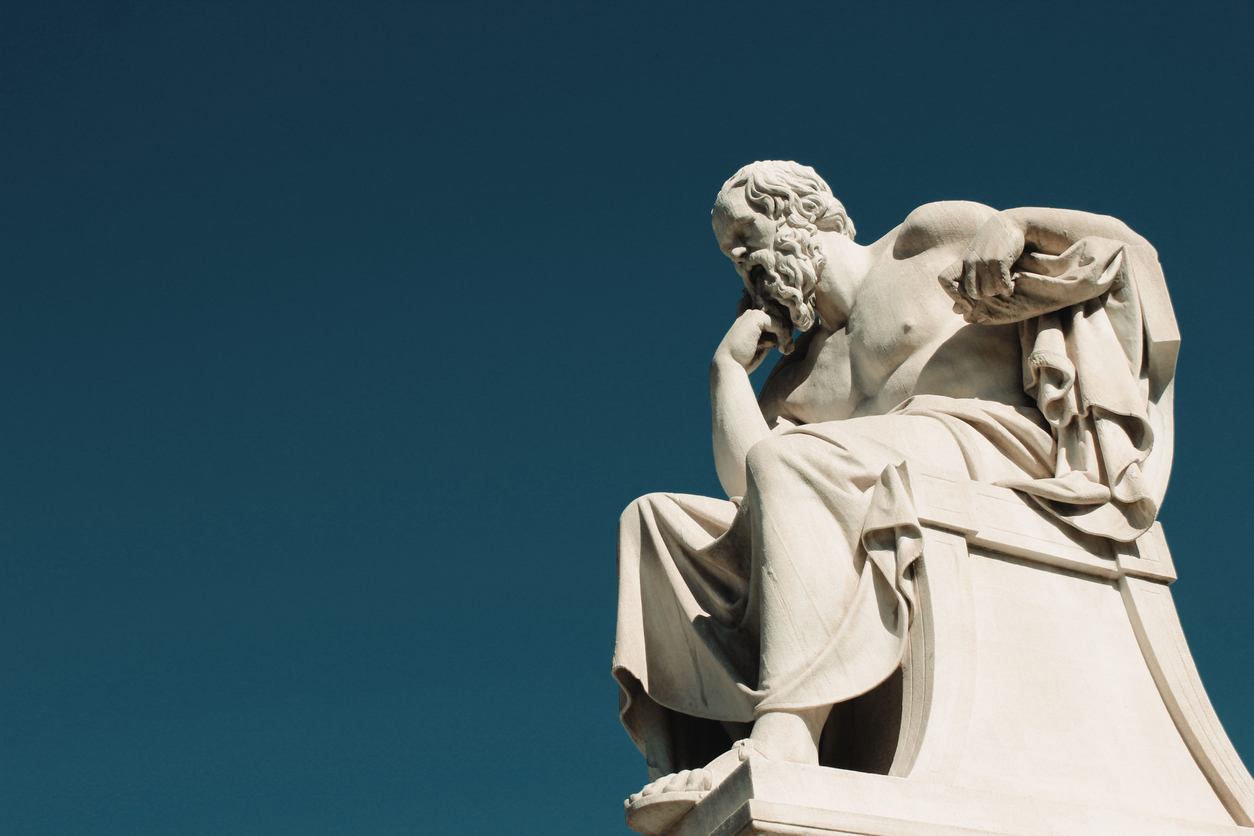
Socrates called it midwifery: helping ideas come to life through questioning.
How do you encourage students to see the relevance of humanities in their everyday lives and future careers?
That’s always going to be a challenge for the humanities, to justify itself. But philosophy has a slight advantage. It’s so incredibly exciting that no student should really be bored.
Philosophy teaches transferable thinking skills, rather than just content. I say to my students, “I’m going to teach you the same thing over and over; how to argue, how to analyse, how to deconstruct an argument.” The content changes, but the skill remains. And they can see that’s a skill they can use anywhere.
In Conversation with Dr Lenny Robinson
Why is philosophy vital for young learners today?
Philosophy teaches young people neutrality. Neutrality, in the sense that when you analyse an argument, you look at its merits and shortcomings rather than your own opinions. They learn to get beyond their opinions and potential misinformation, and start looking at evidence, that capacity to navigate information is incredibly important.
Philosophy teaches students to interrogate the world critically, not rebellion for rebellion’s sake, but to question systems with intellectual integrity. In a school like MGGS, where our students will be future leaders, it’s essential they learn to lead with insight and courage.
In your classroom, you emphasise the idea, rather than the person. Can you share how you cultivate this mindset and why it’s important for productive disagreement?
It's called an ad hominem fallacy, when you attack a person rather than an argument. Getting past that starts with community and trust. Students must feel safe to critique ideas without attacking individuals. I teach them to separate the idea from the person and use philosophical tools, to guide respectful dialogue, and create a space where they are unafraid to share ideas. We learn to put an idea on the table and dissect it for its merits and shortcomings. So if someone says something and they are way off the mark, I would say, “Ok. That’s not quite right, but thank you for having the courage to share your idea...” And I’d ask if anyone else wanted to have a go or build on the presented idea.
Socrates called it midwifery: helping ideas come to life through questioning.
How do you encourage students to see the relevance of humanities in their everyday lives and future careers?
That’s always going to be a challenge for the humanities, to justify itself. But philosophy has a slight advantage. It’s so incredibly exciting that no student should really be bored.
Philosophy teaches transferable thinking skills, rather than just content. I say to my students, “I’m going to teach you the same thing over and over; how to argue, how to analyse, how to deconstruct an argument.” The content changes, but the skill remains. And they can see that’s a skill they can use anywhere.
In Conversation with Dr Lenny Robinson
Why is philosophy vital for young learners today?
Philosophy teaches young people neutrality. Neutrality, in the sense that when you analyse an argument, you look at its merits and shortcomings rather than your own opinions. They learn to get beyond their opinions and potential misinformation, and start looking at evidence, that capacity to navigate information is incredibly important.
Philosophy teaches students to interrogate the world critically, not rebellion for rebellion’s sake, but to question systems with intellectual integrity. In a school like MGGS, where our students will be future leaders, it’s essential they learn to lead with insight and courage.
In your classroom, you emphasise the idea, rather than the person. Can you share how you cultivate this mindset and why it’s important for productive disagreement?
It's called an ad hominem fallacy, when you attack a person rather than an argument. Getting past that starts with community and trust. Students must feel safe to critique ideas without attacking individuals. I teach them to separate the idea from the person and use philosophical tools, to guide respectful dialogue, and create a space where they are unafraid to share ideas. We learn to put an idea on the table and dissect it for its merits and shortcomings. So if someone says something and they are way off the mark, I would say, “Ok. That’s not quite right, but thank you for having the courage to share your idea...” And I’d ask if anyone else wanted to have a go or build on the presented idea.
Socrates called it midwifery: helping ideas come to life through questioning.
How do you encourage students to see the relevance of humanities in their everyday lives and future careers?
That’s always going to be a challenge for the humanities, to justify itself. But philosophy has a slight advantage. It’s so incredibly exciting that no student should really be bored.
Philosophy teaches transferable thinking skills, rather than just content. I say to my students, “I’m going to teach you the same thing over and over; how to argue, how to analyse, how to deconstruct an argument.” The content changes, but the skill remains. And they can see that’s a skill they can use anywhere.

Senior Years students in discussion
Senior Years students in discussion
What impact has your role as a VCE Chief Examiner had on your teaching?
It’s given me clarity on the skills students need to succeed. I’ve backward-mapped the curriculum from Year 12 to Year 9, ensuring students build the right foundations early and are well-practiced by the end of Year 12. But the marks, I don’t think that should be the primary outcome for any teacher. For me, it’s about developing philosophical thinkers who engage deeply with the world.
You’ve recently finished writing your novel. What inspires your fiction writing? How does your philosophical curiosity influence your writing?
It’s been a lifelong dream of mine to be a writer. I’ve have been writing on and off my whole life. The experience of women, and particularly the experience of women whose voices are silent in history, is what’s most exciting to me and what inspired this story.
Oddly enough though, my novel’s inspiration started with my grandfather’s experience in World War I. I never met him, he died before I was born, but I was very interested in that whole experience, to put a human being under these extreme conditions and what that must be like. Quickly, what became even more interesting, was imagining my grandmother’s life beside him.
Writing and philosophy both stem from my immense curiosity about the human experience, its nuance and its complexities. In writing, I get to play out possibilities and how one can experience life. Philosophy gives you all these different views of how one can try to understand this life. Philosophy foregrounds logic, but novel writing reminds me of the power of emotion and intuition. I challenge students to ask whether rationality should always be privileged, especially in moral decision-making. Sometimes, what’s “reasonable” isn’t what’s right.
In some respects, being a writer helps me interrogate philosophy.
How has philosophy grown at MGGS since you arrived?
When I joined in 2021, Philosophy was just beginning. I’ve spent time rebuilding the curriculum, and now we’re starting to see ‘the fruits’: real engagement and growth in participation. Next year’s Year 11 cohort will be the largest yet, a testament to the subject’s relevance and the students’ hunger for deeper thinking.
What’s next in your teaching and creative journey?
I’m excited about the new Year 11 VCE Philosophy unit that critiques the philosophical canon, exploring gender, race and class in philosophical thought. It asks students to think, “what didn’t we see?”
I’m really looking forward to getting started on another book. I want to get stronger through writing more.
We have seen excellent VCE results in recent years in Philosophy. What are some of the most rewarding moments you’ve experienced at MGGS?
It is always exciting to teach high achievers, including students who have topped the state. It is immensely rewarding, not because of the marks, though. It’s because they are so hungry to learn and so interested in the content.
Watching people develop their philosophical self and develop a set of perspectives about the world, and watching the process of that come together in a person is really rewarding. It's watching people's journeys that's more exciting than the marks that they get, for me.
What impact has your role as a VCE Chief Examiner had on your teaching?
It’s given me clarity on the skills students need to succeed. I’ve backward-mapped the curriculum from Year 12 to Year 9, ensuring students build the right foundations early and are well-practiced by the end of Year 12. But the marks, I don’t think that should be the primary outcome for any teacher. For me, it’s about developing philosophical thinkers who engage deeply with the world.
You’ve recently finished writing your novel. What inspires your fiction writing? How does your philosophical curiosity influence your writing?
It’s been a lifelong dream of mine to be a writer. I’ve have been writing on and off my whole life. The experience of women, and particularly the experience of women whose voices are silent in history, is what’s most exciting to me and what inspired this story.
Oddly enough though, my novel’s inspiration started with my grandfather’s experience in World War I. I never met him, he died before I was born, but I was very interested in that whole experience, to put a human being under these extreme conditions and what that must be like. Quickly, what became even more interesting, was imagining my grandmother’s life beside him.
Writing and philosophy both stem from my immense curiosity about the human experience, its nuance and its complexities. In writing, I get to play out possibilities and how one can experience life. Philosophy gives you all these different views of how one can try to understand this life. Philosophy foregrounds logic, but novel writing reminds me of the power of emotion and intuition. I challenge students to ask whether rationality should always be privileged, especially in moral decision-making. Sometimes, what’s “reasonable” isn’t what’s right.
In some respects, being a writer helps me interrogate philosophy.
How has philosophy grown at MGGS since you arrived?
When I joined in 2021, Philosophy was just beginning. I’ve spent time rebuilding the curriculum, and now we’re starting to see ‘the fruits’: real engagement and growth in participation. Next year’s Year 11 cohort will be the largest yet, a testament to the subject’s relevance and the students’ hunger for deeper thinking.
What’s next in your teaching and creative journey?
I’m excited about the new Year 11 VCE Philosophy unit that critiques the philosophical canon, exploring gender, race and class in philosophical thought. It asks students to think, “what didn’t we see?”
I’m really looking forward to getting started on another book. I want to get stronger through writing more.
We have seen excellent VCE results in recent years in Philosophy. What are some of the most rewarding moments you’ve experienced at MGGS?
It is always exciting to teach high achievers, including students who have topped the state. It is immensely rewarding, not because of the marks, though. It’s because they are so hungry to learn and so interested in the content.
Watching people develop their philosophical self and develop a set of perspectives about the world, and watching the process of that come together in a person is really rewarding. It's watching people's journeys that's more exciting than the marks that they get, for me.