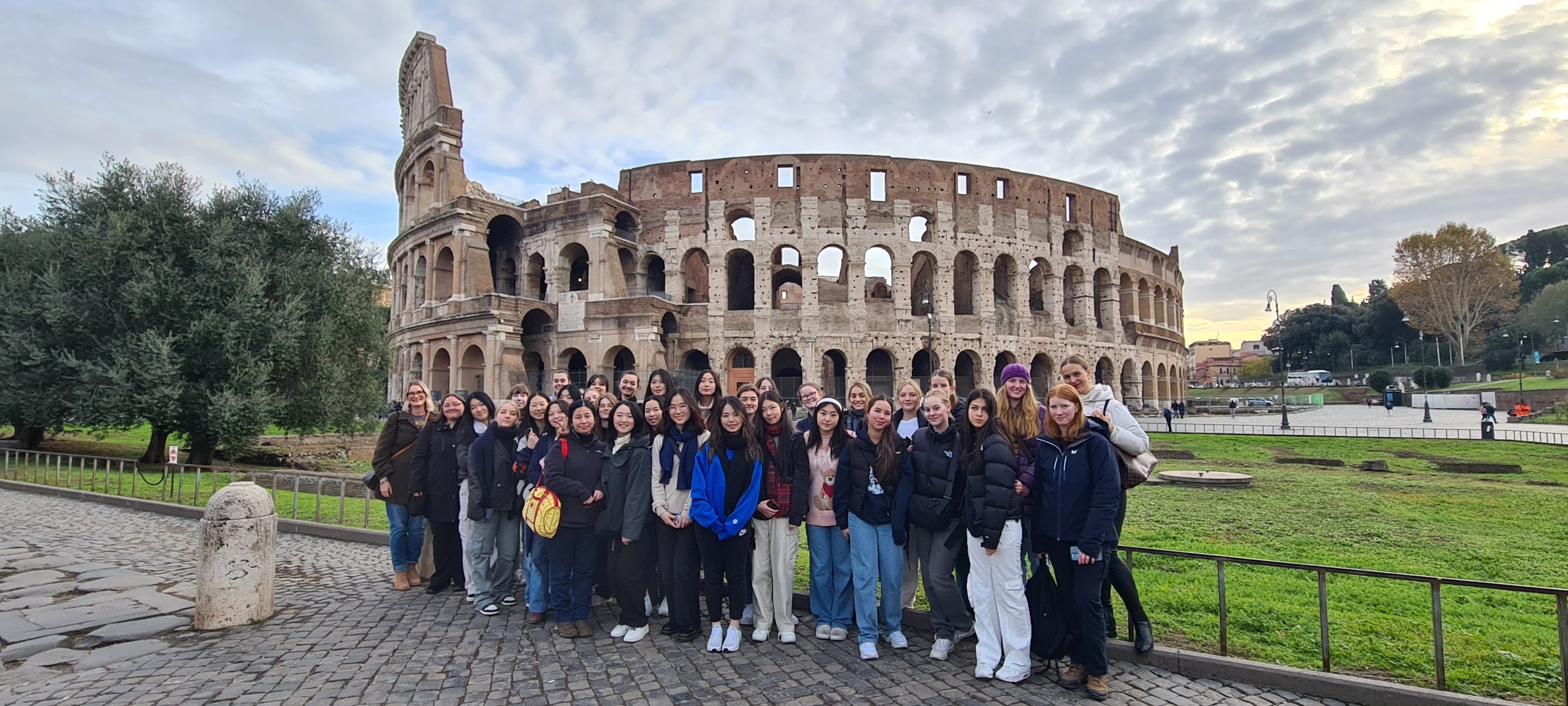
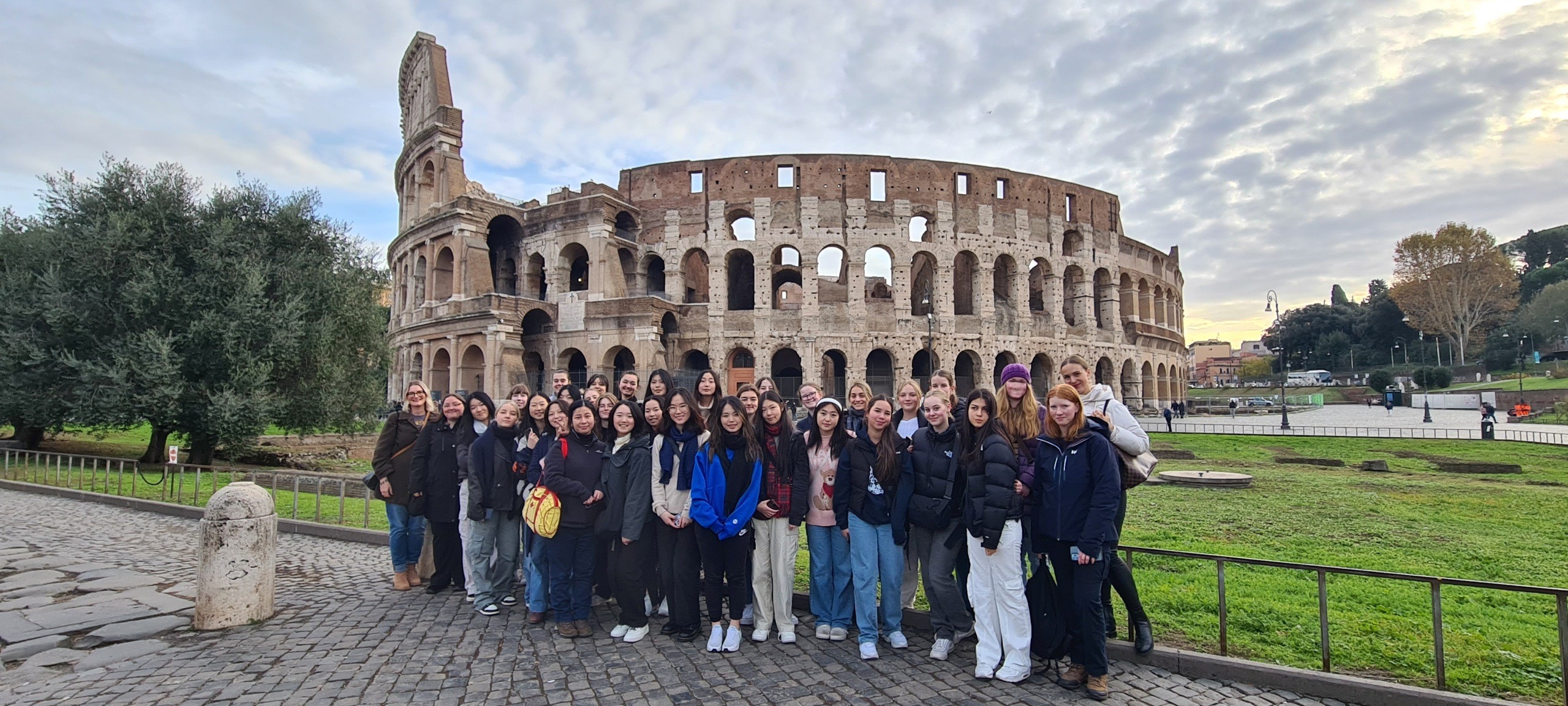

Students at the Roman Colosseum on the 2023 Latin Tour


Students at the Roman Colosseum on the 2023 Latin Tour
At Melbourne Girls Grammar, we know that humanities subjects are essential for understanding the world.
These disciplines, including History, Geography, Politics, Legal Studies, Classical Studies and more, invite our Grammarians to ask big questions, explore diverse perspectives and develop the critical and creative thinking skills that will serve them well into their future.

In our 2025–2030 Strategic Plan and the previous edition of Information Exchange, we speak of learning “in and for the world”, a phrase beautifully translated by our Year 10 Latin students as In Orbe Orbique. This sentiment aligns closely with this edition as it captures the spirit of our humanities program: expansive and alive. It is a vision of education that is grounded in theory, but that reaches outward, encouraging our students to engage deeply with the world around them.
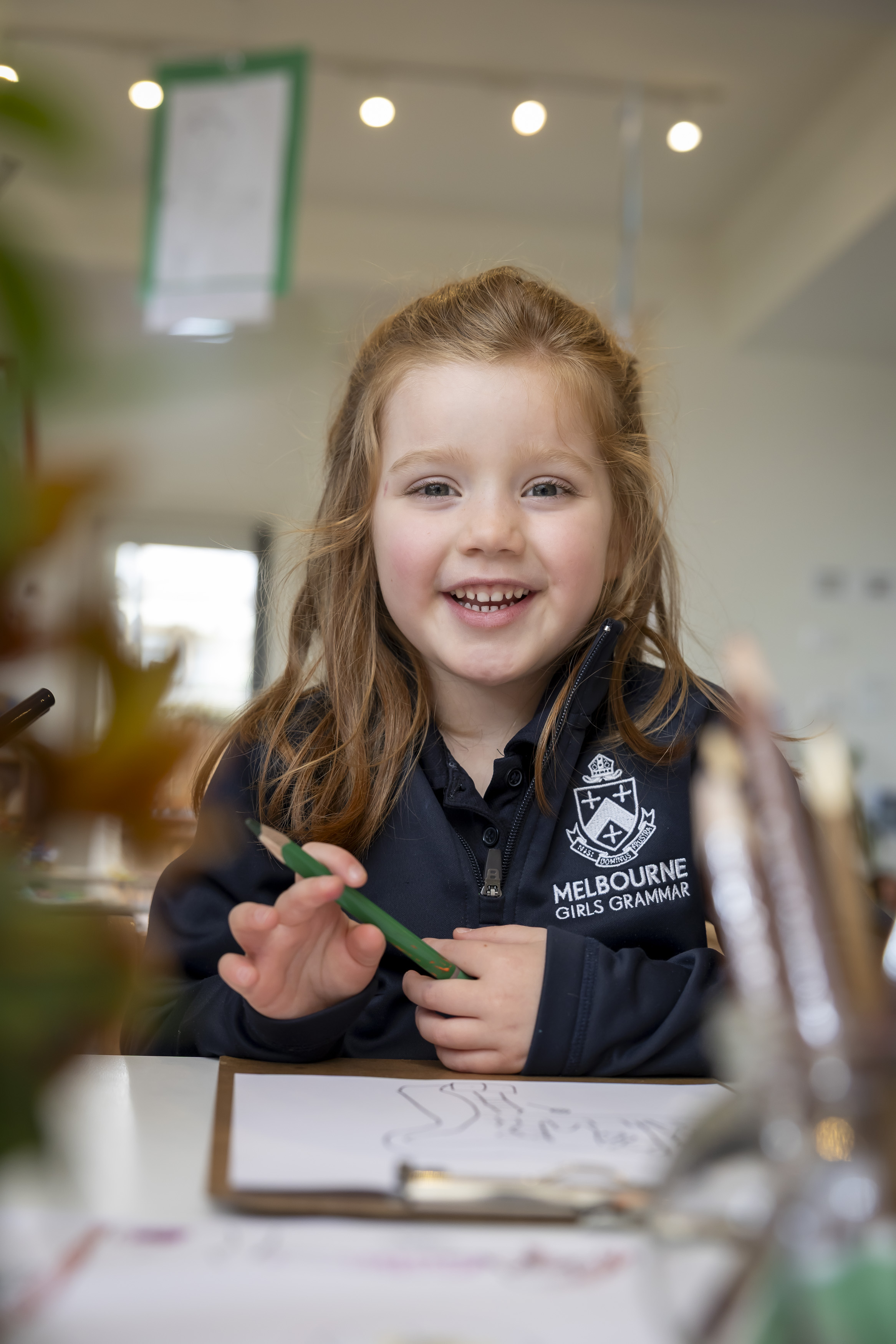
Experiential learning is central to this vision. Across all year levels, hands-on, inquiry-driven experiences are woven into the fabric of our curriculum. From our youngest learners in the ELC who have been mapping important landmarks within our Merton Hall campus, to our Year 12 students, who have visited the Melbourne Magistrates’ Court to observe legal proceedings, every Grammarian has had the opportunity to learn in the real world. Whether it’s exploring ancient artefacts, debating ethical dilemmas, or mapping local environments, our Grammarians are active participants in their learning. They are absorbing knowledge, and consolidating it through experience, analysis and reflection.
This approach is grounded in research and practice. A study by the Institute for Teaching and Learning Innovation at the University of Queensland demonstrates that meaningful learning occurs when students engage in context-rich experiences, followed by guided reflection and application (Bartle, 2015). It is through doing and immersion in real-world contexts that students consolidate theoretical concepts, strengthen neural connections, and develop a deeper understanding (Balcaite, n.d.). They learn not only about history, politics or philosophy, but through them.
In our 2025–2030 Strategic Plan and the previous edition of Information Exchange, we speak of learning “in and for the world”, a phrase beautifully translated by our Year 10 Latin students as In Orbe Orbique. This sentiment aligns closely with this edition as it captures the spirit of our humanities program: expansive and alive. It is a vision of education that is grounded in theory, but that reaches outward, encouraging our students to engage deeply with the world around them.
Experiential learning is central to this vision. Across all year levels, hands-on, inquiry-driven experiences are woven into the fabric of our curriculum. From our youngest learners in the ELC who have been mapping important landmarks within our Merton Hall campus, to our Year 12 students, who have visited the Melbourne Magistrates’ Court to observe legal proceedings, every Grammarian has had the opportunity to learn in the real world. Whether it’s exploring ancient artefacts, debating ethical dilemmas, or mapping local environments, our Grammarians are active participants in their learning. They are absorbing knowledge, and consolidating it through experience, analysis and reflection.
This approach is grounded in research and practice. A study by the Institute for Teaching and Learning Innovation at the University of Queensland demonstrates that meaningful learning occurs when students engage in context-rich experiences, followed by guided reflection and application (Bartle, 2015). It is through doing and immersion in real-world contexts that students consolidate theoretical concepts, strengthen neural connections, and develop a deeper understanding (Balcaite, n.d.). They learn not only about history, politics or philosophy, but through them.
In our 2025–2030 Strategic Plan and the previous edition of Information Exchange, we speak of learning “in and for the world”, a phrase beautifully translated by our Year 10 Latin students as In Orbe Orbique. This sentiment aligns closely with this edition as it captures the spirit of our humanities program: expansive and alive. It is a vision of education that is grounded in theory, but that reaches outward, encouraging our students to engage deeply with the world around them.
Experiential learning is central to this vision. Across all year levels, hands-on, inquiry-driven experiences are woven into the fabric of our curriculum. From our youngest learners in the ELC who have been mapping important landmarks within our Merton Hall campus, to our Year 12 students, who have visited the Melbourne Magistrates’ Court to observe legal proceedings, every Grammarian has had the opportunity to learn in the real world. Whether it’s exploring ancient artefacts, debating ethical dilemmas, or mapping local environments, our Grammarians are active participants in their learning. They are absorbing knowledge, and consolidating it through experience, analysis and reflection.
This approach is grounded in research and practice. A study by the Institute for Teaching and Learning Innovation at the University of Queensland demonstrates that meaningful learning occurs when students engage in context-rich experiences, followed by guided reflection and application (Bartle, 2015). It is through doing and immersion in real-world contexts that students consolidate theoretical concepts, strengthen neural connections, and develop a deeper understanding (Balcaite, n.d.). They learn not only about history, politics or philosophy, but through them.


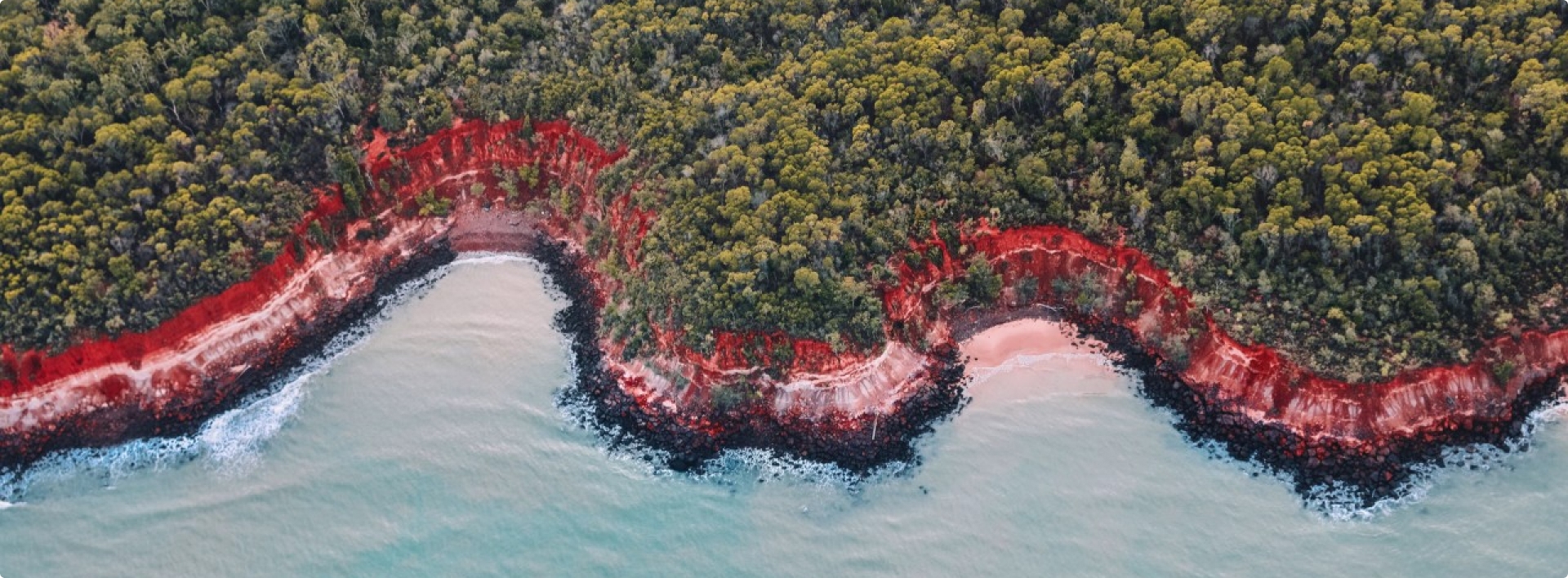
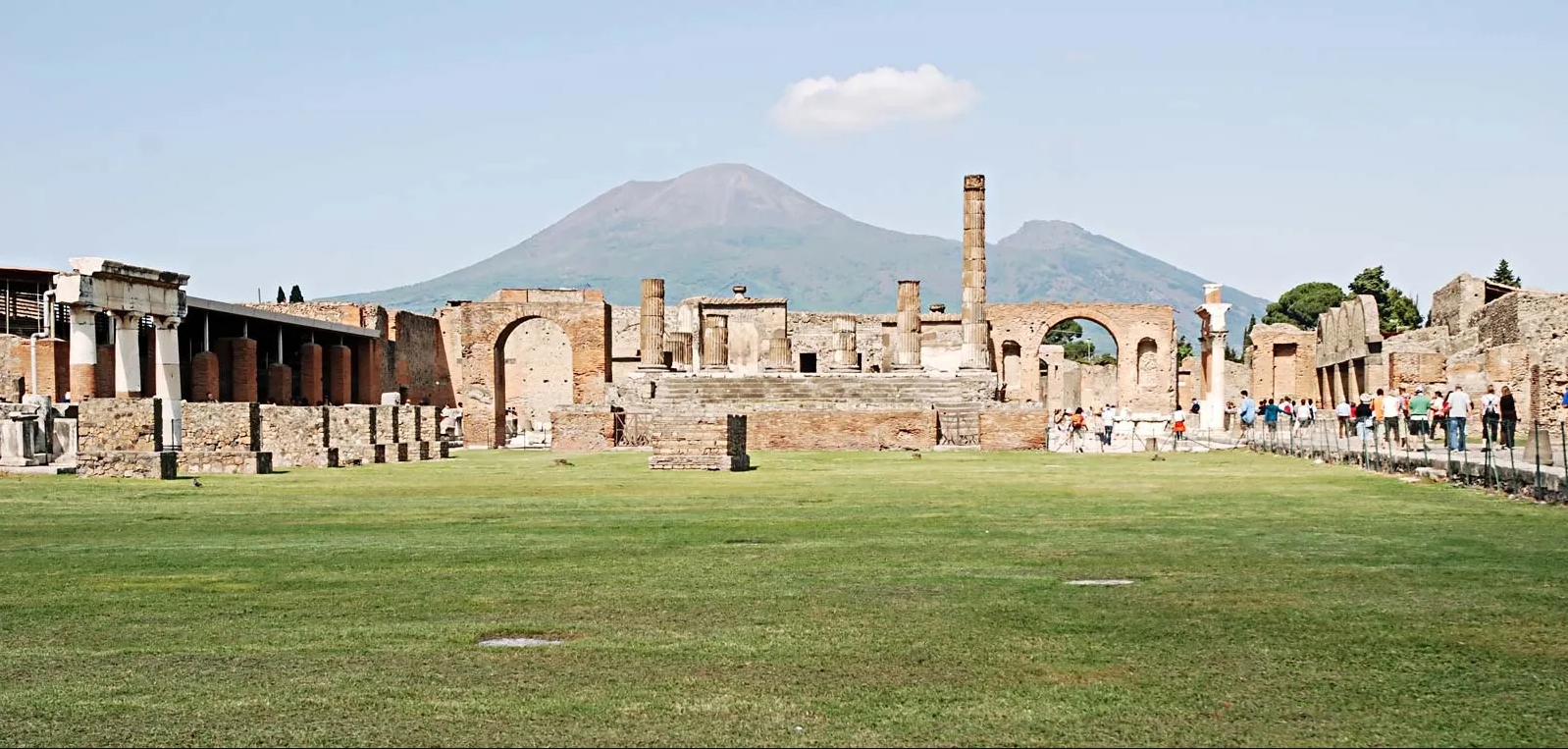
Pompeii, Italy


Pompeii, Italy

I am particularly looking forward to joining our Senior Years Latin Tour to Italy this December, where approximately 30 students from Years 10 and 11 will walk the very streets they’ve studied in their Latin courses. From the Colosseum and Roman Forum to Pompeii and Herculaneum, this tour offers us a rich tapestry of cultural, historical and linguistic experiences. Grammarians will explore Hadrian’s Villa, climb Mount Vesuvius and stand beneath the ceiling of the Sistine Chapel. These moments, seeing, touching and even smelling the places they’ve read about, will bring their learning to life in powerful ways.
It is through doing and immersion in real-world contexts that students consolidate theoretical concepts, strengthen neural connections and develop a deeper understanding.
The itinerary has been carefully designed to align with key curriculum outcomes, ensuring that every experience is academically meaningful, but the benefits go far beyond curriculum. Grammarians will grow in independence, confidence and global awareness. They will reflect on their place in the world, challenge preconceived ideas, and return with a renewed sense of curiosity and motivation. For many, it will spark a lifelong interest in travel, culture and learning.
It’s in these moments, when history becomes tangible, when theory meets experience, that learning excites us and comes alive. This is at the core of an education in Humanities at MGGS; fueling inquiry and preparing our Grammarians to embrace the world beyond our red brick walls. These are the pillars that support us as a learning community focused on preparing our students for an ever-changing world.
...when history becomes tangible, when theory meets experience...learning excites us and comes alive.
I invite you to reflect on the value of these studies, not just as a foundation for academic excellence, but as a pathway to becoming thoughtful, engaged citizens of the world who are ‘In Orbe Orbique’. From the ELC to Year 12, they are learning through action, connection and discovery, and in doing so, they are shaping their futures and contributing meaningfully to the world around them.
I am particularly looking forward to joining our Senior Years Latin Tour to Italy this December, where approximately 30 students from Years 10 and 11 will walk the very streets they’ve studied in their Latin courses. From the Colosseum and Roman Forum to Pompeii and Herculaneum, this tour offers us a rich tapestry of cultural, historical and linguistic experiences. Grammarians will explore Hadrian’s Villa, climb Mount Vesuvius and stand beneath the ceiling of the Sistine Chapel. These moments, seeing, touching and even smelling the places they’ve read about, will bring their learning to life in powerful ways.
It is through doing and immersion in real-world contexts that students consolidate theoretical concepts, strengthen neural connections and develop a deeper understanding.
The itinerary has been carefully designed to align with key curriculum outcomes, ensuring that every experience is academically meaningful, but the benefits go far beyond curriculum. Grammarians will grow in independence, confidence and global awareness. They will reflect on their place in the world, challenge preconceived ideas, and return with a renewed sense of curiosity and motivation. For many, it will spark a lifelong interest in travel, culture and learning.
It’s in these moments, when history becomes tangible, when theory meets experience, that learning excites us and comes alive. This is at the core of an education in Humanities at MGGS; fueling inquiry and preparing our Grammarians to embrace the world beyond our red brick walls. These are the pillars that support us as a learning community focused on preparing our students for an ever-changing world.
...when history becomes tangible, when theory meets experience...learning excites us and comes alive.
I invite you to reflect on the value of these studies, not just as a foundation for academic excellence, but as a pathway to becoming thoughtful, engaged citizens of the world who are ‘In Orbe Orbique’. From the ELC to Year 12, they are learning through action, connection and discovery, and in doing so, they are shaping their futures and contributing meaningfully to the world around them.
I am particularly looking forward to joining our Senior Years Latin Tour to Italy this December, where approximately 30 students from Years 10 and 11 will walk the very streets they’ve studied in their Latin courses. From the Colosseum and Roman Forum to Pompeii and Herculaneum, this tour offers us a rich tapestry of cultural, historical and linguistic experiences. Grammarians will explore Hadrian’s Villa, climb Mount Vesuvius and stand beneath the ceiling of the Sistine Chapel. These moments, seeing, touching and even smelling the places they’ve read about, will bring their learning to life in powerful ways.
It is through doing and immersion in real-world contexts that students consolidate theoretical concepts, strengthen neural connections and develop a deeper understanding.
The itinerary has been carefully designed to align with key curriculum outcomes, ensuring that every experience is academically meaningful, but the benefits go far beyond curriculum. Grammarians will grow in independence, confidence and global awareness. They will reflect on their place in the world, challenge preconceived ideas, and return with a renewed sense of curiosity and motivation. For many, it will spark a lifelong interest in travel, culture and learning.
It’s in these moments, when history becomes tangible, when theory meets experience, that learning excites us and comes alive. This is at the core of an education in Humanities at MGGS; fueling inquiry and preparing our Grammarians to embrace the world beyond our red brick walls. These are the pillars that support us as a learning community focused on preparing our students for an ever-changing world.
...when history becomes tangible, when theory meets experience...learning excites us and comes alive.
I invite you to reflect on the value of these studies, not just as a foundation for academic excellence, but as a pathway to becoming thoughtful, engaged citizens of the world who are ‘In Orbe Orbique’. From the ELC to Year 12, they are learning through action, connection and discovery, and in doing so, they are shaping their futures and contributing meaningfully to the world around them.

At Melbourne Girls Grammar, we know that humanities subjects are essential for understanding the world.
These disciplines, including History, Geography, Politics, Legal Studies, Classical Studies and more, invite our Grammarians to ask big questions, explore diverse perspectives and develop the critical and creative thinking skills that will serve them well into their future.
In our 2025–2030 Strategic Plan and the previous edition of Information Exchange, we speak of learning “in and for the world”, a phrase beautifully translated by our Year 10 Latin students as In Orbe Orbique. This sentiment aligns closely with this edition as it captures the spirit of our humanities program: expansive and alive. It is a vision of education that is grounded in theory, but that reaches outward, encouraging our students to engage deeply with the world around them.
Experiential learning is central to this vision. Across all year levels, hands-on, inquiry-driven experiences are woven into the fabric of our curriculum. From our youngest learners in the ELC who have been mapping important landmarks within our Merton Hall campus, to our Year 12 students, who have visited the Melbourne Magistrates’ Court to observe legal proceedings, every Grammarian has had the opportunity to learn in the real world. Whether it’s exploring ancient artefacts, debating ethical dilemmas, or mapping local environments, our Grammarians are active participants in their learning. They are absorbing knowledge, and consolidating it through experience, analysis and reflection.
This approach is grounded in research and practice. A study by the Institute for Teaching and Learning Innovation at the University of Queensland demonstrates that meaningful learning occurs when students engage in context-rich experiences, followed by guided reflection and application (Bartle, 2015). It is through doing and immersion in real-world contexts that students consolidate theoretical concepts, strengthen neural connections, and develop a deeper understanding (Balcaite, n.d.). They learn not only about history, politics or philosophy, but through them.
In our 2025–2030 Strategic Plan and the previous edition of Information Exchange, we speak of learning “in and for the world”, a phrase beautifully translated by our Year 10 Latin students as In Orbe Orbique. This sentiment aligns closely with this edition as it captures the spirit of our humanities program: expansive and alive. It is a vision of education that is grounded in theory, but that reaches outward, encouraging our students to engage deeply with the world around them.
Experiential learning is central to this vision. Across all year levels, hands-on, inquiry-driven experiences are woven into the fabric of our curriculum. From our youngest learners in the ELC who have been mapping important landmarks within our Merton Hall campus, to our Year 12 students, who have visited the Melbourne Magistrates’ Court to observe legal proceedings, every Grammarian has had the opportunity to learn in the real world. Whether it’s exploring ancient artefacts, debating ethical dilemmas, or mapping local environments, our Grammarians are active participants in their learning. They are absorbing knowledge, and consolidating it through experience, analysis and reflection.
This approach is grounded in research and practice. A study by the Institute for Teaching and Learning Innovation at the University of Queensland demonstrates that meaningful learning occurs when students engage in context-rich experiences, followed by guided reflection and application (Bartle, 2015). It is through doing and immersion in real-world contexts that students consolidate theoretical concepts, strengthen neural connections, and develop a deeper understanding (Balcaite, n.d.). They learn not only about history, politics or philosophy, but through them.
In our 2025–2030 Strategic Plan and the previous edition of Information Exchange, we speak of learning “in and for the world”, a phrase beautifully translated by our Year 10 Latin students as In Orbe Orbique. This sentiment aligns closely with this edition as it captures the spirit of our humanities program: expansive and alive. It is a vision of education that is grounded in theory, but that reaches outward, encouraging our students to engage deeply with the world around them.
Experiential learning is central to this vision. Across all year levels, hands-on, inquiry-driven experiences are woven into the fabric of our curriculum. From our youngest learners in the ELC who have been mapping important landmarks within our Merton Hall campus, to our Year 12 students, who have visited the Melbourne Magistrates’ Court to observe legal proceedings, every Grammarian has had the opportunity to learn in the real world. Whether it’s exploring ancient artefacts, debating ethical dilemmas, or mapping local environments, our Grammarians are active participants in their learning. They are absorbing knowledge, and consolidating it through experience, analysis and reflection.
This approach is grounded in research and practice. A study by the Institute for Teaching and Learning Innovation at the University of Queensland demonstrates that meaningful learning occurs when students engage in context-rich experiences, followed by guided reflection and application (Bartle, 2015). It is through doing and immersion in real-world contexts that students consolidate theoretical concepts, strengthen neural connections, and develop a deeper understanding (Balcaite, n.d.). They learn not only about history, politics or philosophy, but through them.


Pompeii, Italy


Pompeii, Italy

I am particularly looking forward to joining our Senior Years Latin Tour to Italy this December, where approximately 30 students from Years 10 and 11 will walk the very streets they’ve studied in their Latin courses. From the Colosseum and Roman Forum to Pompeii and Herculaneum, this tour offers us a rich tapestry of cultural, historical and linguistic experiences. Grammarians will explore Hadrian’s Villa, climb Mount Vesuvius and stand beneath the ceiling of the Sistine Chapel. These moments, seeing, touching and even smelling the places they’ve read about, will bring their learning to life in powerful ways.
It is through doing and immersion in real-world contexts that students consolidate theoretical concepts, strengthen neural connections and develop a deeper understanding.
The itinerary has been carefully designed to align with key curriculum outcomes, ensuring that every experience is academically meaningful, but the benefits go far beyond curriculum. Grammarians will grow in independence, confidence and global awareness. They will reflect on their place in the world, challenge preconceived ideas, and return with a renewed sense of curiosity and motivation. For many, it will spark a lifelong interest in travel, culture and learning.
It’s in these moments, when history becomes tangible, when theory meets experience, that learning excites us and comes alive. This is at the core of an education in Humanities at MGGS; fueling inquiry and preparing our Grammarians to embrace the world beyond our red brick walls. These are the pillars that support us as a learning community focused on preparing our students for an ever-changing world.
...when history becomes tangible, when theory meets experience...learning excites us and comes alive.
I invite you to reflect on the value of these studies, not just as a foundation for academic excellence, but as a pathway to becoming thoughtful, engaged citizens of the world who are ‘In Orbe Orbique’. From the ELC to Year 12, they are learning through action, connection and discovery, and in doing so, they are shaping their futures and contributing meaningfully to the world around them.
I am particularly looking forward to joining our Senior Years Latin Tour to Italy this December, where approximately 30 students from Years 10 and 11 will walk the very streets they’ve studied in their Latin courses. From the Colosseum and Roman Forum to Pompeii and Herculaneum, this tour offers us a rich tapestry of cultural, historical and linguistic experiences. Grammarians will explore Hadrian’s Villa, climb Mount Vesuvius and stand beneath the ceiling of the Sistine Chapel. These moments, seeing, touching and even smelling the places they’ve read about, will bring their learning to life in powerful ways.
It is through doing and immersion in real-world contexts that students consolidate theoretical concepts, strengthen neural connections and develop a deeper understanding.
The itinerary has been carefully designed to align with key curriculum outcomes, ensuring that every experience is academically meaningful, but the benefits go far beyond curriculum. Grammarians will grow in independence, confidence and global awareness. They will reflect on their place in the world, challenge preconceived ideas, and return with a renewed sense of curiosity and motivation. For many, it will spark a lifelong interest in travel, culture and learning.
It’s in these moments, when history becomes tangible, when theory meets experience, that learning excites us and comes alive. This is at the core of an education in Humanities at MGGS; fueling inquiry and preparing our Grammarians to embrace the world beyond our red brick walls. These are the pillars that support us as a learning community focused on preparing our students for an ever-changing world.
...when history becomes tangible, when theory meets experience...learning excites us and comes alive.
I invite you to reflect on the value of these studies, not just as a foundation for academic excellence, but as a pathway to becoming thoughtful, engaged citizens of the world who are ‘In Orbe Orbique’. From the ELC to Year 12, they are learning through action, connection and discovery, and in doing so, they are shaping their futures and contributing meaningfully to the world around them.
I am particularly looking forward to joining our Senior Years Latin Tour to Italy this December, where approximately 30 students from Years 10 and 11 will walk the very streets they’ve studied in their Latin courses. From the Colosseum and Roman Forum to Pompeii and Herculaneum, this tour offers us a rich tapestry of cultural, historical and linguistic experiences. Grammarians will explore Hadrian’s Villa, climb Mount Vesuvius and stand beneath the ceiling of the Sistine Chapel. These moments, seeing, touching and even smelling the places they’ve read about, will bring their learning to life in powerful ways.
It is through doing and immersion in real-world contexts that students consolidate theoretical concepts, strengthen neural connections and develop a deeper understanding.
The itinerary has been carefully designed to align with key curriculum outcomes, ensuring that every experience is academically meaningful, but the benefits go far beyond curriculum. Grammarians will grow in independence, confidence and global awareness. They will reflect on their place in the world, challenge preconceived ideas, and return with a renewed sense of curiosity and motivation. For many, it will spark a lifelong interest in travel, culture and learning.
It’s in these moments, when history becomes tangible, when theory meets experience, that learning excites us and comes alive. This is at the core of an education in Humanities at MGGS; fueling inquiry and preparing our Grammarians to embrace the world beyond our red brick walls. These are the pillars that support us as a learning community focused on preparing our students for an ever-changing world.
...when history becomes tangible, when theory meets experience...learning excites us and comes alive.
I invite you to reflect on the value of these studies, not just as a foundation for academic excellence, but as a pathway to becoming thoughtful, engaged citizens of the world who are ‘In Orbe Orbique’. From the ELC to Year 12, they are learning through action, connection and discovery, and in doing so, they are shaping their futures and contributing meaningfully to the world around them.


References
Bartle, E. (2015, March). Experiential learning: An overview: A discussion paper prepared for Professor Joanne Wright, Deputy Vice‑Chancellor (Academic), Vice‑Chancellor’s Retreat [Discussion paper]. Institute for Teaching and Learning Innovation, University of Queensland.
Balcaite, E. (n.d.). Experiential learning: Transforming classrooms through experiences. Arts Teaching Innovation, Faculty of Arts, University of Melbourne. Retrieved from https://arts.unimelb.edu.au/
References
Bartle, E. (2015, March). Experiential learning: An overview: A discussion paper prepared for Professor Joanne Wright, Deputy Vice‑Chancellor (Academic), Vice‑Chancellor’s Retreat [Discussion paper]. Institute for Teaching and Learning Innovation, University of Queensland.
Balcaite, E. (n.d.). Experiential learning: Transforming classrooms through experiences. Arts Teaching Innovation, Faculty of Arts, University of Melbourne. Retrieved from https://arts.unimelb.edu.au/
References
Bartle, E. (2015, March). Experiential learning: An overview: A discussion paper prepared for Professor Joanne Wright, Deputy Vice‑Chancellor (Academic), Vice‑Chancellor’s Retreat [Discussion paper]. Institute for Teaching and Learning Innovation, University of Queensland.
Balcaite, E. (n.d.). Experiential learning: Transforming classrooms through experiences. Arts Teaching Innovation, Faculty of Arts, University of Melbourne. Retrieved from https://arts.unimelb.edu.au/


