


.JPG)









Thinking Forward
Introducing students in Years 5 to 8 to the discipline of philosophy offers a powerful opportunity to cultivate critical thinking skills that underpin academic success and future career readiness.

Sustained research over the past two decades has consistently affirmed the value of philosophical inquiry in education. The Forward Thinking: Learning and Teaching Philosophy in Australian Universities report (Dodds et al., 2008) highlighted Philosophy’s unique role in developing reasoning, ethical reflection and intellectual independence. More recently, a 2025 meta-analysis confirmed that Philosophy for Children programs significantly enhance students’ reasoning, creativity and critical thinking (Wei & Chen, 2025). These findings are echoed in curriculum frameworks such as the Victorian Curriculum, which identifies critical and creative thinking and ethical capability as essential skills for lifelong learning and civic engagement (Victorian Department of Education, 2025).
For a leading school in girls’ education, it is imperative to acknowledge the gender imbalance in philosophy at higher levels. Despite strong female enrolment at the undergraduate level, women remain underrepresented in philosophy majors, honours and postgraduate research (Goddard, 2008). This trend signals a broader issue in academic and intellectual leadership that we, as educators, have a responsibility to address. By fostering early engagement through experiences like the Middle Years Philosophy Club, we aim to ignite curiosity and confidence in our Grammarians; planting seeds that may grow into sustained interest.
The Middle Years Philosophy Club is a co-curricular activity designed to foster deep thinking, respectful dialogue and intellectual curiosity among students. Meeting regularly in an informal, discussion-based format, the Club provides a dedicated space for us to explore different philosophical questions. Guided by teachers and occasionally supported by Senior Years students, our Grammarians engage in collaborative inquiry and reflective exercises that encourage them to consider multiple perspectives, challenge assumptions and articulate their own views with confidence.
Year 6 student Karina, a dedicated member since 2024, shares:
“This Club is a welcoming space to explore new ideas and concepts centred around morals with those with shared interests.”
Sustained research over the past two decades has consistently affirmed the value of philosophical inquiry in education. The Forward Thinking: Learning and Teaching Philosophy in Australian Universities report (Dodds et al., 2008) highlighted Philosophy’s unique role in developing reasoning, ethical reflection and intellectual independence. More recently, a 2025 meta-analysis confirmed that Philosophy for Children programs significantly enhance students’ reasoning, creativity and critical thinking (Wei & Chen, 2025). These findings are echoed in curriculum frameworks such as the Victorian Curriculum, which identifies critical and creative thinking and ethical capability as essential skills for lifelong learning and civic engagement (Victorian Department of Education, 2025).
For a leading school in girls’ education, it is imperative to acknowledge the gender imbalance in philosophy at higher levels. Despite strong female enrolment at the undergraduate level, women remain underrepresented in philosophy majors, honours and postgraduate research (Goddard, 2008). This trend signals a broader issue in academic and intellectual leadership that we, as educators, have a responsibility to address. By fostering early engagement through experiences like the Middle Years Philosophy Club, we aim to ignite curiosity and confidence in our Grammarians; planting seeds that may grow into sustained interest.
The Middle Years Philosophy Club is a co-curricular activity designed to foster deep thinking, respectful dialogue and intellectual curiosity among students. Meeting regularly in an informal, discussion-based format, the Club provides a dedicated space for us to explore different philosophical questions. Guided by teachers and occasionally supported by Senior Years students, our Grammarians engage in collaborative inquiry and reflective exercises that encourage them to consider multiple perspectives, challenge assumptions and articulate their own views with confidence.
Year 6 student Karina, a dedicated member since 2024, shares:
“This Club is a welcoming space to explore new ideas and concepts centred around morals with those with shared interests.”
Sustained research over the past two decades has consistently affirmed the value of philosophical inquiry in education. The Forward Thinking: Learning and Teaching Philosophy in Australian Universities report (Dodds et al., 2008) highlighted Philosophy’s unique role in developing reasoning, ethical reflection and intellectual independence. More recently, a 2025 meta-analysis confirmed that Philosophy for Children programs significantly enhance students’ reasoning, creativity and critical thinking (Wei & Chen, 2025). These findings are echoed in curriculum frameworks such as the Victorian Curriculum, which identifies critical and creative thinking and ethical capability as essential skills for lifelong learning and civic engagement (Victorian Department of Education, 2025).
For a leading school in girls’ education, it is imperative to acknowledge the gender imbalance in philosophy at higher levels. Despite strong female enrolment at the undergraduate level, women remain underrepresented in philosophy majors, honours and postgraduate research (Goddard, 2008). This trend signals a broader issue in academic and intellectual leadership that we, as educators, have a responsibility to address. By fostering early engagement through experiences like the Middle Years Philosophy Club, we aim to ignite curiosity and confidence in our Grammarians; planting seeds that may grow into sustained interest.
The Middle Years Philosophy Club is a co-curricular activity designed to foster deep thinking, respectful dialogue and intellectual curiosity among students. Meeting regularly in an informal, discussion-based format, the Club provides a dedicated space for us to explore different philosophical questions. Guided by teachers and occasionally supported by Senior Years students, our Grammarians engage in collaborative inquiry and reflective exercises that encourage them to consider multiple perspectives, challenge assumptions and articulate their own views with confidence.
Year 6 student Karina, a dedicated member since 2024, shares:
“This Club is a welcoming space to explore new ideas and concepts centred around morals with those with shared interests.”
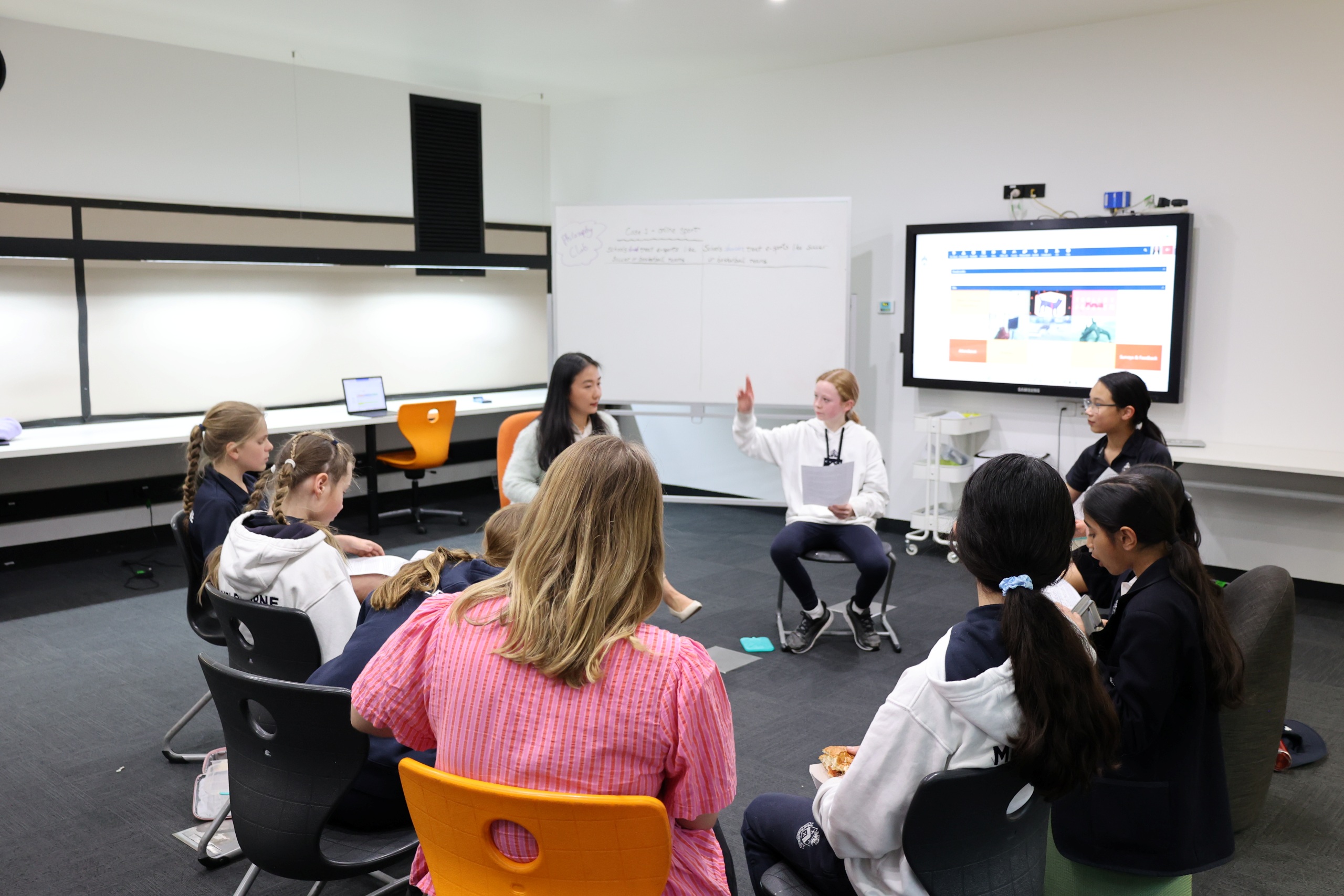
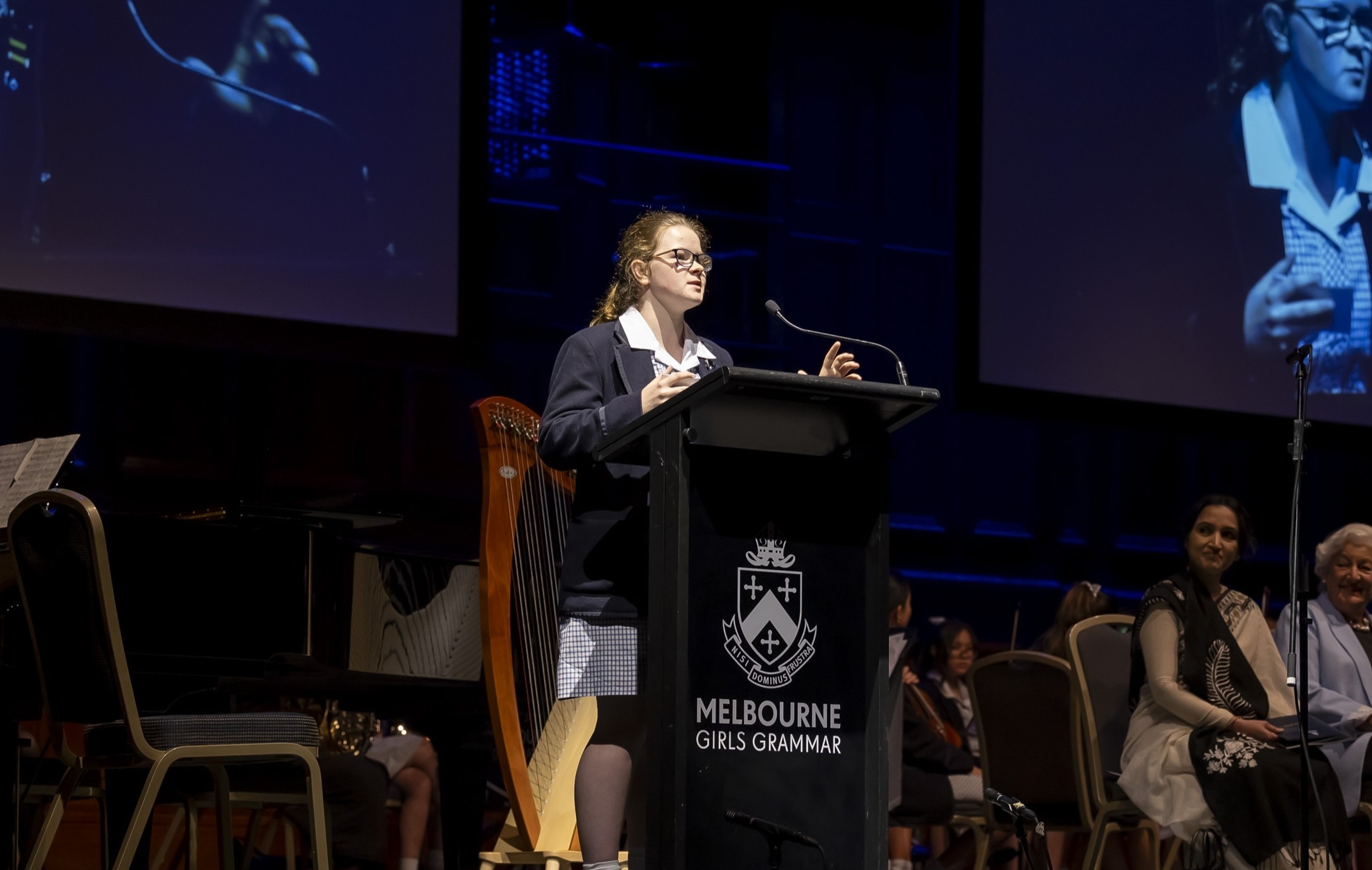
Middle Years Philosophy Club meet at Wildfell during lunchtime
Middle Years Philosophy Club meet at Wildfell during lunchtime
The topics we discuss vary based on the girls’ interests and span a range of philosophical disciplines, including epistemology, metaphysics and ethics – the latter being one of the most engaging and frequently explored areas within the Club. Our conversations are often sparked by stimulus such as short stories, thought experiments or current events, or emerge organically from questions raised by students themselves.
“Together, we learn about consequential, rule-based, virtue and moral theories that need to be considered when discussing the outcomes of a situation,” Karina explains.
2026 School Vice Captain, Katherine recalls her time in Philosophy Club in Year 5, “I vividly remember the first time I sat in Philosophy Club. As a 10-year-old, I don’t think my brain had ever worked so hard, desperately trying to find a logical answer to the problem[s] in front of me.” Through these discussions, our Grammarians develop useful skills in reasoning, communication and ethical reflection, laying a strong foundation for academic achievement and pathways to future leadership.
“I have learnt to use a new language and vocabulary in expressing my views on a dilemma.” — Karina
“The trolley problem is a classic," adds Katherine. "... my introduction into the world of philosophy. But, as I soon realised, philosophy is so much more than just the decision of whether to flip the lever or not,” she said.
In the first half of the year, the Club’s focus centres on preparing for the Ethics Olympiad, a national and international competition that invites students to examine complex ethical dilemmas through rigorous dialogue. Students explore cases provided, analysing them through various lenses and debating their implications in pursuit of the most ethical outcomes. These dilemmas rarely yield a single correct answer, offering students a valuable opportunity to grapple with ambiguity and appreciate the nuance of real-world decision making. The sessions are used to gather viewpoints, challenge ideas and refine arguments, often culminating in team-based conclusions that reflect thoughtful compromise and ethical depth.
“I have now competed twice in the Ethics Olympiad and this year, my team came second overall!” — Karina
The topics we discuss vary based on the girls’ interests and span a range of philosophical disciplines, including epistemology, metaphysics and ethics – the latter being one of the most engaging and frequently explored areas within the Club. Our conversations are often sparked by stimulus such as short stories, thought experiments or current events, or emerge organically from questions raised by students themselves.
“Together, we learn about consequential, rule-based, virtue and moral theories that need to be considered when discussing the outcomes of a situation,” Karina explains.
2026 School Vice Captain, Katherine recalls her time in Philosophy Club in Year 5, “I vividly remember the first time I sat in Philosophy Club. As a 10-year-old, I don’t think my brain had ever worked so hard, desperately trying to find a logical answer to the problem[s] in front of me.” Through these discussions, our Grammarians develop useful skills in reasoning, communication and ethical reflection, laying a strong foundation for academic achievement and pathways to future leadership.
“I have learnt to use a new language and vocabulary in expressing my views on a dilemma.” — Karina
“The trolley problem is a classic," adds Katherine. "... my introduction into the world of philosophy. But, as I soon realised, philosophy is so much more than just the decision of whether to flip the lever or not,” she said.
In the first half of the year, the Club’s focus centres on preparing for the Ethics Olympiad, a national and international competition that invites students to examine complex ethical dilemmas through rigorous dialogue. Students explore cases provided, analysing them through various lenses and debating their implications in pursuit of the most ethical outcomes. These dilemmas rarely yield a single correct answer, offering students a valuable opportunity to grapple with ambiguity and appreciate the nuance of real-world decision making. The sessions are used to gather viewpoints, challenge ideas and refine arguments, often culminating in team-based conclusions that reflect thoughtful compromise and ethical depth.
“I have now competed twice in the Ethics Olympiad and this year, my team came second overall!” — Karina
The topics we discuss vary based on the girls’ interests and span a range of philosophical disciplines, including epistemology, metaphysics and ethics – the latter being one of the most engaging and frequently explored areas within the Club. Our conversations are often sparked by stimulus such as short stories, thought experiments or current events, or emerge organically from questions raised by students themselves.
“Together, we learn about consequential, rule-based, virtue and moral theories that need to be considered when discussing the outcomes of a situation,” Karina explains.
2026 School Vice Captain, Katherine recalls her time in Philosophy Club in Year 5, “I vividly remember the first time I sat in Philosophy Club. As a 10-year-old, I don’t think my brain had ever worked so hard, desperately trying to find a logical answer to the problem[s] in front of me.” Through these discussions, our Grammarians develop useful skills in reasoning, communication and ethical reflection, laying a strong foundation for academic achievement and pathways to future leadership.
“I have learnt to use a new language and vocabulary in expressing my views on a dilemma.” — Karina
“The trolley problem is a classic," adds Katherine. "... my introduction into the world of philosophy. But, as I soon realised, philosophy is so much more than just the decision of whether to flip the lever or not,” she said.
In the first half of the year, the Club’s focus centres on preparing for the Ethics Olympiad, a national and international competition that invites students to examine complex ethical dilemmas through rigorous dialogue. Students explore cases provided, analysing them through various lenses and debating their implications in pursuit of the most ethical outcomes. These dilemmas rarely yield a single correct answer, offering students a valuable opportunity to grapple with ambiguity and appreciate the nuance of real-world decision making. The sessions are used to gather viewpoints, challenge ideas and refine arguments, often culminating in team-based conclusions that reflect thoughtful compromise and ethical depth.
“I have now competed twice in the Ethics Olympiad and this year, my team came second overall!” — Karina
.jpg)
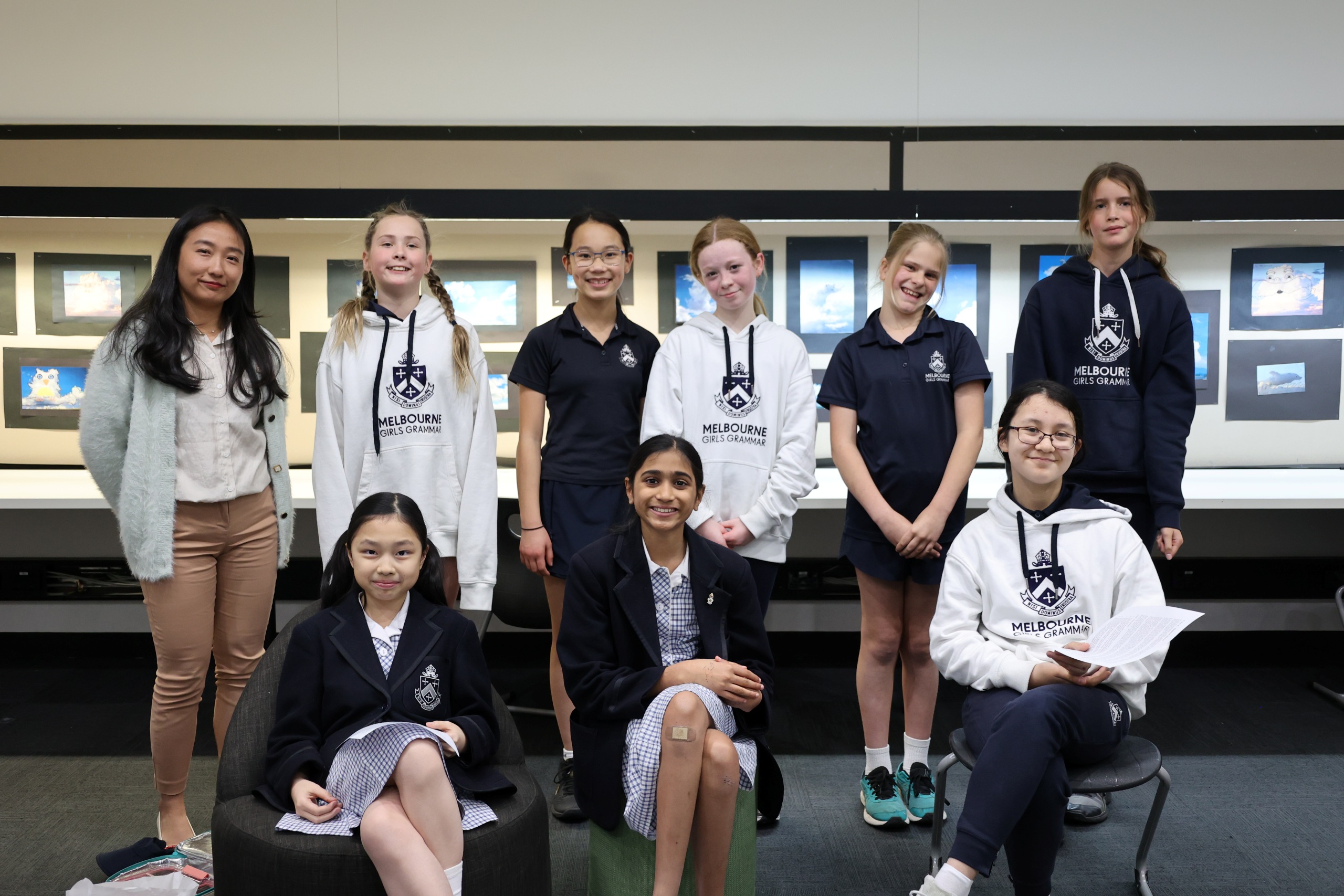
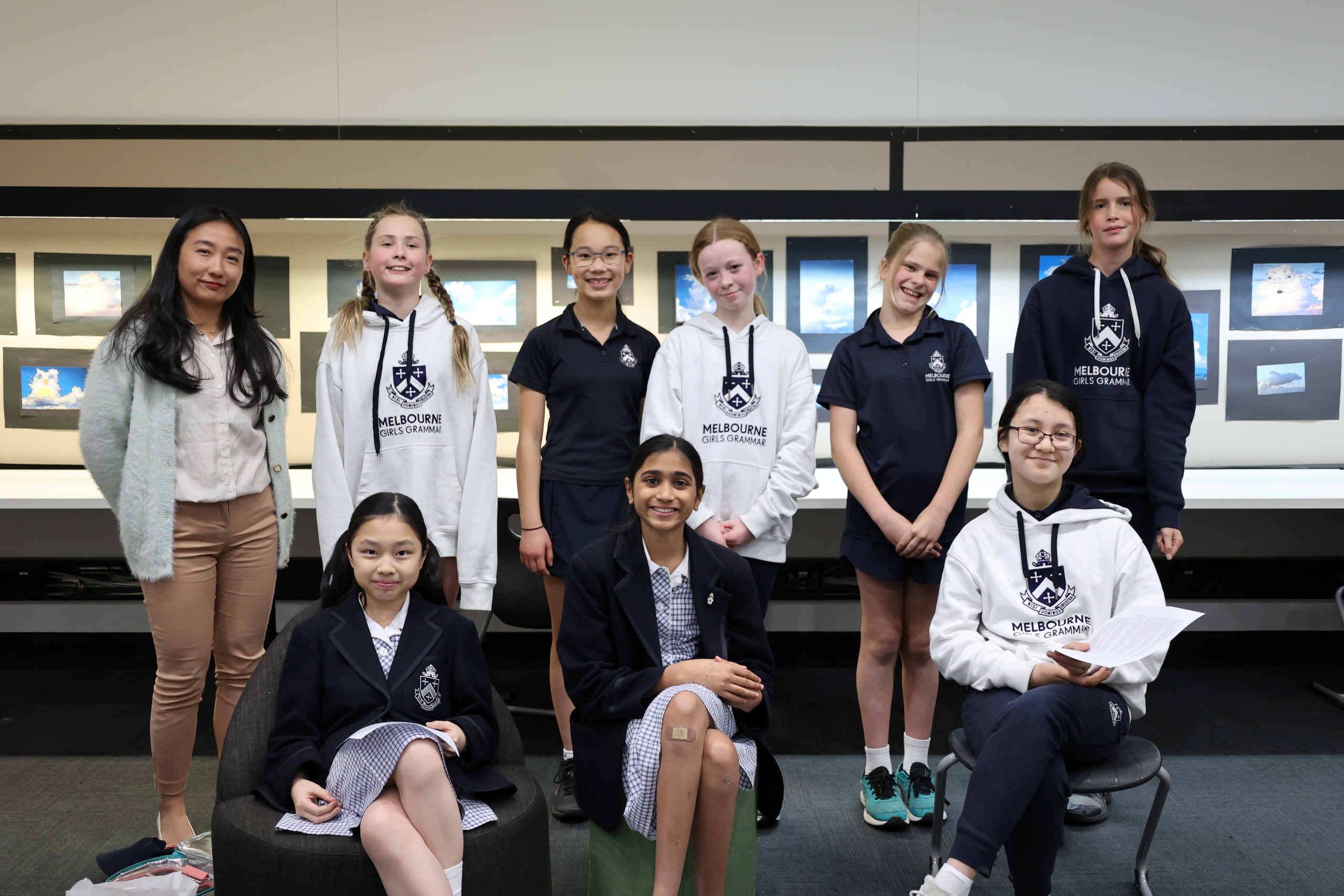
Junior Ethics Olympiad team 2025, L-R: Mara, Clarrie, Karina, Charlotte & Aneesha
Junior Ethics Olympiad team 2025, L-R: Mara, Clarrie, Karina, Charlotte & Aneesha
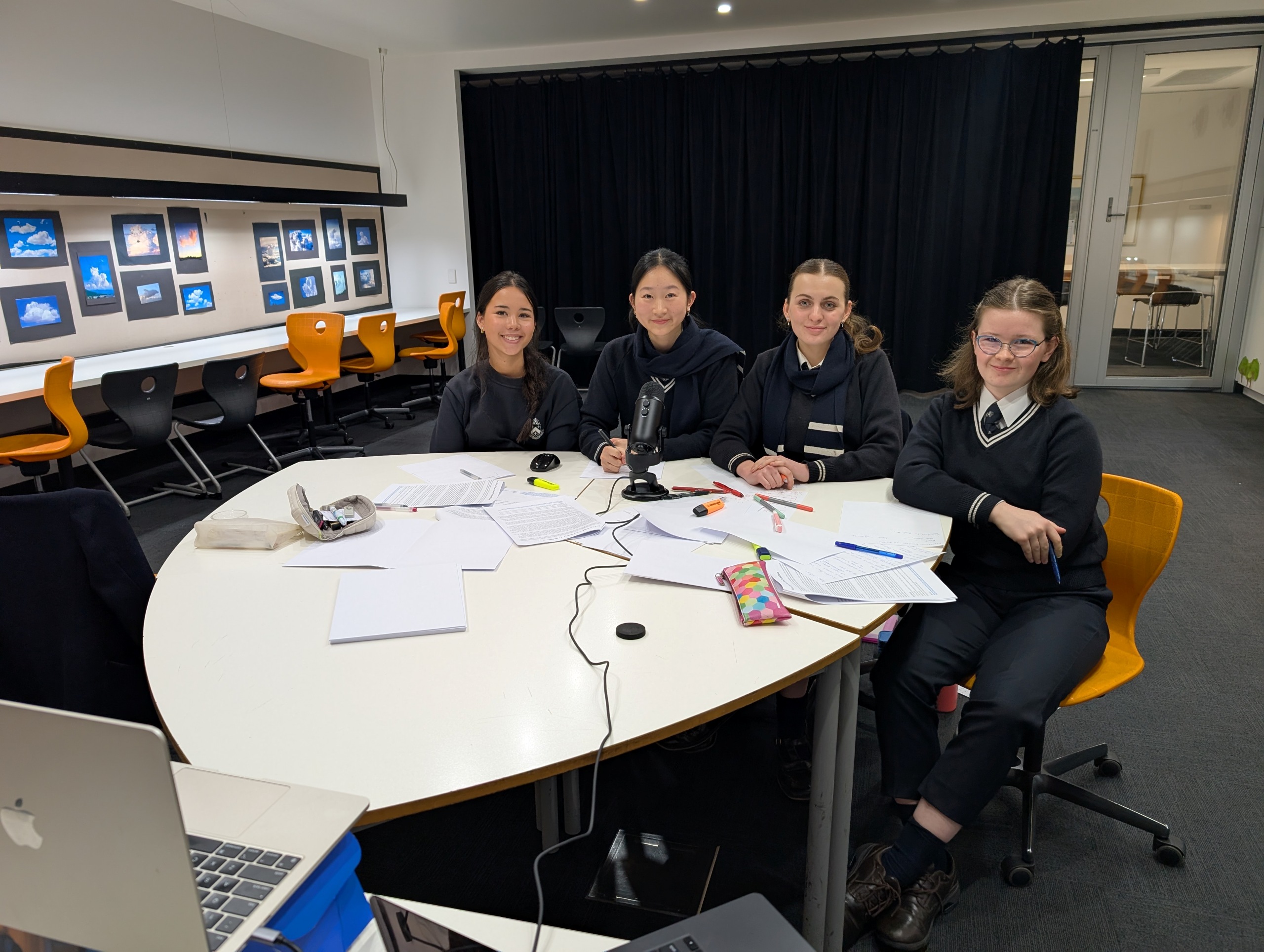
Senior Ethics Olympiad team, L-R: Lexi, Katherine, Xanthe & Alex
.jpg)
Junior team hard at work
Junior Ethics Olympiad team 2025, L-R: Mara, Clarrie, Karina, Charlotte & Aneesha
Senior Ethics Olympiad team, L-R: Lexi, Katherine, Xanthe & Alex
Junior team hard at work
Participation in the Olympiad also connects students with peers from across Australia, New Zealand and beyond, broadening their understanding of global perspectives and diverse reasoning strategies. Through this process, students not only sharpen their ability to express complex ideas but also learn to negotiate differences with civility and respect – skills that are vital for personal growth and civic engagement.
Katherine continues to be involved in the Club as a mentor:
“I grab at any opportunity to be more involved with the subject, including volunteering to facilitate Philosophy Club sessions with younger girls now ... I hope I can spark the same passion inside of them and open their eyes to how extraordinary the world of philosophy is.”
Participation in the Olympiad also connects students with peers from across Australia, New Zealand and beyond, broadening their understanding of global perspectives and diverse reasoning strategies. Through this process, students not only sharpen their ability to express complex ideas but also learn to negotiate differences with civility and respect – skills that are vital for personal growth and civic engagement.
Katherine continues to be involved in the Club as a mentor:
“I grab at any opportunity to be more involved with the subject, including volunteering to facilitate Philosophy Club sessions with younger girls now ... I hope I can spark the same passion inside of them and open their eyes to how extraordinary the world of philosophy is.”
Participation in the Olympiad also connects students with peers from across Australia, New Zealand and beyond, broadening their understanding of global perspectives and diverse reasoning strategies. Through this process, students not only sharpen their ability to express complex ideas but also learn to negotiate differences with civility and respect – skills that are vital for personal growth and civic engagement.
Katherine continues to be involved in the Club as a mentor:
“I grab at any opportunity to be more involved with the subject, including volunteering to facilitate Philosophy Club sessions with younger girls now ... I hope I can spark the same passion inside of them and open their eyes to how extraordinary the world of philosophy is.”
References
Dodds, S., Diprose, R., Duke-Yonge, J., Goddard, E., Lumsden, S., Mackenzie, C., Menzies, P., Parsell, M., & Ravenscroft, I. (2008). Forward Thinking: Learning and Teaching Philosophy in Australian Universities – The Significance of the Discipline of Philosophy. Australasian Association of Philosophy.
Goddard, E. (2008). Improving the Participation of Women in the Philosophy Profession: Report C – Students by Gender in Philosophy Programs in Australian Universities. Australasian Association of Philosophy.
Victorian Department of Education. (2025). Delivering the new Victorian Curriculum F–10. https://www.education.vic.gov.au/Documents/about/educationstate/viccurriculumf10edstatefactsheet.pdf
Wei, Y., & Chen, X. (2025). Philosophy for Children: A meta-analysis of cognitive outcomes. Journal of Intelligence, 13(10), 130. https://www.mdpi.com/2079-3200/13/10/130
References
Dodds, S., Diprose, R., Duke-Yonge, J., Goddard, E., Lumsden, S., Mackenzie, C., Menzies, P., Parsell, M., & Ravenscroft, I. (2008). Forward Thinking: Learning and Teaching Philosophy in Australian Universities – The Significance of the Discipline of Philosophy. Australasian Association of Philosophy.
Goddard, E. (2008). Improving the Participation of Women in the Philosophy Profession: Report C – Students by Gender in Philosophy Programs in Australian Universities. Australasian Association of Philosophy.
Victorian Department of Education. (2025). Delivering the new Victorian Curriculum F–10. https://www.education.vic.gov.au/Documents/about/educationstate/viccurriculumf10edstatefactsheet.pdf
Wei, Y., & Chen, X. (2025). Philosophy for Children: A meta-analysis of cognitive outcomes. Journal of Intelligence, 13(10), 130. https://www.mdpi.com/2079-3200/13/10/130
References
Dodds, S., Diprose, R., Duke-Yonge, J., Goddard, E., Lumsden, S., Mackenzie, C., Menzies, P., Parsell, M., & Ravenscroft, I. (2008). Forward Thinking: Learning and Teaching Philosophy in Australian Universities – The Significance of the Discipline of Philosophy. Australasian Association of Philosophy.
Goddard, E. (2008). Improving the Participation of Women in the Philosophy Profession: Report C – Students by Gender in Philosophy Programs in Australian Universities. Australasian Association of Philosophy.
Victorian Department of Education. (2025). Delivering the new Victorian Curriculum F–10. https://www.education.vic.gov.au/Documents/about/educationstate/viccurriculumf10edstatefactsheet.pdf
Wei, Y., & Chen, X. (2025). Philosophy for Children: A meta-analysis of cognitive outcomes. Journal of Intelligence, 13(10), 130. https://www.mdpi.com/2079-3200/13/10/130